
Table of Contents
- China’s Groundbreaking Armed Robot Dogs Deployed by Drones: The Future of Combat
- A Revolutionary and Disturbing Development in Autonomous Warfare
- Technical Overview of the Armed Robot Dogs and Drones
- Military Implications: A New Era of Urban Warfare
- Autonomous Robots on the Battlefield: A Double-Edged Sword
- The Role of Artificial Intelligence in Autonomous Combat Systems
- The Future of Warfare: Drone-Delivered Armed Robots
- The Dangers of Autonomous Warfare and the Need for Regulation
China’s Groundbreaking Armed Robot Dogs Deployed by Drones: The Future of Combat
In a development that is poised to reshape the future of warfare, China has unveiled an astonishing new technology: drones capable of deploying armed robot dogs onto the battlefield. The innovation, demonstrated in a video posted on Chinese social media platform Weibo, showcases a futuristic, dystopian vision of combat where drones act as mini dropships, delivering robot dogs equipped with machine guns to take out targets. Though this technology is still in its early stages, the demonstration video has set the internet ablaze, raising significant questions about the implications of autonomous machines in warfare.
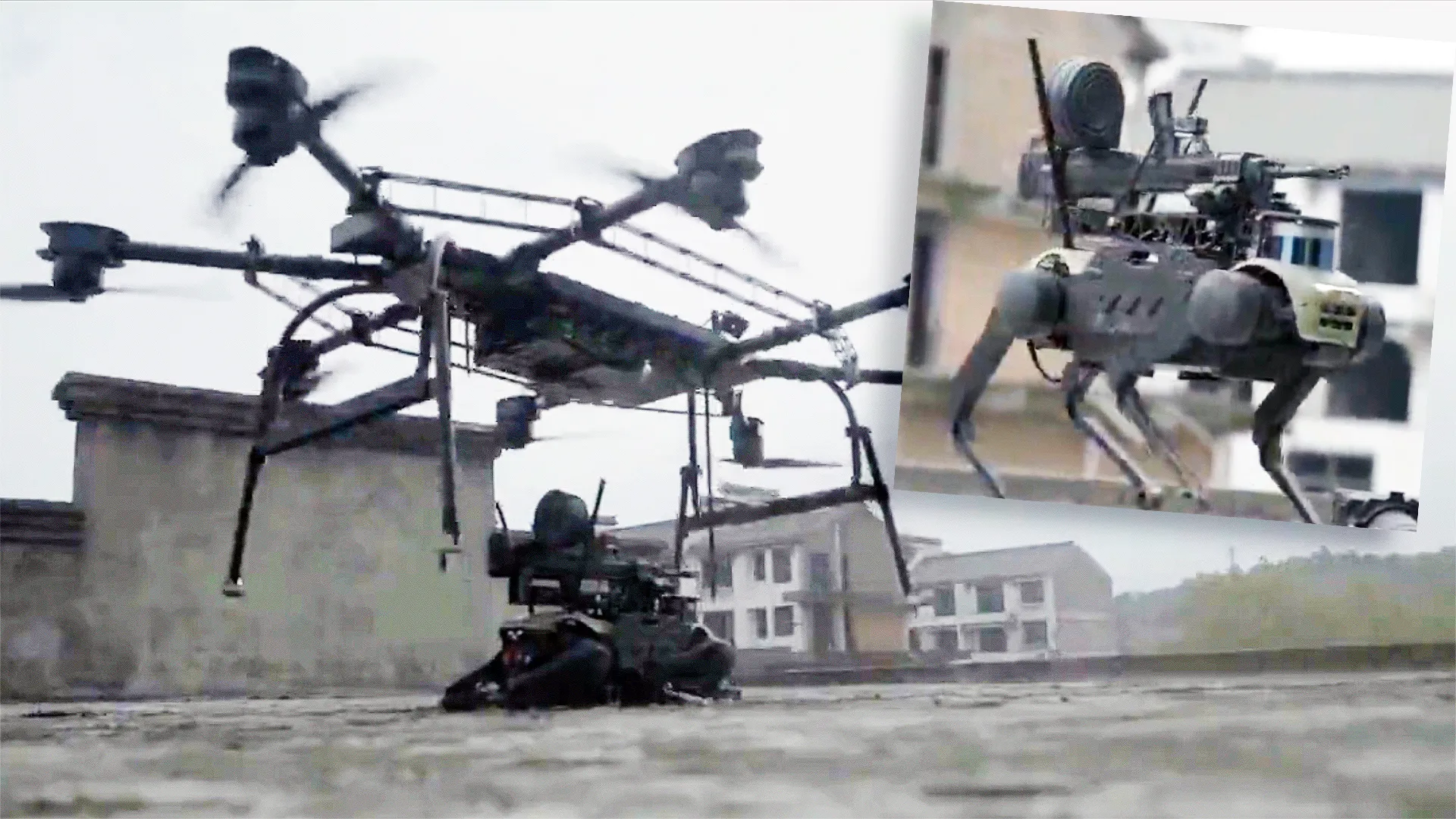
The footage, which quickly gained traction online, shows a drone approaching the rooftop of a building, carrying a robot dog equipped with a machine gun. Upon landing, the drone releases the robot dog, which unfolds from its compact form and begins patrolling its surroundings. With its weapon mounted on its back, the armed robot dog is ready to engage targets, showcasing how drones and robotic soldiers could work in tandem to execute military operations in complex urban environments.
This breakthrough is not just another technological marvel; it marks a pivotal moment in the ongoing arms race for autonomous weaponry, signaling the rise of robots in military applications. While much of the world remains fixated on the development of AI and autonomous systems in various sectors, China’s demonstration offers a chilling glimpse into the future of warfare, where human soldiers may no longer be the primary boots on the ground.
A Revolutionary and Disturbing Development in Autonomous Warfare
The concept of autonomous robots on the battlefield is not new, but China’s latest development marks a significant leap forward in the use of drones to deploy combat robots in real-time. The video demonstrates a “Red Wing Forward heavy-duty drone,” which operates as a robotic delivery vehicle, capable of navigating complex terrain and delivering robot dogs directly behind enemy lines or to hard-to-reach rooftops.
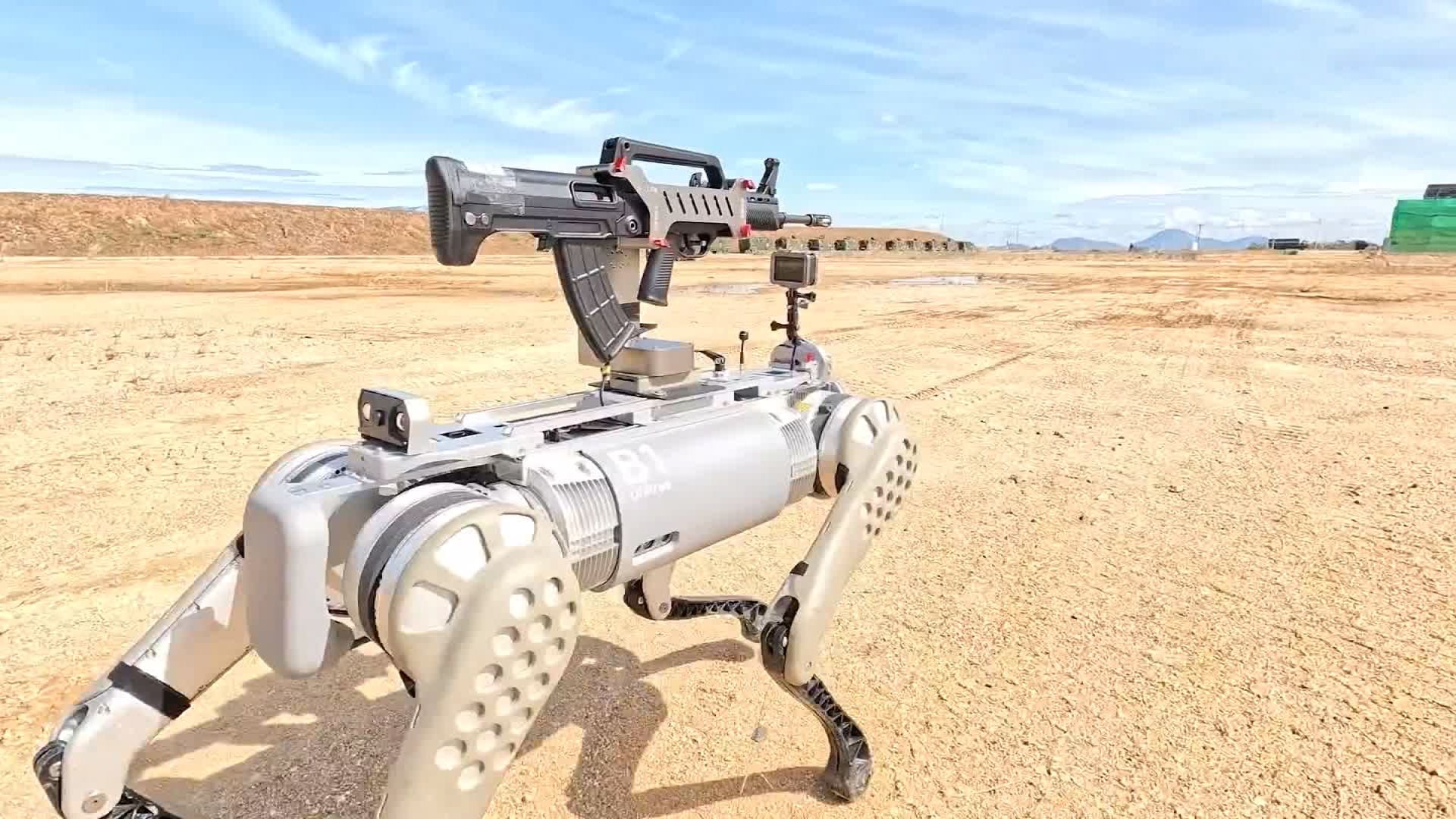
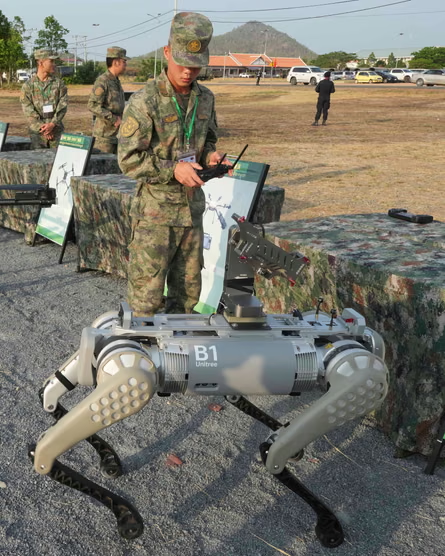
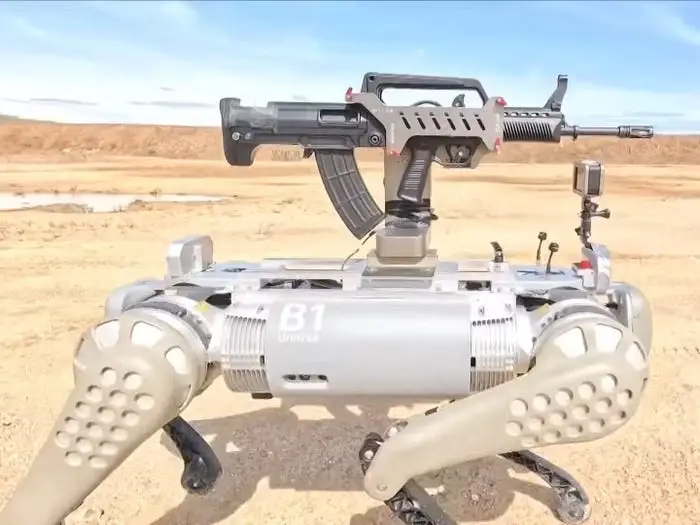
What sets this development apart from other robotic innovations is the weaponization of these machines. The armed robot dogs are equipped with Chinese QBB-97 light machine guns, which are capable of sustained automatic fire. While the idea of deploying such machines for warfare is undoubtedly alarming, the potential tactical advantages are clear. Drones could quickly deliver these robotic soldiers to critical points on the battlefield, providing an unprecedented level of flexibility and surprise for military operations. With their autonomous capabilities, these machines could engage enemies without putting human soldiers in harm’s way.
Though this idea may sound like something from a science fiction movie, the demonstration video has already sparked widespread discussion about the ethical and military implications of such technology. Autonomous machines that can make decisions about combat and engage targets independently raise significant concerns about the rules of engagement and accountability in warfare.
Technical Overview of the Armed Robot Dogs and Drones
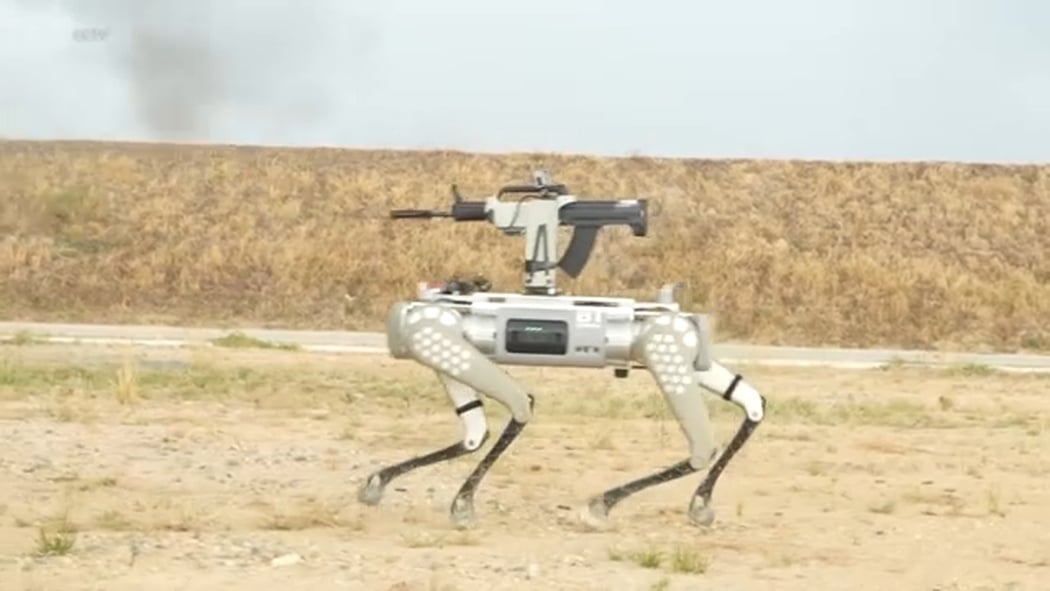
At the heart of China’s new military concept lies the sophisticated integration of drones and robot dogs. The drone, which appears to be a modified commercial drone, is capable of carrying the robot dog, which unfolds upon landing. The robot dog, once deployed, begins navigating its environment autonomously while armed with a machine gun. This type of design brings to the forefront a new era of aerial warfare, where drones act as tactical vehicles delivering fully equipped ground units.
The QBB-97 machine gun, a primary armament on these robot dogs, is a 5.8x42mm weapon designed for sustained fire. Its drum magazine holds up to 80 rounds and can fire up to 650 rounds per minute. While the weapon is relatively small in terms of military machine guns, the use of such a weapon on a robot dog presents new challenges for military strategies, as the dog’s mobility allows it to quickly change positions and engage enemies from unexpected angles.
While the exact specifications of the drone are unclear, the footage suggests it is equipped with the ability to fly and navigate with precision, potentially using advanced navigation technology such as GPS or real-time control systems. What makes this pairing of drones and robots particularly effective is the ability to deploy these robotic soldiers in urban environments where traditional warfare tactics might be less effective.
Military Implications: A New Era of Urban Warfare
The deployment of armed robot dogs by drones opens up new possibilities for urban warfare, a type of conflict that is increasingly becoming a focal point of modern military strategies. Urban environments, with their tall buildings, narrow streets, and complex infrastructure, present significant challenges for military forces. Drones capable of delivering robot dogs to rooftops or other hard-to-reach areas could provide a tactical advantage, allowing soldiers to bypass traditional barricades and engage enemies in unexpected locations.
The ability to deploy robotic soldiers behind enemy lines could also give military forces a unique advantage in terms of both offense and defense. Imagine a scenario where enemy forces are surrounded on all sides, with drone-deployed robot dogs engaging them from above. This type of warfare would not only introduce new forms of combat but also shift the balance of power on the battlefield.
Additionally, this innovation raises critical questions about the future of military ethics. How will international laws governing the use of force evolve in response to the growing capabilities of autonomous weaponry? As the line between human-controlled and autonomous systems blurs, the potential for misuse and unintended consequences grows. The emergence of such technologies requires robust international dialogue to ensure that they are used in accordance with established norms and ethical standards.
Autonomous Robots on the Battlefield: A Double-Edged Sword
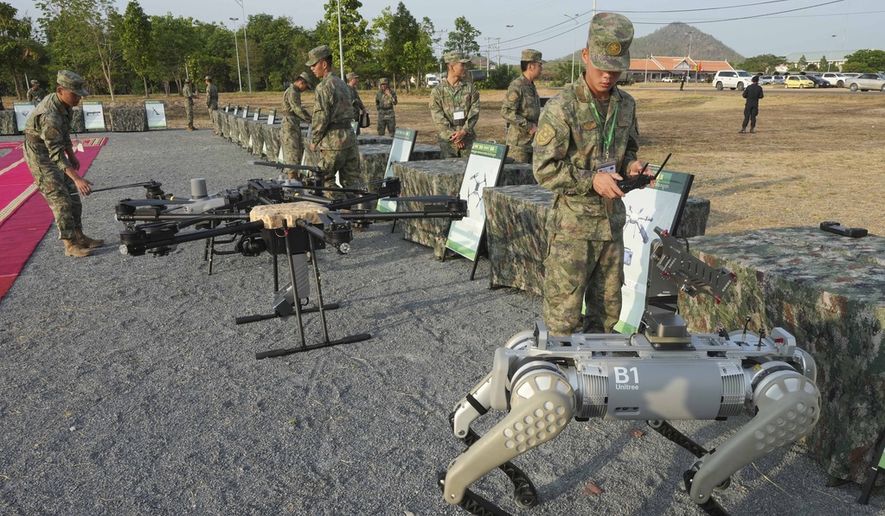
While the potential advantages of using autonomous robots on the battlefield are undeniable, there are equally significant concerns about their implementation. One of the most pressing issues is the question of control. Who is responsible for the actions of an autonomous machine that engages in combat? As these robots become more capable of making independent decisions, the accountability for their actions becomes less clear.
Furthermore, the prospect of machines making life-and-death decisions raises ethical concerns. Will robots, equipped with AI, be able to make moral decisions about when and how to use lethal force? The prospect of autonomous robots making decisions about who to engage in combat without human oversight could potentially lead to catastrophic mistakes, especially in environments where distinguishing between combatants and civilians is difficult.
The use of robot dogs in combat scenarios also challenges traditional notions of what warfare looks like. Instead of soldiers engaging in direct combat, machines will increasingly take the front line. This raises concerns about the dehumanization of warfare, where machines become the instruments of death and destruction.
The Role of Artificial Intelligence in Autonomous Combat Systems
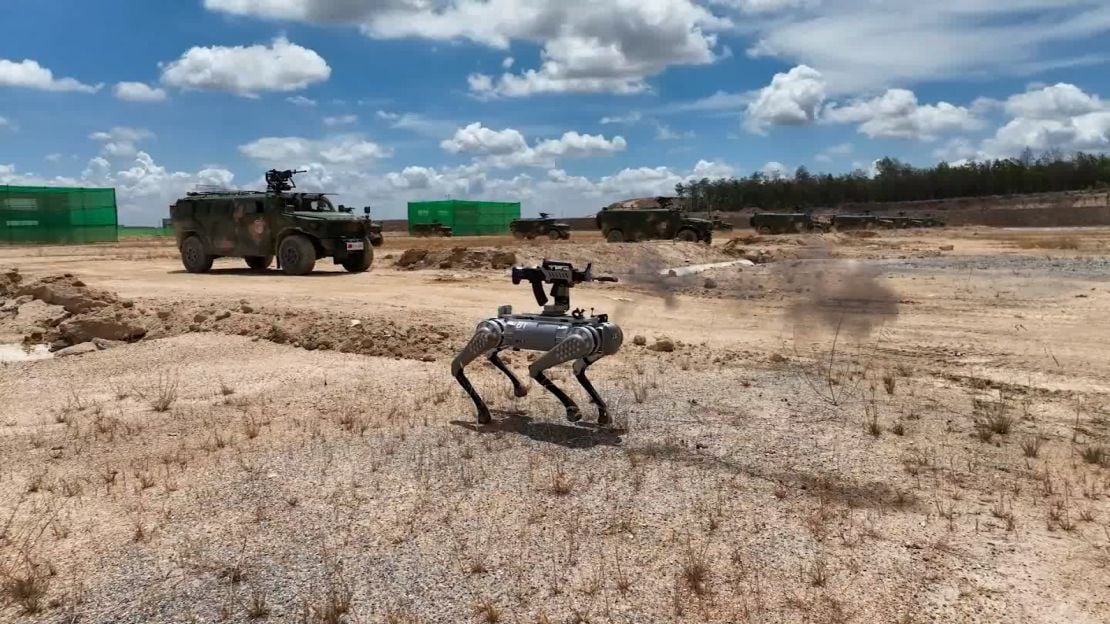
Artificial intelligence (AI) plays a critical role in the functionality of these autonomous combat robots. AI algorithms enable the robot dogs to navigate their environment, detect targets, and make decisions about when to engage. While the technology is still in its infancy, the rapid advancement of AI means that these machines will only become more sophisticated and capable over time.
As AI systems improve, they will likely be able to engage in more complex combat scenarios, including situations that require advanced decision-making, such as determining whether an enemy is armed or posing a direct threat. This raises concerns about the lack of human oversight and the potential for AI to make erroneous or catastrophic decisions in the heat of battle.
Moreover, AI-driven systems can be vulnerable to hacking or malfunctions, which could lead to unintended consequences. If an enemy were to gain control of an armed robot dog, it could turn the machine’s weapons against its own forces, creating chaos and confusion on the battlefield. As such, the security of AI-controlled autonomous weapons must be a top priority for military forces that choose to adopt these systems.
The Future of Warfare: Drone-Delivered Armed Robots
The demonstration of drone-delivered armed robot dogs represents a significant step forward in the evolution of warfare. The concept of pairing drones and robots for combat missions opens up new possibilities for military strategy, particularly in urban environments where traditional methods of warfare can be ineffective. While the technology is still in its early stages, it’s clear that drones and autonomous robots will play an increasingly important role in future military operations.
As military forces around the world continue to explore the potential of autonomous weapons, the ethical, legal, and technological challenges will only become more pronounced. It is imperative that international agreements and regulations evolve to address the risks posed by these systems, ensuring that they are used responsibly and in compliance with established norms of warfare.
The Dangers of Autonomous Warfare and the Need for Regulation
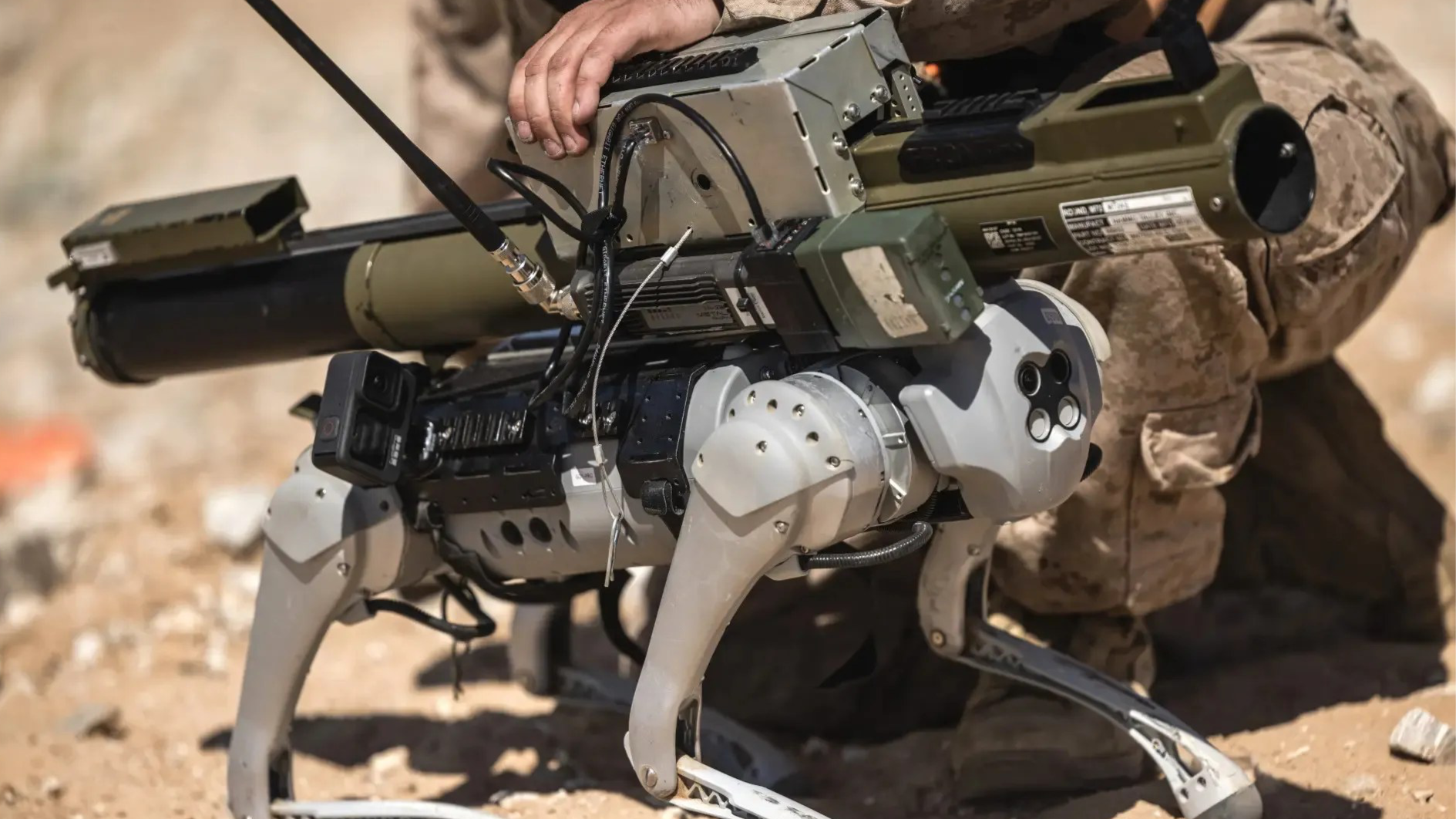
The development of drone-delivered armed robot dogs is a sobering reminder of the rapid pace of technological innovation in military applications. While the potential benefits of this technology are clear, the dangers and ethical concerns cannot be ignored. As the use of autonomous weapons becomes more widespread, it is essential that governments, military leaders, and international bodies work together to create frameworks for their responsible use.
The future of warfare may look increasingly robotic, but the need for human oversight and accountability will remain as critical as ever. By ensuring that these technologies are developed with strict ethical guidelines and oversight, we can help mitigate the risks and ensure that autonomous weapons are used in ways that protect, rather than endanger, lives.