
Table of Contents
- Cuba’s Blackout Crisis Reached a Breaking Point
- Oil Shortages Intensified After US Pressure
- The Crisis Triggered a Solar Energy Explosion
- China Became Central to Cuba’s Energy Shift
- Solar Power Is Growing Faster Than Many Expected
- The Grid Still Faces Massive Problems
- Cuba’s Financial Crisis Creates Major Obstacles
- Some Cubans Are Already Seeing Benefits
- The Revolution Is About More Than Climate Change
- The Future Remains Uncertain
Cuba’s Blackout Crisis Reached a Breaking Point
For years, electricity shortages have been part of daily life in Cuba.
The country’s electrical infrastructure is old, heavily dependent on fossil fuels, and increasingly unable to keep up with national demand. Aging power plants, outdated transmission systems, and limited maintenance have all contributed to frequent disruptions.
But in 2026, the situation became dramatically worse.
Cuba experienced multiple nationwide blackouts that affected millions of people across the island. Entire neighborhoods lost power for long periods, businesses shut down temporarily, and hospitals faced serious operational challenges.
In some areas, people reportedly burned wood for cooking because electric stoves no longer worked reliably. Trash piled up in streets as public services struggled under the pressure of repeated outages.
The crisis exposed how dependent Cuba still remained on imported oil.
Without steady fuel supplies, the country’s electricity system could not function consistently.
Oil Shortages Intensified After US Pressure
The roots of the energy crisis stretch far beyond simple infrastructure problems.
For decades, Cuba relied heavily on imported oil to power its electricity grid. During the Cold War era, much of that oil came from the Soviet Union. After the collapse of the Soviet Union in the 1990s, Cuba increasingly turned toward Venezuela.
Under a long standing arrangement, Cuba sent medical professionals and support services to Venezuela in exchange for oil shipments.
However, that system reportedly collapsed after major geopolitical changes involving Venezuela earlier this year. Reports indicated the Trump administration intensified pressure that disrupted Venezuela’s ability to continue supplying oil to Cuba.
At the same time, other potential suppliers reportedly reduced exports to Cuba amid fears of economic penalties or tariffs connected to US policy.
The result was devastating.
Fuel shortages worsened dramatically, making blackouts more severe and pushing Cuba’s already struggling power system closer to collapse.
The Crisis Triggered a Solar Energy Explosion
Ironically, the worsening energy crisis may have accelerated Cuba’s renewable energy transition faster than almost anyone predicted.
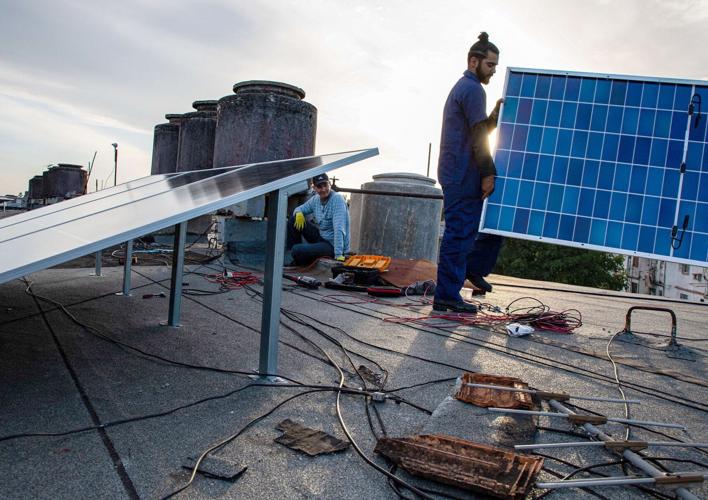
According to data cited from the energy think tank Ember, imports of Chinese solar panels into Cuba exploded over the past two years.
In 2023, Cuba reportedly imported around $3 million worth of Chinese solar panels. By 2025, that figure had surged to roughly $117 million.
That extraordinary increase reflected a much broader national push toward renewable energy infrastructure.
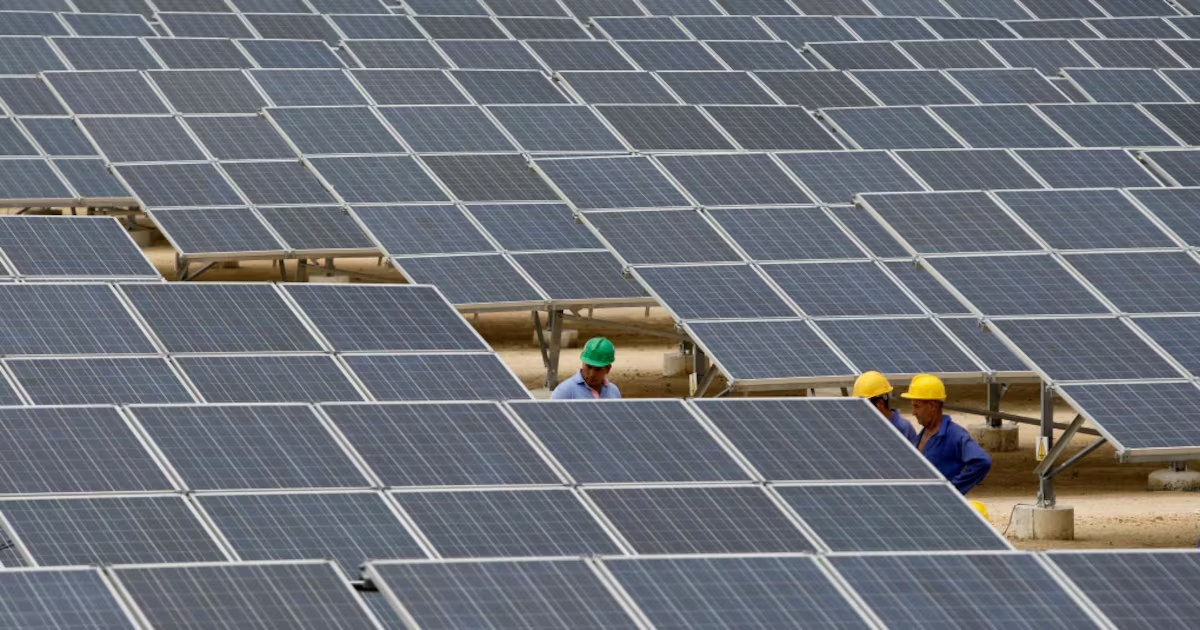
China and Cuba reportedly entered agreements to develop dozens of solar parks across the country by 2028. The goal is ambitious: adding roughly 2 gigawatts of solar capacity, enough to power more than 1.5 million homes.
The first major solar parks reportedly opened in early 2025, and around 50 projects are already operating across the island.
Energy analysts described the growth as remarkably fast, especially for a country facing such severe economic hardship.
China Became Central to Cuba’s Energy Shift
China’s role in Cuba’s solar transformation has attracted enormous international attention.
Chinese companies and investment have reportedly supplied large quantities of solar panels, batteries, and technical support. For Beijing, the partnership represents more than simply a business opportunity.
Analysts say the projects allow China to strengthen political influence and goodwill throughout Latin America while presenting itself as a major global clean energy partner.
As the United States tightened economic pressure on Cuba, China effectively positioned itself as an alternative source of infrastructure support and technological investment.
The geopolitical symbolism became difficult to ignore.
One global superpower was associated with economic pressure and fuel shortages, while another was helping finance renewable energy expansion.
This dynamic reflects a much larger international competition unfolding across energy, trade, technology, and diplomacy.
Solar Power Is Growing Faster Than Many Expected
The scale and speed of Cuba’s renewable expansion surprised many experts.
Within roughly one year, Cuba reportedly installed around 1 gigawatt of solar capacity. Renewable energy now reportedly accounts for around 10 percent of the country’s electricity generation, up from roughly 3 percent in 2024.
For a relatively small island nation with major financial limitations, that increase represents an extraordinarily rapid transformation.
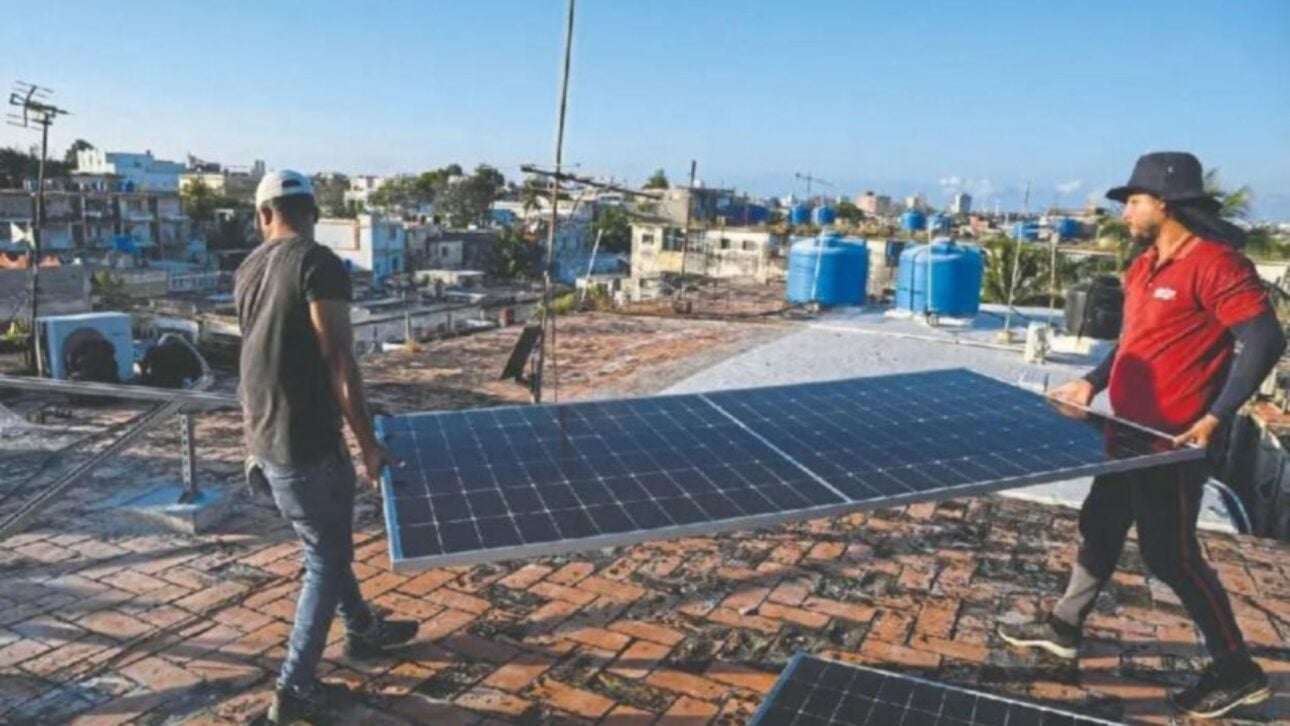
Part of the reason solar can expand so quickly is because the technology has become dramatically cheaper worldwide. Solar panels are now far more affordable than they were a decade ago, while installation times are relatively short compared to building new fossil fuel infrastructure.
Once installed, solar systems also reduce dependence on imported fuel.
That factor matters enormously for Cuba, which remains vulnerable to external pressure because of its reliance on foreign oil supplies.
Some analysts believe renewable energy could eventually reduce the ability of outside powers to influence Cuba through fuel access.
The Grid Still Faces Massive Problems
Despite the optimism surrounding solar growth, experts caution that Cuba’s energy problems remain severe.
Solar power can help during daylight hours, but electricity demand often peaks at night when the sun is no longer available. Batteries can partially solve this problem, and Cuba has reportedly increased battery imports significantly, but the country still lacks large scale storage infrastructure.
The electrical grid itself also remains deeply damaged and outdated.
Even if more solar energy becomes available, experts warn the transmission system may struggle to distribute electricity reliably across the island without massive modernization efforts.
Some analysts estimate it could cost billions of dollars to fully rebuild Cuba’s energy infrastructure and transition toward a mostly renewable system.
That raises a difficult question: who will pay for it?
Cuba’s Financial Crisis Creates Major Obstacles
The financial side of the transition may be the country’s biggest challenge.
Cuba is facing an intense economic crisis involving inflation, shortages, declining purchasing power, and limited access to international financing. The government itself has very limited resources available for large infrastructure projects.
Ordinary Cubans are struggling financially as well.
For many families, even small personal solar systems remain far too expensive. Some people can barely afford basic food and household essentials, making renewable technology feel distant despite the country’s broader energy ambitions.
Experts argue that outside financing will likely be necessary for Cuba to complete a large scale renewable transformation.
However, attracting international investment requires confidence that loans can eventually be repaid, something difficult for economically struggling countries.
This creates a paradox. Cuba urgently needs investment to stabilize its energy system, but the economic instability itself makes securing financing more difficult.
Some Cubans Are Already Seeing Benefits
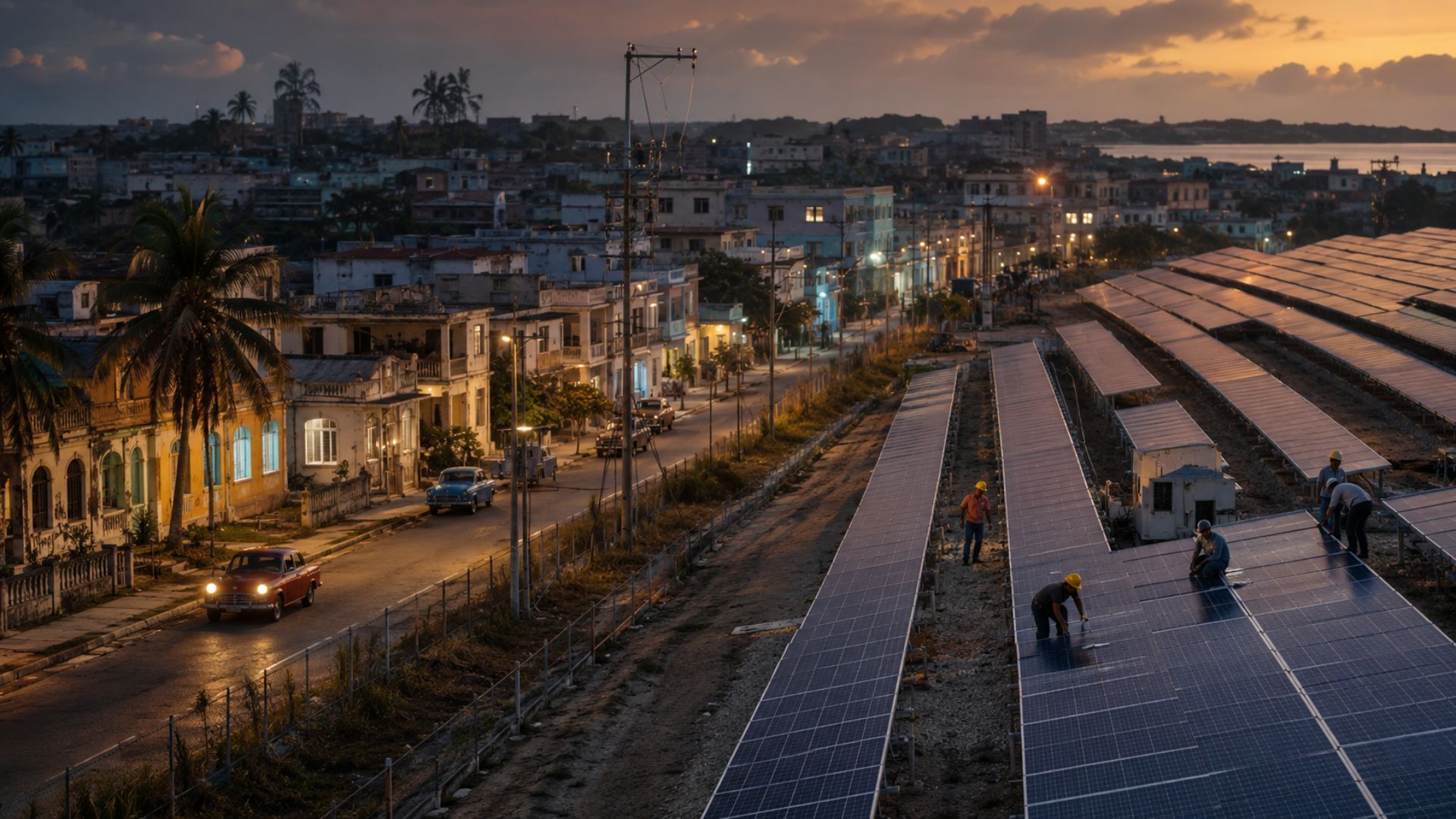
Even though the national grid still struggles, some Cubans are beginning to experience direct benefits from the solar boom.
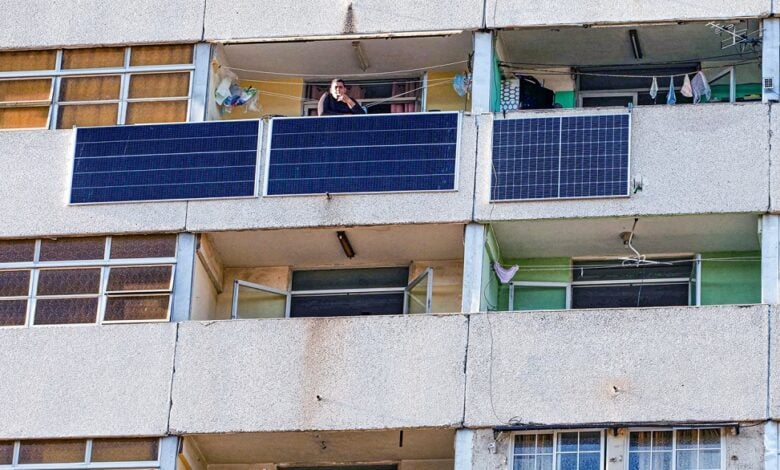
In cities such as Santa Clara, solar powered charging stations now allow residents to recharge phones, power banks, electric bikes, and small vehicles.
For people enduring constant blackouts, even limited access to stable charging infrastructure can dramatically improve daily life.
Residents interviewed near some of these facilities described them as practical solutions helping families stay connected and mobile during power shortages.
Small scale renewable systems can also provide local resilience even when the larger grid collapses.
That is one reason renewable energy advocates see Cuba as an important example of how decentralized energy systems can help vulnerable communities during crises.
Still, many residents remain skeptical because blackouts continue worsening in many parts of the country.
The Revolution Is About More Than Climate Change
Although solar energy is often discussed primarily through environmental language, Cuba’s transition is also about survival, geopolitics, and national independence.
For Cuba, renewable energy is not simply an environmental project. It represents a possible escape from dependence on imported oil and external political pressure.
Some experts argue that clean energy can function as a form of national security.
Countries heavily dependent on imported fossil fuels remain vulnerable to sanctions, price shocks, geopolitical conflicts, and supply disruptions. Renewable energy offers a way to reduce some of those vulnerabilities because sunlight cannot be embargoed or blocked by foreign powers.
This idea is increasingly shaping energy policy discussions globally, especially after years of international instability involving oil and gas markets.
Cuba’s experience may become an important case study showing how geopolitical pressure can unintentionally accelerate renewable energy transitions.
The Future Remains Uncertain
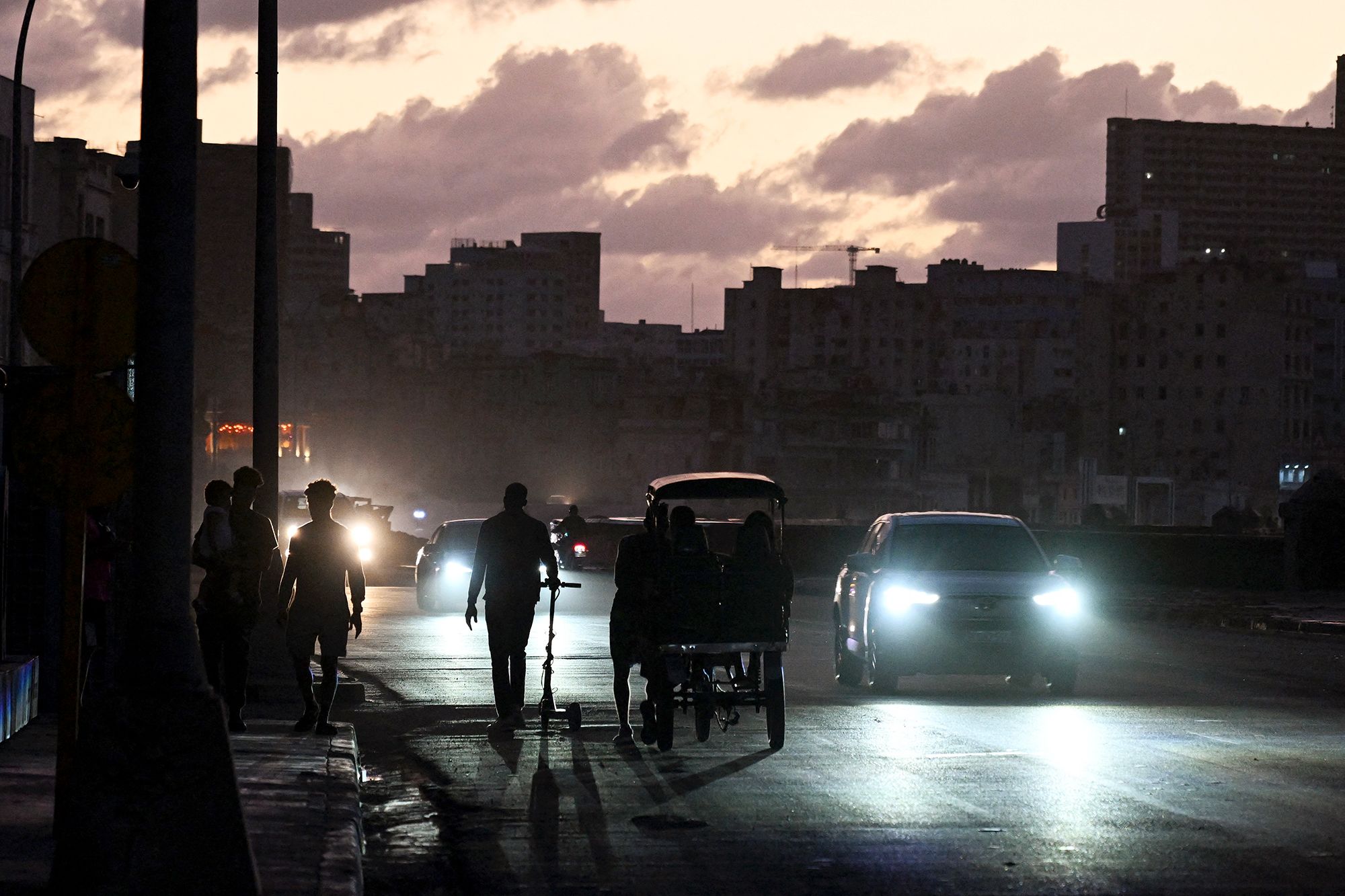
Despite the dramatic growth of solar infrastructure, Cuba’s future remains uncertain.
The country still faces severe economic hardship, infrastructure decay, and ongoing power shortages. Most Cubans have not yet experienced major improvements in daily electricity reliability.
Experts remain divided about how quickly renewable energy can realistically solve the crisis.
Some believe the solar boom marks the beginning of a major long term transformation that could eventually free Cuba from fossil fuel dependence. Others argue the country’s problems are too deep and too expensive to solve quickly.
What seems undeniable, however, is that Cuba’s energy story has become globally significant.
The island now sits at the intersection of several major global trends: renewable energy expansion, geopolitical rivalry, economic sanctions, energy security, and climate transition.
For years, Cuba’s electrical system symbolized scarcity and dependence.
Now, even amid blackouts and crisis, the country is becoming one of the world’s most closely watched renewable energy experiments.
Whether the transformation ultimately succeeds or struggles, one reality is already becoming clear. The global clean energy transition is no longer happening only in wealthy countries with stable economies. It is also unfolding in places facing extreme hardship, political pressure, and deep uncertainty.
And in Cuba, that transition is happening faster than almost anyone expected.