

Table of Contents
- When Denmark’s Threat Assessment Named the U.S., the World Took Notice
- What the Report Actually Suggested, and Why the Wording Matters
- The Arctic Factor, Greenland, and Why Geography Has Become a Pressure Point
- Espionage Between Allies, the Line That Denmark Says Should Not Be Crossed
- Economic Pressure as a Security Tool, and Why Intelligence Agencies Track It
- NATO Isn’t Just a Treaty, It’s Trust, and Trust Can Be Tested
- Why Denmark Can Call the U.S. a “Concern” and Still Call It Its Closest Ally
- The Domestic Reaction, and the Rise of a Quiet European Pivot
- What This Means for Greenland, Not as a Symbol, but as a Place Where People Live
- Security Threats Now Include Influence, Cyber, and Narrative Power
- A Conclusion That Doesn’t Feel Like an Ending
When Denmark’s Threat Assessment Named the U.S., the World Took Notice
When Denmark’s defence intelligence service released an annual threat assessment that, for the first time, treated the United States as a potential security concern, it landed like a diplomatic shockwave. Denmark did not suddenly declare America an enemy, and the report did not pretend the alliance had vanished overnight. But the symbolism was impossible to miss. A NATO ally publicly acknowledged that the world has become unstable enough that even the closest partnerships can produce risk, pressure, and uncertainty.
The intelligence view, as reported by multiple outlets, was framed around how powerful states use economic and technological leverage, and how the possibility of coercion has widened in a more confrontational global environment. It also emphasized that the U.S. remains Denmark’s closest ally, which made the message more unsettling, not less. The warning was essentially this: an ally can still be an ally while also creating vulnerabilities that Denmark must plan for.
What the Report Actually Suggested, and Why the Wording Matters

The coverage around the assessment describes two ideas that matter more than the headline. First, the U.S. was described as a “negative factor” or potential risk in the wider threat landscape, not as a conventional military enemy poised to invade Denmark tomorrow. Second, the concern was linked to the use of power to “assert its will,” including pressure through economic tools and, notably, the idea that military force is no longer unthinkable even against allies in some scenarios.
That nuance often gets lost when a story goes viral. “Denmark calls the U.S. a threat” spreads faster than “Denmark says the world is shifting and allies can apply coercive pressure.” But intelligence assessments are built for planning, not comfort. Their job is to map what cannot be ruled out, even when it feels politically awkward to say out loud.
The Arctic Factor, Greenland, and Why Geography Has Become a Pressure Point
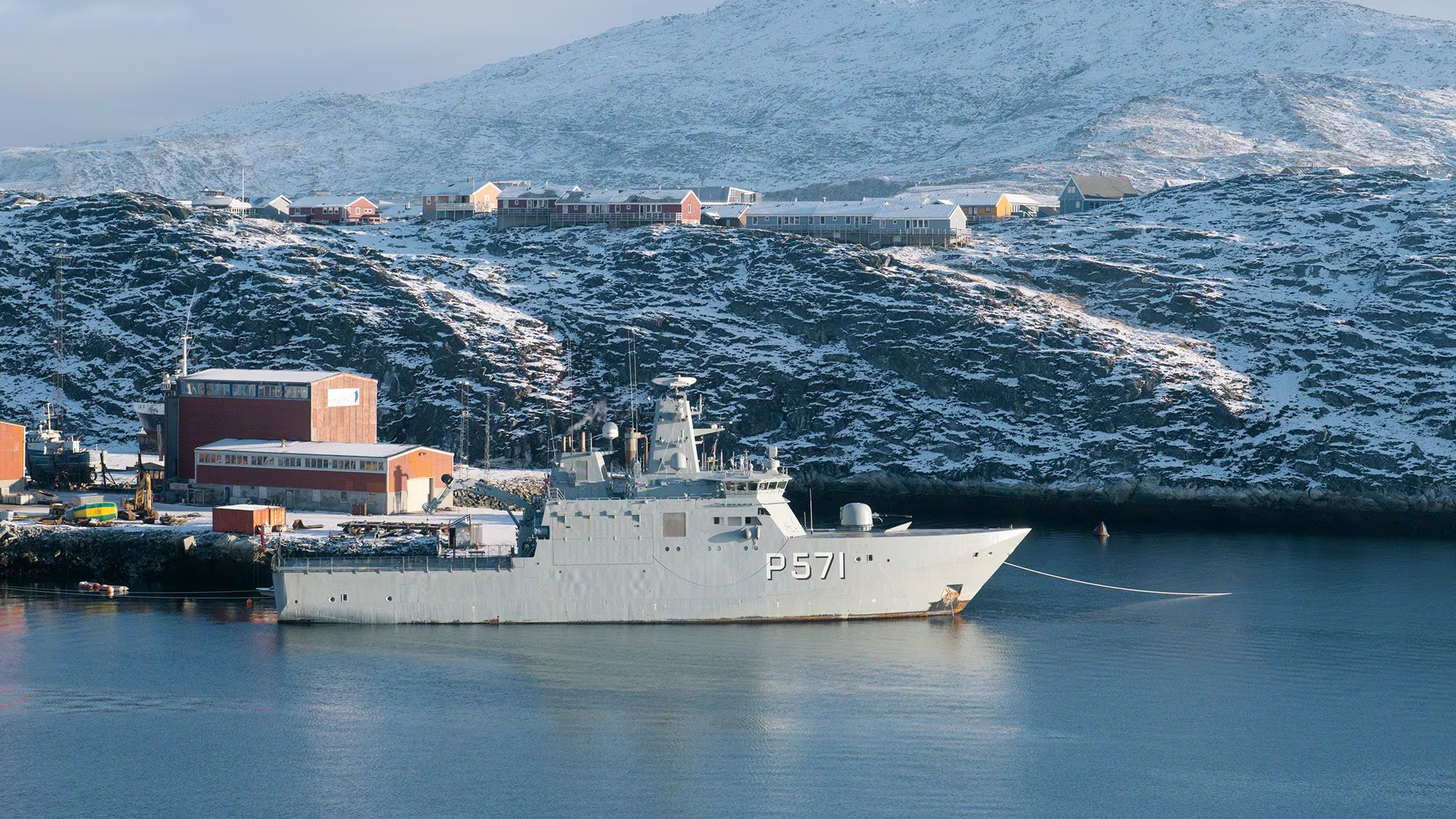
If there is one place where the U.S. and Denmark’s interests overlap and occasionally strain, it is Greenland. Greenland is part of the Kingdom of Denmark, and it also sits in a region that major powers view as strategically central. Several reports tie Denmark’s heightened sensitivity to U.S. attention on Greenland and the Arctic, where security competition and influence operations can intensify.
This is not a new story line, but the intensity has changed. Recent reporting describes Denmark and Greenland reacting strongly to rhetoric and pressure around Greenland’s status, including statements that alarmed Danish leadership and sparked wider European solidarity messages about sovereignty.
Espionage Between Allies, the Line That Denmark Says Should Not Be Crossed
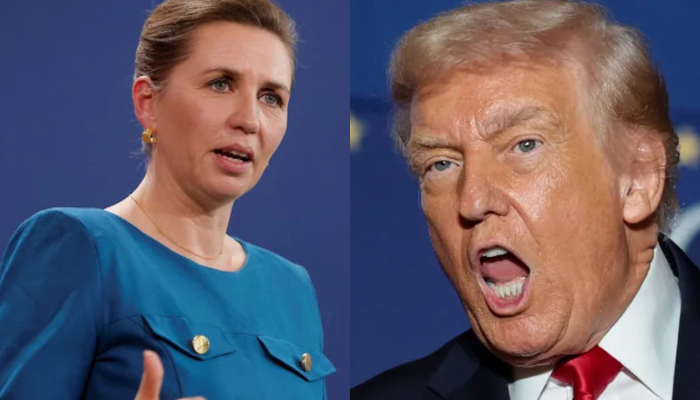
Another reason the debate feels personal in Copenhagen is the recurring allegation that U.S. intelligence activity has targeted Greenland-related information. An Associated Press report described Danish Prime Minister Mette Frederiksen condemning reported U.S. intelligence gathering on Greenland with a blunt principle: allies should not spy on allies.
In intelligence culture, governments rarely pretend spying does not happen. But public outrage tends to flare when it involves allies and sensitive sovereignty questions. For Denmark, the concern is not only the act itself, but what it signals about trust, leverage, and the future boundaries of alliance behavior in an Arctic era defined by competition.
Economic Pressure as a Security Tool, and Why Intelligence Agencies Track It
The assessment’s framing, as reported, highlights a modern reality: power is not expressed only through troops and missiles. It is also expressed through tariffs, supply chains, tech dependence, investment access, and the threat of withdrawal from security commitments. Reuters’ coverage linked Denmark’s rising threat picture to doubts about U.S. commitment to Europe’s security, a doubt that can shape adversary calculations and national planning.
This is one of the most uncomfortable shifts in the post Cold War mindset. For decades, many European states treated American security guarantees as the fixed background of their planning. When intelligence reports begin modeling a future where that guarantee is less predictable, it changes what “national security” means, even if the alliance remains intact on paper.
NATO Isn’t Just a Treaty, It’s Trust, and Trust Can Be Tested
The reason this story resonated far beyond Denmark is that NATO is not merely about a written promise. It is about confidence that allies will act in good faith, coordinate, and avoid coercion. Recent reporting quotes Denmark’s prime minister warning that a U.S. takeover of Greenland would effectively mark the end of NATO, which shows how seriously Danish leadership is treating even rhetorical pressure around sovereignty.
Intelligence assessments often measure the gap between formal commitments and real-world behavior. When that gap widens, even slightly, the result is not immediate collapse. It is anxiety, hedging strategies, and a search for backup options, usually closer to home, meaning Europe itself.
Why Denmark Can Call the U.S. a “Concern” and Still Call It Its Closest Ally
This is the part casual readers miss. Denmark’s reporting repeatedly emphasizes that the U.S. remains Denmark’s closest ally, a cornerstone of European security, and deeply embedded through NATO.
Intelligence writing often has this duality. It can say, “We rely on this relationship,” and also say, “We must plan for scenarios where reliance becomes vulnerability.” That is not hypocrisy. It is risk management. The emotional impact comes from the fact that this risk management now includes things that would have sounded unthinkable to many readers a decade ago.
The Domestic Reaction, and the Rise of a Quiet European Pivot
Some commentary and reporting suggests Danish public opinion has become more skeptical about depending primarily on the U.S. for security, with growing calls to look to Europe more. A recent New Yorker piece framed the assessment as aligning with that mood shift, portraying Denmark as increasingly wary of U.S. pressure tactics.
This matters because public trust influences policy. Defence budgets, Arctic posture, intelligence priorities, and EU cooperation become easier to justify when the public believes “the old assumptions” are no longer reliable.
What This Means for Greenland, Not as a Symbol, but as a Place Where People Live
Greenland often becomes a chessboard in international arguments, but it is also a society with its own politics, concerns, and sensitivities about being spoken about as an asset. Reporting around the recent Greenland tension includes Greenlandic leaders pushing back strongly against annexation rhetoric and reiterating democratic self-determination.
In that context, Denmark’s intelligence framing can be read as an attempt to defend the integrity of the Kingdom of Denmark and to acknowledge that pressure on Greenland is pressure on Denmark, even if the pressure comes from an ally.
Security Threats Now Include Influence, Cyber, and Narrative Power
Even when talk of military force grabs attention, many of the day-to-day risks are quieter: cyber espionage, influence campaigns, and attempts to shape public debate. Coverage referencing Denmark’s threat picture highlights concern about espionage and influence threats around Greenland and the broader Arctic competition environment.
This is where the story stops being only about Denmark versus the U.S. and becomes a picture of a world where great powers increasingly use every tool available, and smaller states must defend themselves not only at borders, but in networks, supply chains, institutions, and public trust.
A Conclusion That Doesn’t Feel Like an Ending
Denmark classifying the United States as a security concern in an intelligence context is not the same thing as Denmark abandoning NATO, nor does it mean a rupture is inevitable. What it does mean is that the emotional foundation of alliance politics has shifted. The old idea, that allies might disagree but would never apply coercive pressure, is being treated as less certain than before.
And once an intelligence service puts uncertainty on paper, it becomes part of the national imagination. Plans adapt. Diplomatic language hardens. Europe thinks more seriously about self-reliance. Greenland becomes more sensitive, not less. The alliance may endure, but it will not feel the same if trust must now be defended as actively as territory.