
Table of Contents
- FIFA’s Peace Prize: A New Tradition?
- Klaveness Calls for Abolition of the Prize
- The Political Implications of FIFA’s Peace Prize
- Should FIFA Be Involved in Political Matters?
- FIFA’s Response: Standing by the Decision
- Calls for an Investigation into FIFA’s Actions
- The Broader Debate on Political Influence in Sports
- What Happens Next for the FIFA Peace Prize?
- A Crossroads for FIFA and Global Sports
FIFA’s Peace Prize: A New Tradition?
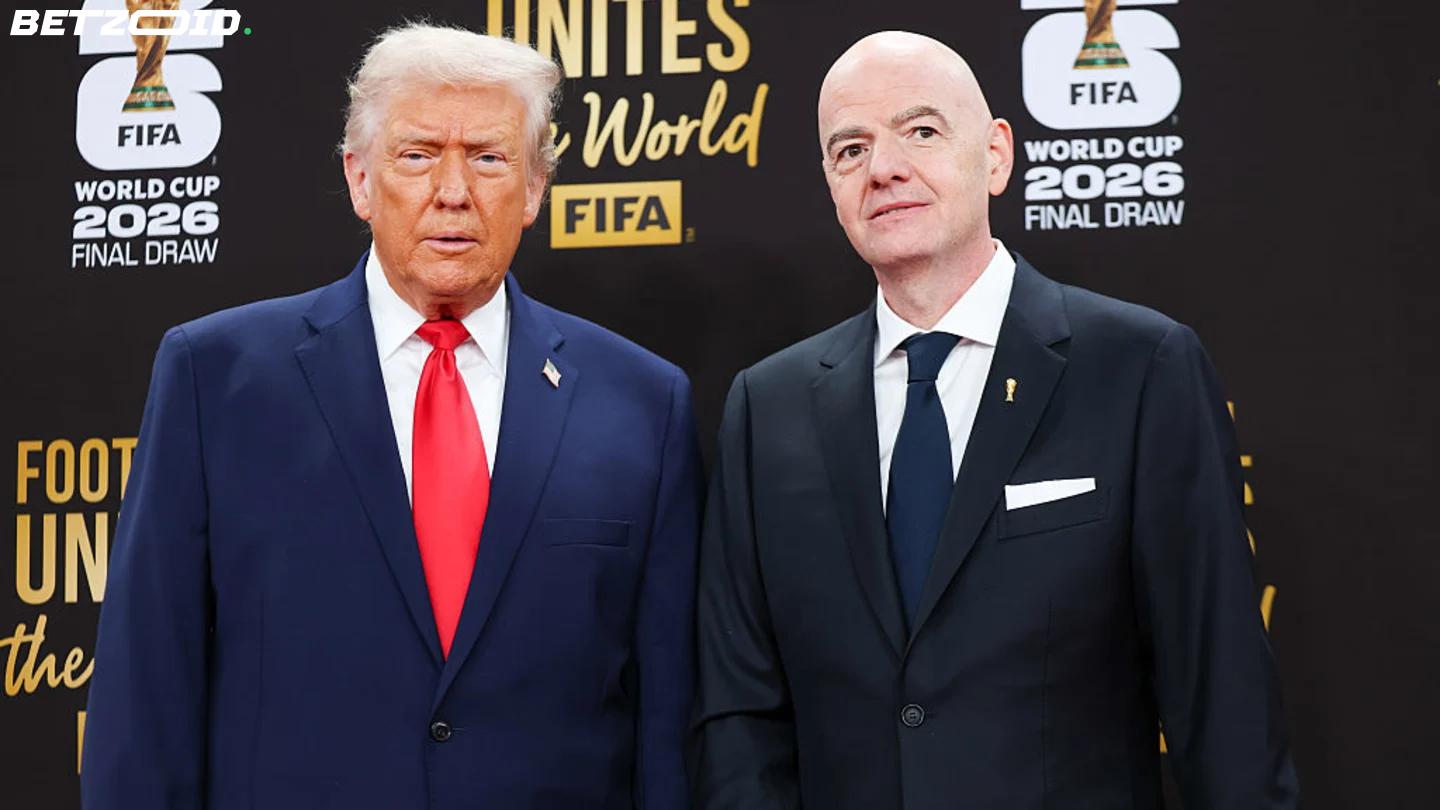
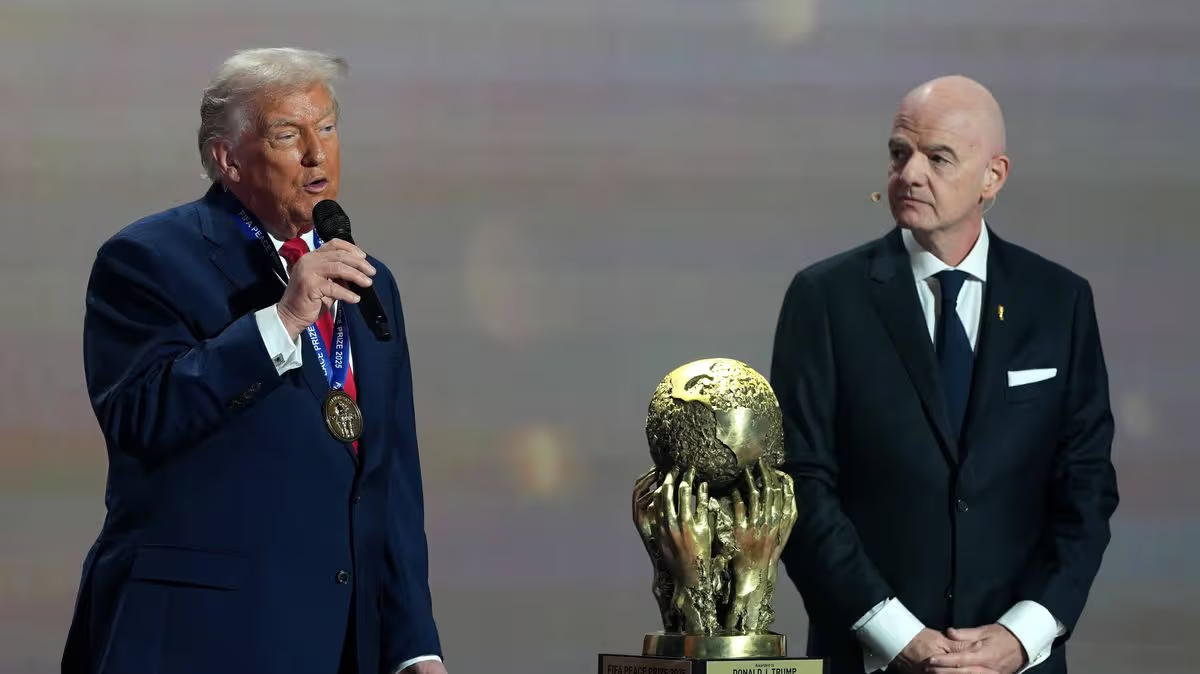
The FIFA Peace Prize was introduced as a way for the organization to recognize those who have contributed to peace through soccer. However, the award’s first recipient, Donald Trump, raised eyebrows due to his controversial political actions and policies. Trump, whose administration has been marked by contentious policies on immigration and global diplomacy, has been a polarizing figure both in the U.S. and abroad. Critics of the award argue that FIFA’s involvement in such political decisions undermines the integrity of the prize.
FIFA’s decision to award Trump the Peace Prize was widely seen as a political move, especially since the U.S. is set to co-host the 2026 World Cup along with Canada and Mexico. Many observers believe that the award was given as a form of recognition for the U.S.’s role in bringing the World Cup to North America, further fueling the perception that the Peace Prize is politically motivated.
Klaveness Calls for Abolition of the Prize
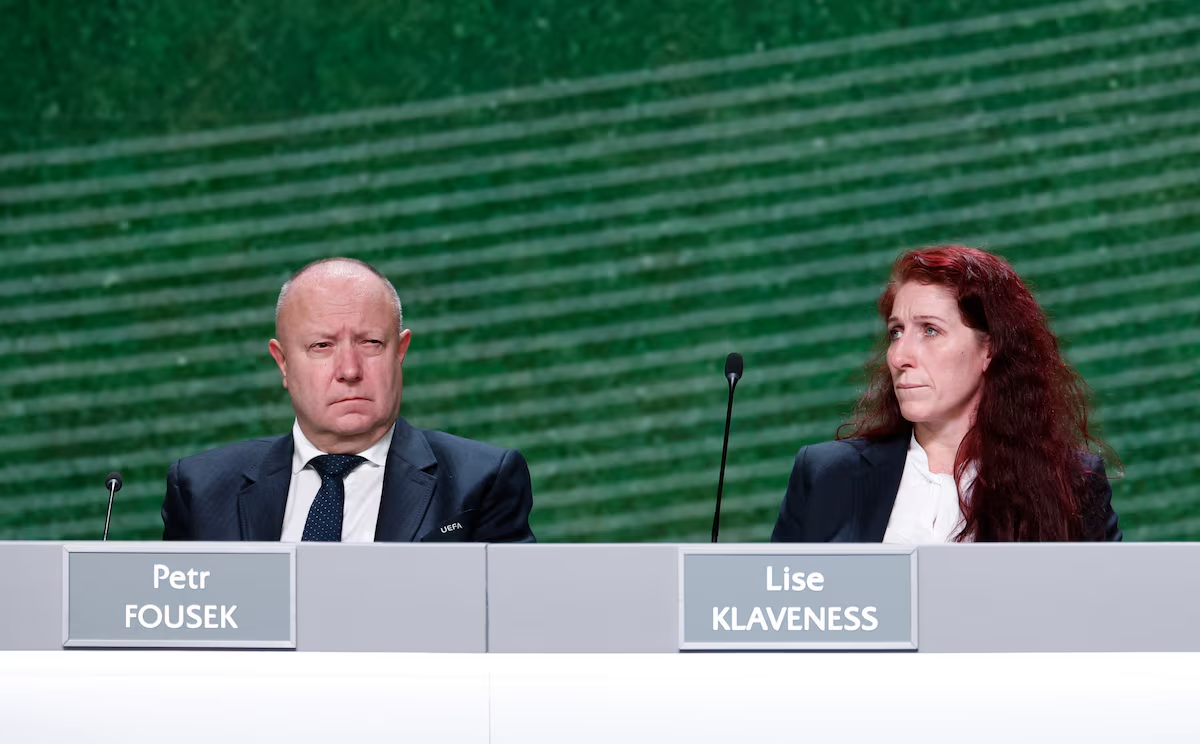
Lise Klaveness, the president of the Norwegian Football Association, has been one of the most outspoken critics of the FIFA Peace Prize. In a recent press briefing, she argued that FIFA should abolish the prize entirely. “We don’t think it’s part of FIFA’s mandate to give such a prize,” Klaveness stated. She emphasized that organizations like the Nobel Institute are far better suited to handle the delicate task of awarding peace prizes, as they operate independently and have established protocols for making such decisions.
Klaveness’ comments reflect broader concerns about FIFA’s involvement in politics. As a global sports organization, FIFA is meant to remain neutral and focused on promoting the game of soccer. Awarding a Peace Prize to a controversial figure like Trump, whose policies have sparked global debate, risks compromising FIFA’s credibility and its role in fostering unity through sport.
The Political Implications of FIFA’s Peace Prize
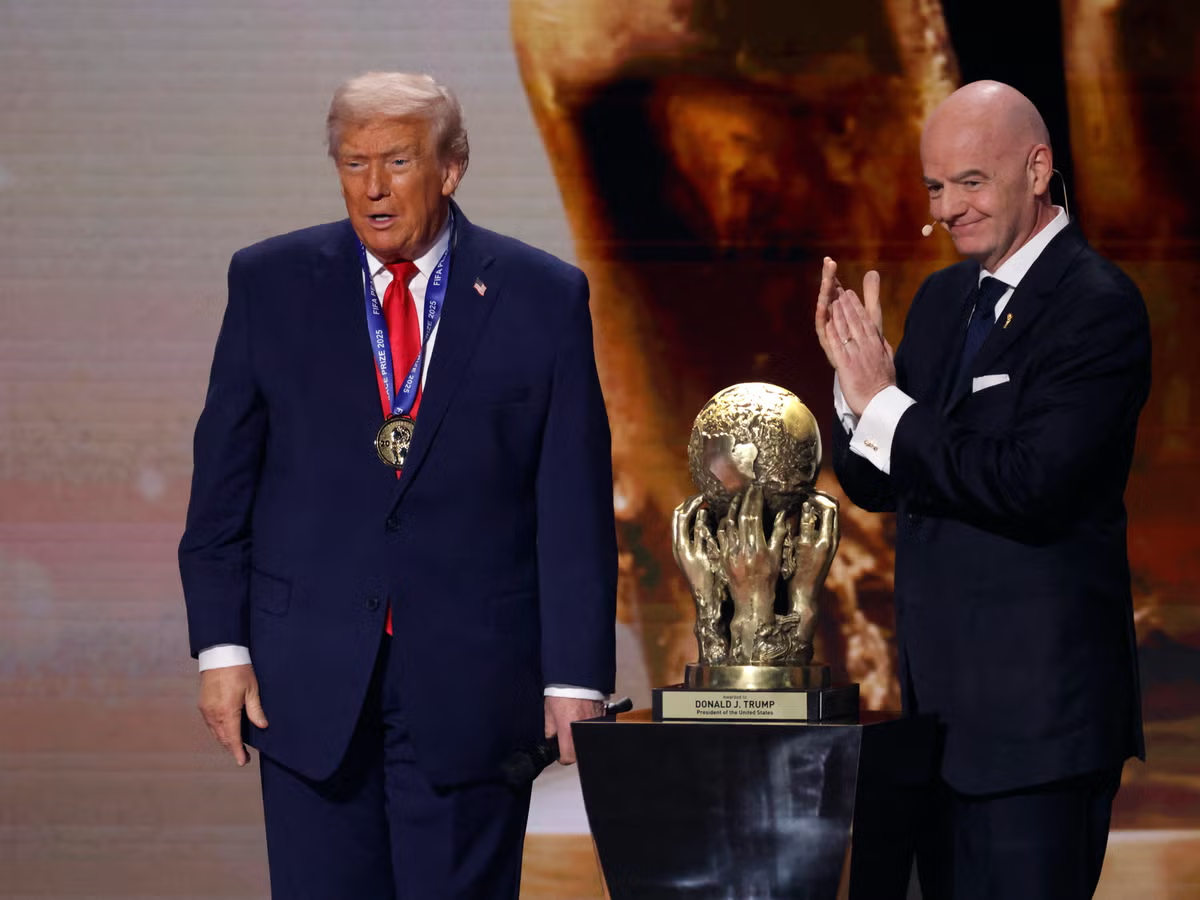
The decision to award Trump the Peace Prize has significant political implications. By granting the award to a sitting U.S. president, FIFA risked becoming entangled in the political disputes surrounding Trump’s administration. Many critics argue that the Peace Prize, by its very nature, should be awarded to individuals or organizations that are seen as neutral and impartial, not figures who have been the subject of political and ideological battles.
The controversy surrounding the award highlights the challenges that FIFA faces as it navigates the complex intersection of sport and politics. As a global organization, FIFA is under constant scrutiny, and its decisions are often viewed through the lens of political influence. The decision to award the Peace Prize to Trump has only intensified calls for FIFA to focus on its primary mission: promoting the sport of soccer and using it as a force for good.
Should FIFA Be Involved in Political Matters?
FIFA’s involvement in political matters has always been a contentious issue. The organization has frequently faced criticism for its handling of various political situations, from its dealings with authoritarian regimes to its response to human rights abuses in host countries. The decision to award Trump the Peace Prize is seen by many as an example of FIFA overstepping its bounds and venturing into political territory where it does not belong.
Klaveness’s call for the abolition of the Peace Prize reflects the growing sentiment that FIFA should stick to what it does best—promote soccer and maintain the integrity of the game. The prize, she argues, is a distraction from FIFA’s core mission and risks undermining the organization’s credibility on the world stage.
FIFA’s Response: Standing by the Decision
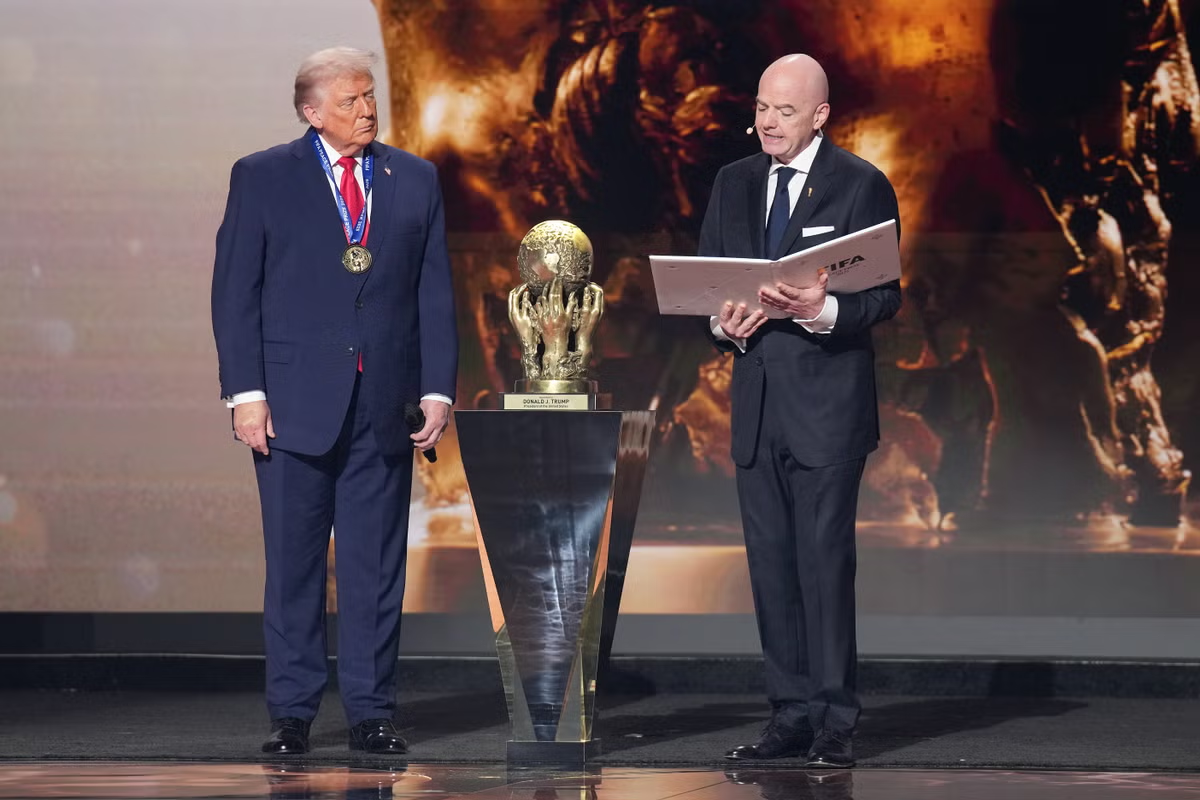
FIFA, however, has defended its decision to award the Peace Prize to Trump. In a statement following the backlash, the organization reaffirmed its commitment to using soccer as a tool for promoting peace and unity. FIFA president Gianni Infantino, who presented the prize to Trump, has said that the award was intended to recognize the positive role that soccer can play in global diplomacy, rather than as an endorsement of Trump’s policies.
While FIFA insists that the Peace Prize is not politically motivated, the decision to award it to Trump has made it difficult to separate the two. Many see the prize as an attempt to curry favor with the U.S. government and, by extension, the American public, especially as the 2026 World Cup approaches.
Calls for an Investigation into FIFA’s Actions
In addition to calls for the abolition of the Peace Prize, there have also been calls for an investigation into the decision to award it to Trump. The non-profit organization FairSquare has raised concerns that FIFA may have breached its own ethical guidelines regarding political impartiality. FairSquare has called for a transparent investigation into the award process, including a review of FIFA’s decision-making criteria and the involvement of its leadership in awarding the prize to Trump.
Klaveness has expressed support for such an investigation, stating that it is crucial to ensure that FIFA’s actions are held to the highest ethical standards. “There should be checks and balances on these issues,” Klaveness said, emphasizing the need for transparency in FIFA’s decision-making process. She has also called for a clear timeline for the investigation and for the reasoning behind FIFA’s decisions to be made public.
The Broader Debate on Political Influence in Sports
The controversy surrounding the FIFA Peace Prize is part of a larger debate about the role of politics in sports. Over the years, there have been numerous instances where political considerations have affected sporting events, from the decision to award the 2022 World Cup to Qatar to the political tensions surrounding the Olympic Games. The question remains: should sports organizations like FIFA remain neutral, or should they use their platforms to engage with political issues?
The FIFA Peace Prize controversy is a reflection of the increasingly blurred lines between politics and sports. As global organizations like FIFA gain more influence, their decisions have a ripple effect far beyond the soccer field. This has led many to question whether sports organizations should focus solely on promoting their respective sports or whether they have a responsibility to engage with political and social issues as well.
What Happens Next for the FIFA Peace Prize?
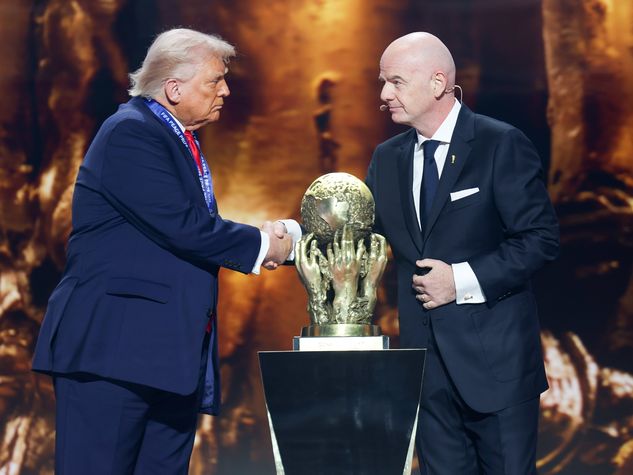
The future of the FIFA Peace Prize remains uncertain. With mounting pressure from critics like Klaveness and FairSquare, FIFA may be forced to reconsider its approach to awarding the prize. If the investigation into the decision to award the prize to Trump leads to significant changes, FIFA may choose to abandon the prize altogether or revise its criteria for awarding it in the future.
In the meantime, the controversy over the Peace Prize is likely to continue, with debates about the intersection of politics and sports continuing to dominate the discourse. FIFA’s decision on how to move forward with the Peace Prize will be closely watched by both supporters and critics alike.
A Crossroads for FIFA and Global Sports
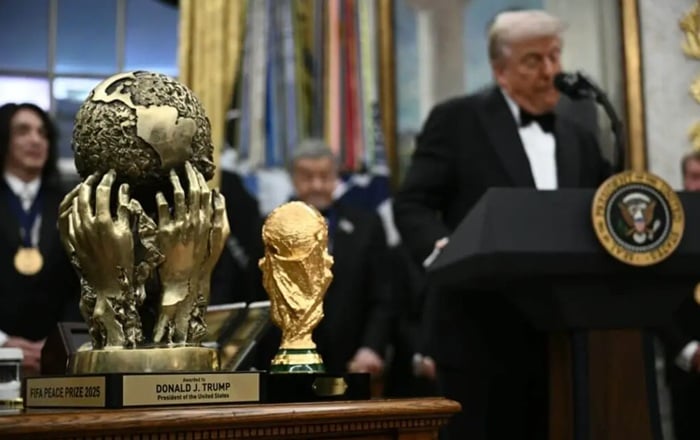
The FIFA Peace Prize controversy has placed FIFA at a crossroads. The decision to award the prize to Donald Trump has sparked widespread debate about the organization’s role in political matters, and it raises important questions about the future of sports governance. While FIFA maintains that the award was intended to promote peace through soccer, the backlash highlights the difficulties of separating sport from politics in today’s world.
As FIFA moves forward, it must carefully consider how its decisions, both big and small, affect its reputation and its mission. Whether or not the Peace Prize continues, one thing is clear: FIFA’s actions will continue to shape the future of global sports, and its engagement with political issues will remain a central topic of debate.