
Table of Contents
- When India Quietly Signaled a Shift Away From the Dollar
- Understanding India’s Long Relationship With U.S. Treasuries
- Why Gold Is Regaining Strategic Importance for Central Banks
- The Five-Year Low That Caught Global Attention
- Decoupling Does Not Mean Abandonment
- The Role of Geopolitics in Reserve Strategy
- What This Means for the Indian Rupee
- A Broader Global Pattern Is Emerging
- Market Reactions and Investor Interpretation
- What India’s Reserve Shift Means for the Future of Global Finance
When India Quietly Signaled a Shift Away From the Dollar
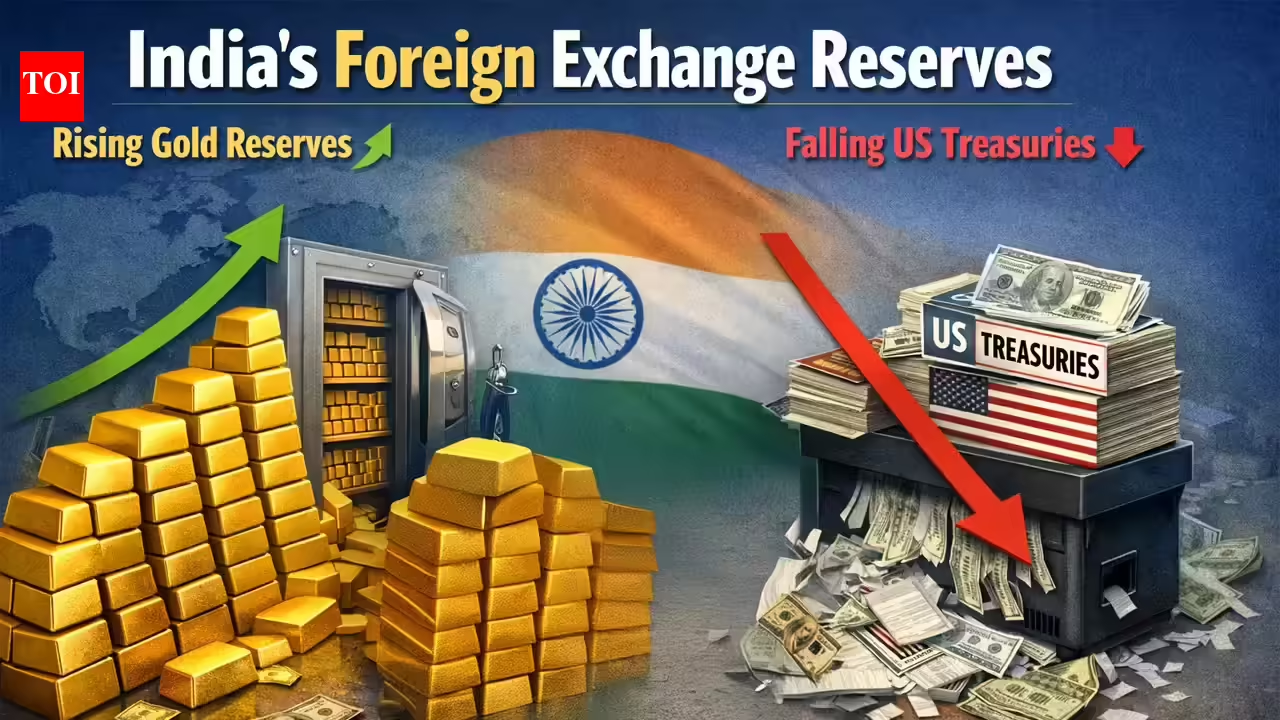
When data revealed that India had significantly reduced its holdings of U.S. Treasuries while increasing its gold reserves, the move initially appeared technical, almost routine. But as analysts examined the numbers more closely, the implications became harder to ignore. India’s U.S. Treasury holdings had fallen to their lowest level in five years, while gold purchases surged, pointing to a deliberate recalibration rather than a temporary adjustment.
This was not just about portfolio rebalancing. It was about positioning. At a time when global financial systems are increasingly shaped by geopolitical tensions, currency volatility, and shifting alliances, India’s actions suggested a broader strategic intent. The question was no longer whether India was reducing exposure to the dollar, but why now, and what it meant for the global financial order.
Understanding India’s Long Relationship With U.S. Treasuries

For decades, U.S. Treasuries have been considered the safest asset in the world, backed by the economic strength and institutional stability of the United States. Central banks across the globe, including India’s Reserve Bank, have relied on Treasuries to park foreign exchange reserves, ensure liquidity, and maintain financial stability.
India’s accumulation of U.S. Treasuries was historically tied to trade dynamics, particularly dollar-denominated transactions and capital flows. Holding Treasuries helped stabilize the rupee, manage external shocks, and signal confidence to international investors. Reducing these holdings, therefore, represents a departure from long-standing reserve management norms rather than a minor tactical move.
Why Gold Is Regaining Strategic Importance for Central Banks
Gold has always played a symbolic and practical role in global finance, but its importance has grown sharply in recent years. Unlike fiat currencies, gold carries no counterparty risk. It cannot be sanctioned, frozen, or devalued by policy decisions in another country. For central banks navigating an increasingly fragmented world, that neutrality matters.
India’s increased gold purchases reflect this logic. Gold serves as a hedge against inflation, currency depreciation, and geopolitical instability. By shifting reserves toward gold, India gains an asset that holds value across borders and political systems. This is particularly relevant at a time when sanctions and financial weaponization have become common tools in international relations.
The Five-Year Low That Caught Global Attention
India’s U.S. Treasury holdings dropping to a five-year low was not an isolated data point. It occurred alongside similar moves by other countries seeking to diversify away from dollar-dominated assets. While India’s reduction does not threaten the dominance of the dollar on its own, it contributes to a growing pattern that financial observers are watching closely.
What made India’s move notable was its timing. Global interest rates remain elevated, making Treasuries theoretically attractive. Yet India chose to reduce exposure anyway, signaling that strategic considerations may now outweigh short-term returns. This suggests a long-term reassessment of risk rather than a reaction to market fluctuations.
Decoupling Does Not Mean Abandonment

Despite the dramatic language often used to describe these shifts, India is not abandoning the dollar. The U.S. currency remains central to global trade, energy markets, and financial infrastructure. India continues to hold significant dollar reserves and conduct trade in dollars where necessary.
However, decoupling does not require a complete break. It involves reducing dependence, increasing optionality, and building resilience. By gradually lowering its reliance on U.S. Treasuries and strengthening alternative assets like gold, India is expanding its financial autonomy without triggering instability.
The Role of Geopolitics in Reserve Strategy
Geopolitical considerations are increasingly shaping reserve management decisions worldwide. The freezing of foreign reserves in recent conflicts has reshaped perceptions of risk, particularly for emerging economies. Assets once considered untouchable are now viewed through a more cautious lens.
India’s reserve shift reflects this reality. By holding more gold domestically and reducing exposure to assets subject to foreign jurisdiction, India mitigates potential vulnerabilities. This does not imply hostility toward the United States, but rather prudence in an era where economic tools are frequently used for political leverage.
What This Means for the Indian Rupee
Reserve composition plays a critical role in currency stability. U.S. Treasuries provide liquidity and ease of intervention, while gold offers long-term value preservation. Balancing the two is a complex task, particularly for a fast-growing economy like India’s.
By maintaining diversified reserves, India strengthens its ability to manage external shocks and currency volatility. Gold-backed confidence can support the rupee during periods of global stress, while remaining dollar assets allow for tactical market interventions. The strategy reflects flexibility rather than rigidity.
A Broader Global Pattern Is Emerging

India’s actions are part of a broader trend among central banks worldwide. Countries across Asia, the Middle East, and Europe have been increasing gold reserves while reassessing exposure to dollar-based assets. This does not signal the collapse of the dollar system, but it does indicate a gradual move toward multipolar reserve structures.
In such a system, no single currency dominates entirely. Instead, reserves are spread across assets and currencies to reduce systemic risk. India’s shift aligns with this emerging paradigm, positioning the country as a pragmatic actor rather than an ideological one.
Market Reactions and Investor Interpretation
Financial markets tend to respond cautiously to reserve changes, particularly when they involve large economies. So far, India’s move has not caused turbulence, suggesting that investors view it as measured and controlled. The absence of panic is itself telling.
For investors, the signal is subtle but important. It highlights the growing role of central banks as strategic planners rather than passive reserve holders. It also reinforces the idea that long-term stability may increasingly depend on diversification rather than concentration in any single asset class.
What India’s Reserve Shift Means for the Future of Global Finance
India’s decision to sell U.S. Treasuries and buy gold will likely be remembered as part of a broader transformation rather than a single turning point. It reflects a world where economic security is defined not just by growth, but by resilience, autonomy, and adaptability.
As global power structures evolve, reserve strategies will continue to change. India’s approach offers a glimpse into how major economies may navigate uncertainty without provoking disruption. It is a reminder that the future of global finance will likely be shaped not by sudden breaks, but by gradual, deliberate shifts that redefine stability itself.