
Table of Contents
- When the death of a teenage wrestler became a symbol of a wider crackdown
- What Iranian authorities say happened in Qom
- Why human rights groups say this was not justice
- Saleh Mohammadi’s identity as an athlete changed the meaning of the case
- The crackdown is unfolding in the shadow of war and leadership change
- Why activists want sports bodies to stop treating this as business as usual
- The regime’s use of execution is also about the public mind
- The international response remains loud in language and weak in consequence
- Mohammadi’s death is about one teenager, but also about Iran’s future
When the death of a teenage wrestler became a symbol of a wider crackdown
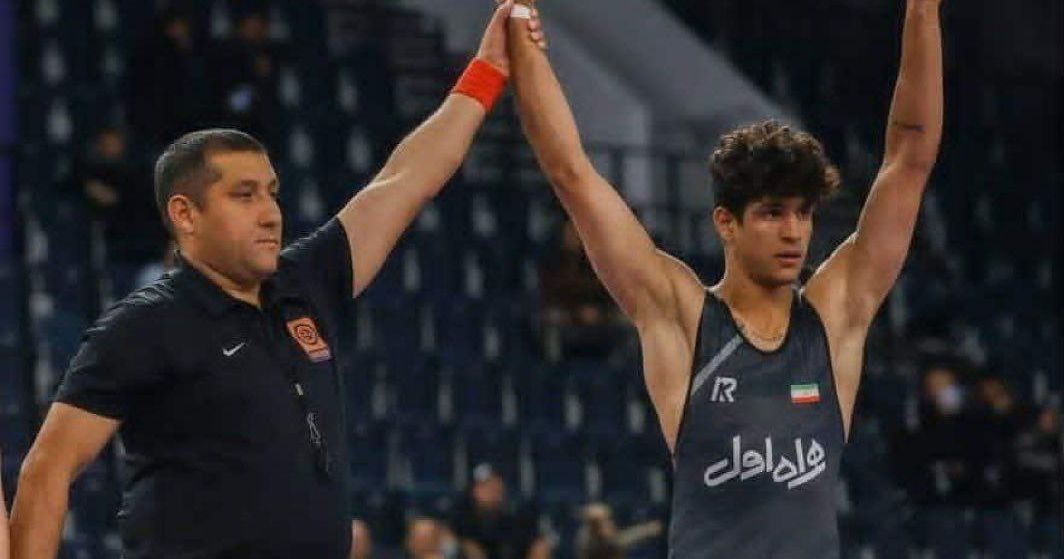
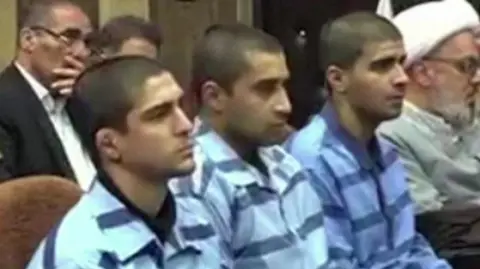
When reports emerged that Iran had executed 19-year-old wrestler Saleh Mohammadi, the reaction was immediate, emotional, and international. To supporters of the Iranian state, the execution was part of the judiciary’s enforcement of sentences against men convicted of killing police officers during January’s unrest. To human rights groups, dissidents, and many athletes in exile, it was something else entirely: a political killing designed to terrorize a population already living under an escalating wartime crackdown. Reuters reported that Iran said it was implementing sentences against people arrested during the January 2026 protests and that three men had been executed last week after being convicted in connection with the deaths of two police officers. The Associated Press identified one of those three as Saleh Mohammadi, a 19-year-old wrestler, and said the case had triggered alarm over a wider wave of politically charged executions.
What makes the story hit so hard is not only Mohammadi’s age, but what he represented. He was not an anonymous detainee swallowed quietly by a prison system. He was a young athlete with national-level wrestling recognition, someone whose image fit easily into Iran’s proud sporting tradition. In a country where wrestling carries deep cultural weight, the execution of a teenage wrestler has a symbolism far beyond one criminal case. It tells a frightened public that neither youth, nor talent, nor public visibility will protect anyone once the state decides to make an example of them. That is why activists and former Iranian athletes are now calling not just for condemnation, but for international sporting punishment against the Islamic Republic.
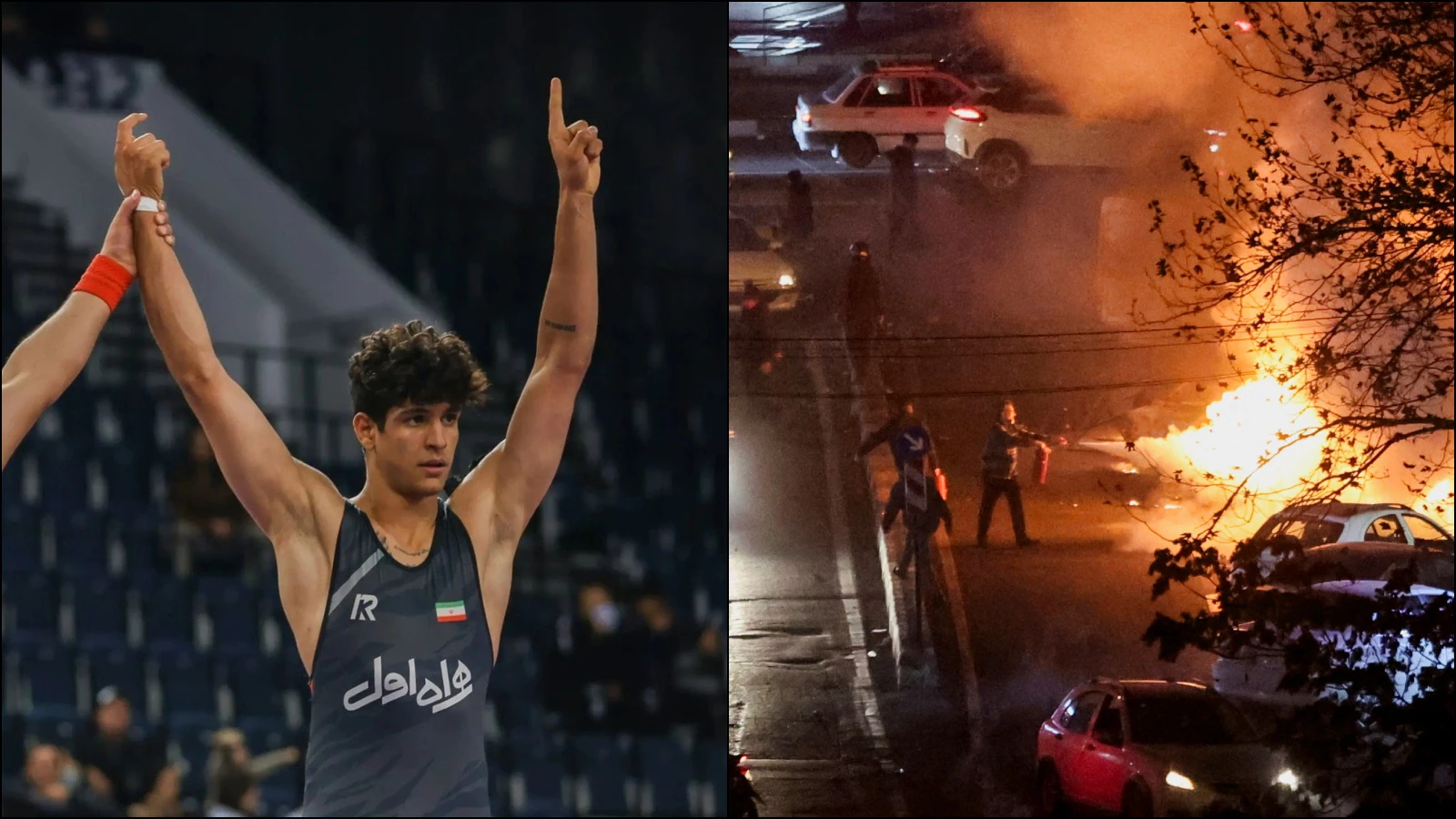
According to Iranian state-linked reporting summarized by Reuters and AP, Mohammadi was executed alongside Mehdi Ghasemi and Saeed Davoudi after being convicted over the killing of two police officers during protests in Qom in January 2026. Reuters reported that senior judiciary official Hamzeh Khalili said cases involving what the state described as “terrorist elements and rioters” had been processed and that verdicts were being enforced, with no leniency shown. Iran International similarly reported that the three men were accused of attacking two police officers with knives and swords during the January 8 protests in Qom.
That is the official state version, and it matters because the Iranian government is clearly using these cases to frame the January protests not as popular unrest, but as organized violent disorder or foreign-backed sabotage. This framing has been a recurring feature of Iranian state repression for years. Protesters are regularly cast as agents of Israel, the United States, or shadowy external conspiracies. Reuters noted that the judiciary’s language around the recent sentences fit that broader pattern of describing those arrested in the unrest as security threats rather than political dissidents.
But the state’s version is exactly what rights groups dispute most fiercely.
Why human rights groups say this was not justice
The Associated Press reported that Amnesty International and other human rights organizations condemned the executions, saying the convictions followed deeply unfair trials marked by torture-tainted confessions and a denial of due process. AP said rights advocates argued the men were convicted after proceedings based on confessions allegedly extracted under torture, and that the case has become a warning sign of what may be coming next for dozens of other detainees facing capital charges after the January protests.
That dispute over process is central. Even in cases involving deadly violence, the legitimacy of a state’s response depends heavily on whether the accused received a genuine chance to defend themselves. Rights groups say these men did not. Instead, they argue, the executions followed the familiar logic of authoritarian repression: closed proceedings, coerced statements, limited legal access, and verdicts designed to deter dissent rather than establish truth. AP’s reporting on the case made clear that the fears are not isolated to Mohammadi. Activists believe Iran may now be entering a new phase of executions aimed at crushing the most serious wave of unrest the Islamic Republic has faced.
That is why the execution is being interpreted not just as punishment for an alleged crime, but as political theater carried out with deadly intent.
Saleh Mohammadi’s identity as an athlete changed the meaning of the case
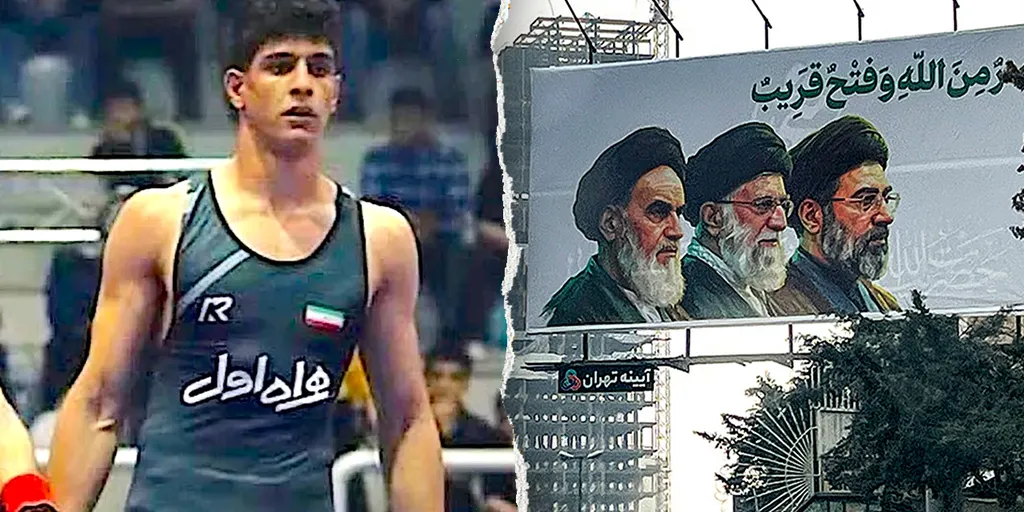
Saleh Mohammadi was not merely a young man accused in a protest case. Iran International reported that he was a member of Iran’s national wrestling structure, and Fox-linked accounts cited by other outlets described him as a promising wrestler who had won a bronze medal at the Saytiyev International Cup in Krasnoyarsk, Russia, in September 2024. AP also described him as a wrestler whose case had drawn unusual attention because of his public profile.
That profile matters because the Islamic Republic has a long and painful history with athletes who become symbols of resistance, especially wrestlers. The execution of wrestler Navid Afkari in 2020 remains one of the most internationally notorious examples of Iran punishing a sports figure accused in a protest case. Activists and former Iranian athletes immediately drew that comparison again after Mohammadi’s death, warning that the regime is once more targeting athletes precisely because they can inspire broader society. Reuters quoted former Iranian water polo player Reza Soleimani saying he was devastated by Mohammadi’s execution, adding to a wave of outrage from athletes in exile.
Athletes hold a particular place in authoritarian states. They are celebrated when useful, displayed as national symbols when compliant, and feared when their popularity spills into the political realm. That is what makes Mohammadi’s execution so chilling for activists. It sends a message that public recognition is not a shield. In fact, it may make a person more useful as an example.
The crackdown is unfolding in the shadow of war and leadership change
The broader context of the execution makes it even more alarming. Reuters reported that Iran is implementing sentences amid the most serious domestic unrest in the history of the Islamic Republic and in the midst of the ongoing U.S.-Israeli war on Iran. The same Reuters coverage also reflected the state’s determination to show no softness as conflict and internal fear intensify.
At the same time, Reuters has reported that Iran now has a new supreme leader, Ayatollah Mojtaba Khamenei, following the death of his father Ali Khamenei. Reuters described Mojtaba as taking a hardline posture in his first reported foreign-policy session and rejecting de-escalation proposals passed through intermediaries. That matters because leadership transitions in authoritarian systems often heighten insecurity, and insecurity often produces harsher repression. Another Reuters explainer published on March 23 also referred to Mojtaba Khamenei as Iran’s new supreme leader, reinforcing that this is now the political context in which the executions are unfolding.
This makes Mohammadi’s execution part of a much larger picture. Iran is not only fighting an external war. It is also trying to lock down the interior, signal control, and demonstrate that leadership change will not weaken the state’s will to punish dissent.
Why activists want sports bodies to stop treating this as business as usual
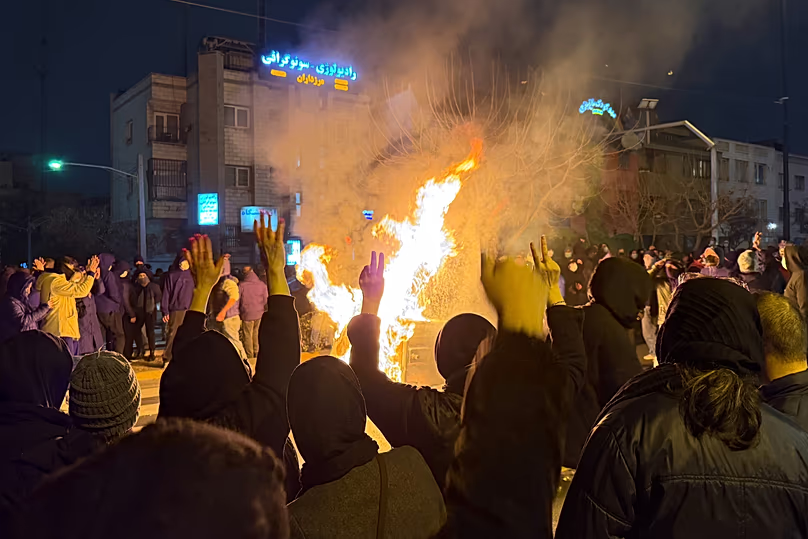
The most forceful international reaction has come from human rights activists and former Iranian athletes who say that quiet diplomacy has failed. AP reported that rights groups fear a broader wave of executions, and Reuters highlighted the personal devastation felt by former athletes after Mohammadi’s death. Fox-linked activist reactions have gone further, openly demanding that international sports bodies suspend Iran from competition until it halts executions of protesters and athletes. While those demands go beyond what Reuters and AP formally reported, they align with the broader push now being made by dissident networks and athlete activists in exile.
The logic behind the boycott demand is simple. International sport gives authoritarian governments prestige. It allows them to present themselves as legitimate members of the global community even while imprisoning, torturing, and executing their own citizens. Activists argue that if sports organizations continue to engage Iran as normal, they help launder that brutality. Mohammadi’s case has made that argument harder to ignore because he was himself part of the athletic world that global organizations claim to protect.
This is also why outrage has not stayed confined to human rights circles. It has spilled into debates about whether institutions such as the International Olympic Committee and international wrestling bodies can continue their usual formulas of concern, statement, and silence without inviting moral complicity.
The regime’s use of execution is also about the public mind
Executions in Iran are not only about removing individuals. They are about shaping collective psychology. Publicized hangings or high-profile executions function as warnings. They tell the public that the state is not merely stronger than dissent, but willing to act without hesitation even when the victim is young, admired, or internationally recognized. AP reported that Mohammadi’s case has heightened fears of a new wave of death sentences and executions tied to the January unrest. Reuters likewise noted that judiciary officials emphasized there would be no leniency.
That kind of messaging has a dual purpose. It tries to crush protest momentum, but it also tries to fracture solidarity. If people believe that even visible figures like athletes can be killed, the cost of speaking out appears even higher for everyone else. It is a politics of exhaustion and intimidation.
But repression carries its own risks. Each execution may terrify some people, yet radicalize others. Mohammadi’s death has already become a symbol far larger than one judicial file. In death, he may become exactly the kind of memory the state fears most: a young national athlete whose fate crystallizes a regime’s cruelty in a single image.
The international response remains loud in language and weak in consequence
So far, international reaction has been morally strong but institutionally limited. AP reported condemnation from rights organizations. Reuters reflected anguish from Iranian athletes in exile. But outrage and deterrence are not the same thing. There is still little evidence that Iran faces immediate sporting, diplomatic, or economic consequences specifically because of Mohammadi’s execution.
That gap matters because the Islamic Republic has lived through condemnation before. It knows how to absorb outrage if the cost remains mostly rhetorical. This is why activists are increasingly focusing not only on statements, but on penalties. They want sanctions, suspensions, and exclusions that break the pattern of symbolic concern followed by institutional normalcy.
The dilemma, of course, is that sports bans also affect innocent athletes still inside Iran, many of whom are themselves living under coercion. That makes the boycott question morally complex. Yet the argument from activists is gaining force precisely because the alternative, business as usual, now looks increasingly hollow.
Mohammadi’s death is about one teenager, but also about Iran’s future
At the center of all the politics, there remains a simple and brutal fact. A 19-year-old wrestler is dead. The Associated Press identified him by name and age. Reuters placed his execution within a fresh burst of sentence enforcement after January’s unrest. Whatever legal claims the state makes, his death now sits inside a much wider struggle over truth, fear, and power in Iran.
That is what makes this case so resonant. It is not only about whether one conviction was just or unjust. It is about what kind of country executes a teenage athlete in the middle of war while facing accusations of torture, sham trials, and political vengeance. It is about whether the international community, including the global sports world, will continue to engage the regime as though these deaths are tragic but separate from normal diplomatic and athletic life. And it is about whether young Iranians, watching all this happen, are meant to conclude that their future belongs to obedience or to fear.
Mohammadi’s execution may have been intended as a lesson. But it is unlikely to remain the lesson the regime wanted. For many people inside and outside Iran, it now stands as one more piece of evidence that the crackdown is deepening, the leadership is hardening, and the cost of silence may be rising alongside the cost of protest.