
Table of Contents
- When a tax proposal became a test of New York’s future
- The proposal is not current law, but it would be a major break if adopted
- Why Mamdani is pushing so hard for new revenue
- Critics say the real risk is not just taxation, but migration
- In New York City, the home itself changes the politics
- The estate tax fight is inseparable from Mamdani’s broader housing and tax agenda
- Albany may decide the proposal’s fate, and Albany is not fully aligned
- The proposal also revives an uncomfortable question about what “the rich” means now
- What this fight may mean for New York’s next chapter
When a tax proposal became a test of New York’s future
When New York City Mayor Zohran Mamdani floated a plan to slash New York State’s estate tax threshold from $7.35 million to $750,000 and raise the top rate from 16 percent to 50 percent, the proposal immediately broke out of normal budget politics and entered a much more emotional territory. It was no longer just about one tax. It became a fight over inheritance, mobility, family homes, business succession, and whether New York is becoming a place that taxes wealth so aggressively it risks pushing it elsewhere. Bloomberg reported that the proposal was included in a memo of revenue-raising ideas Mamdani’s office circulated to state lawmakers as he sought help closing a large city budget gap. New York’s current 2026 estate tax exclusion is indeed $7.35 million under state law, so the shift being discussed would be dramatic by any standard.
That is why the backlash arrived so quickly. Supporters of the broader “tax the rich” agenda see the estate tax plan as a logical extension of Mamdani’s political brand, which argues that wealthy households and corporations should shoulder more of the burden for keeping the city solvent and affordable. Critics see something much riskier. They argue that once the exemption falls that far, the tax stops looking like a levy aimed only at the ultra-rich and starts touching households whose biggest asset may simply be a home in an expensive region. In a city where property values often distort who looks “wealthy” on paper, that distinction matters.
The proposal is not current law, but it would be a major break if adopted
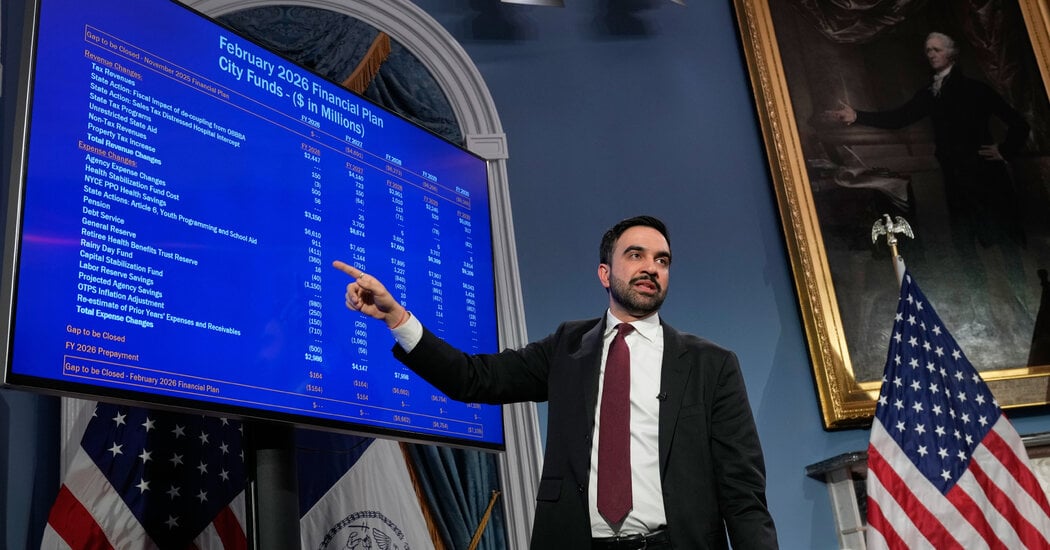
The first thing to understand is that this is still a proposal, not enacted policy. Bloomberg reported that Mamdani wants New York State lawmakers to cut the exemption threshold by almost 90 percent, from more than $7 million to $750,000, while lifting the top rate to 50 percent. That would be a huge change from the current New York estate tax structure, which the state tax department says uses a 2026 exclusion amount of $7.35 million.
Even without getting into every technical detail of the estate tax code, the scale of the change explains why it has drawn such intense attention. A threshold of $750,000 would move New York from a system that mostly concerns higher-net-worth households into one that reaches much further down the wealth ladder, especially in and around New York City, where housing values alone can be substantial. Critics quoted by Fox News argued that this could pull in families whose wealth is tied less to cash or investment portfolios and more to a single appreciated home, a small business, or retirement assets meant to be passed on.
That is what gives the idea its political potency. “Tax the rich” is usually sold as a measure aimed upward, toward concentrated wealth. But the lower the exemption threshold falls, the harder it becomes to keep the conversation confined to billionaires and penthouses. In New York, especially, middle-class and upper-middle-class households can find themselves asset-rich on paper without feeling remotely affluent in day-to-day life. That tension is central to the debate Mamdani has opened.
Why Mamdani is pushing so hard for new revenue
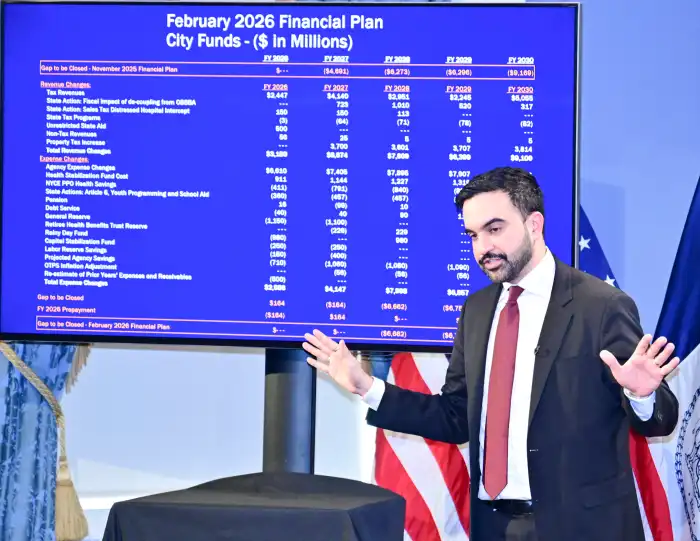
The estate tax proposal is best understood as one piece of a much larger revenue push. The mayor’s office said in its February FY 2027 preliminary budget release that the city faced a remaining two-year gap of $5.4 billion after savings efforts, updated revenue assumptions, and state support. Mamdani framed the choice starkly: either raise more revenue from wealthy residents and profitable corporations or shift the pain toward property taxes and reserve drawdowns that would hit working and middle-class New Yorkers harder.
That broader context matters because the estate tax plan was not dropped into the debate by accident. It is part of a city strategy that also includes higher taxes on high earners and corporations, along with threats of a 9.5 percent property tax increase if Albany does not approve new revenue authority. The mayor’s office said that absent new state-backed revenue options, the FY 2027 preliminary budget assumes a 9.5 percent property tax increase that would generate $3.7 billion.
In other words, Mamdani is using the estate tax proposal as part of a larger pressure campaign on Albany. The message is that New York City’s fiscal problems cannot be solved by trimming around the edges, and that the burden should be pushed upward rather than spread more broadly through property taxes or spending cuts. For supporters, that is fiscal realism with progressive priorities. For opponents, it is a warning sign that New York’s tax appetite is growing faster than the state’s ability to keep mobile wealth from leaving.
Critics say the real risk is not just taxation, but migration
The sharpest criticism of the estate tax proposal focuses on behavior. Fox News quoted AEI Housing Center senior fellow Edward Pinto saying the plan could drive residents and their wealth out of New York, especially to lower-tax states such as Florida and Tennessee. Mercatus Center research fellow Joshua Rowley similarly argued that estate taxes can force people to liquidate homes, businesses, or retirement assets to pay taxes on wealth that has already been taxed in other ways.
That concern is not new in New York tax politics. The state has long faced arguments that high earners, retirees, and business owners have options, and that once taxes pass a psychological threshold, some portion of them will choose to leave. Estate taxes are especially vulnerable to this criticism because they affect decisions made over long timelines. A household that can tolerate high annual taxes may still decide to change residency late in life if it believes the state will take too much from the estate before assets pass to children or heirs.
This is where the politics turn from abstract redistribution to lived planning. Estate tax policy shapes not only what happens at death, but what happens years before it. Families hire planners, move legal domicile, shift assets, or rethink where they want to retire. That is why even critics who are not reflexively anti-tax tend to pay close attention to estate tax thresholds. A state may gain revenue from a broader tax base, but it may also increase incentives for wealthy and semi-wealthy households to leave earlier than they otherwise would have.
In New York City, the home itself changes the politics
The estate tax fight looks different in New York than it would in many other places because of the city’s property values. The current state exclusion of $7.35 million places the tax safely above the range of most households. A threshold of $750,000 would not. In many parts of New York City and its nearby suburbs, a family residence alone can approach or exceed that amount, especially after years of price appreciation. Add retirement savings, life insurance, business interests, or other family assets, and the political meaning of the tax changes fast.
That is why opponents say the plan could hit more than the stereotypical “rich.” Whether one agrees with that framing or not, it is clear that a threshold this low would widen the affected group substantially. The emotional force of the opposition comes from that widening. Once people can picture not only financiers and inherited dynasties, but also parents hoping to pass down a brownstone, a family business, or a nest egg, the argument becomes much harder for supporters to keep confined to elite wealth.
This also helps explain why the proposal has become entangled with housing politics. In New York, homes are not just places to live. They are the largest store of family wealth for many households. Any tax plan that touches intergenerational transfer of that wealth is going to land in the same public conversation as affordability, ownership, rent burden, and neighborhood stability.
The estate tax fight is inseparable from Mamdani’s broader housing and tax agenda
Fox’s report correctly linked the estate tax proposal to Mamdani’s wider policy push, and the mayor’s own budget documents reinforce that. His administration has made clear that new taxes on the wealthy and corporations are part of its preferred path. At the same time, he has backed an immediate freeze on roughly 2 million rent-stabilized apartments, a position that has made him popular with many tenants while alarming landlords and property groups.
The result is that many business and housing critics no longer see the estate tax in isolation. They see it as one more piece of a governing philosophy that treats capital as something to extract more heavily in order to relieve pressure on renters, fund city services, and close budget gaps. Supporters would describe that as overdue redistribution in an unequal city. Opponents describe it as a one-two blow to wealth formation and investment, especially when paired with rent controls or threatened property-tax hikes.
That broader framing matters politically because voters and business owners rarely evaluate one policy in a vacuum. They evaluate direction. If they believe a mayor is moving consistently toward higher taxes, stricter housing regulation, and a more confrontational stance toward wealth, then each new proposal reinforces the story told by the previous one. That is exactly what is happening here.
Albany may decide the proposal’s fate, and Albany is not fully aligned
For all the noise around the plan, Mamdani cannot impose this estate tax change by himself. The proposal depends on state lawmakers, because New York State controls the estate tax. And so far, the signs from Albany are mixed. New York Focus reported that the state legislature’s one-house budget plans backed some tax increases on wealthy residents and corporations, but did not adopt every piece of Mamdani’s package. Notably, the legislature did not sign onto some of his more aggressive property tax ideas, even while showing openness to other tax measures. Governor Kathy Hochul, meanwhile, has ruled out some tax increases and has not embraced the full Mamdani fiscal approach.
That suggests the estate tax proposal may face the same reality that many big city tax ideas face in New York. The city can demand, but the state decides. And state lawmakers, while often willing to raise taxes at the margins, may be more cautious when a proposal has the potential to become politically radioactive far beyond Manhattan or Brooklyn. A dramatic estate tax expansion could quickly become fodder for suburban and statewide backlash, especially if opponents successfully frame it as a threat to family property and long-term planning rather than a strike on concentrated wealth.
In that sense, the estate tax plan is not only a policy test. It is a test of Mamdani’s influence. Can he persuade Albany that the state should accept greater tax risk in order to support New York City’s fiscal strategy? Or will legislators trim his ambitions and leave the estate tax proposal as a symbol rather than a law?
The proposal also revives an uncomfortable question about what “the rich” means now
One reason this debate feels so volatile is that it exposes a deeper problem in modern tax politics: the phrase “tax the rich” often sounds cleaner than the policy details underneath it. In a state like New York, wealth is uneven and highly concentrated, but it is also distorted by real estate values, retirement accumulation, and family-owned assets that may not fit the public imagination of luxury. A $750,000 threshold would force a confrontation with that ambiguity.
Supporters might answer that if the policy needs refinement, that can happen in the legislative process. Critics answer that this is exactly the point. Once the political system starts with a sweeping anti-rich argument, the actual categories of who counts as “rich” tend to expand downward in practice. Fox’s cited critics made that argument explicitly, warning that policies marketed as targeting elites often end up reaching much broader groups over time.
Whether that critique is fair or exaggerated, it is politically powerful because it taps into anxiety about drift. Voters often worry less about one stated target than about what comes next after a state establishes the principle that more assets should be taxed more aggressively at death. Once that principle is accepted, threshold creep and future expansion become easier to imagine.
What this fight may mean for New York’s next chapter
The real significance of Mamdani’s estate tax push is that it captures the crossroads New York now faces. The city needs revenue. It has major affordability problems, large spending commitments, and a political leadership that believes the wealthy and corporations should contribute more. At the same time, New York is a global financial center whose tax base depends heavily on people and capital that are more mobile than the average resident. That makes every major tax proposal a balancing act between fiscal need and behavioral risk.
If the estate tax idea advances, it will likely reshape more than just tax planning. It will influence how families think about staying in New York, how businesses assess long-term succession, how homeowners view inherited property, and how investors read the direction of city and state policy. If it stalls, it will still have done important political work by showing just how far Mamdani is willing to go in redefining who should pay to sustain the city.
That is why this is bigger than one headline tax proposal. It is a preview of a much larger argument about what kind of place New York wants to be. A city that leans harder into redistribution and public spending, even at the risk of wealth flight. Or a city that tempers progressive ambition out of fear that too much tax pressure will erode the very base it depends on. Mamdani has made his choice clear. Albany, markets, and voters will now decide how much of it they are willing to live with.