
Table of Contents
- When hunters started cutting into pigs and found something impossible to ignore
- The discovery began with one trapper who had seen many pigs before
- Why the meat may be blue in the first place
- How pigs may be getting poisoned on agricultural land
- Why wildlife officials say people should not eat this meat
- This is not just a pig problem
- California already tightened rodenticide rules, but the problem has not disappeared
- Why hunters are being singled out in the warning
- What this alarming discovery really means
When hunters started cutting into pigs and found something impossible to ignore
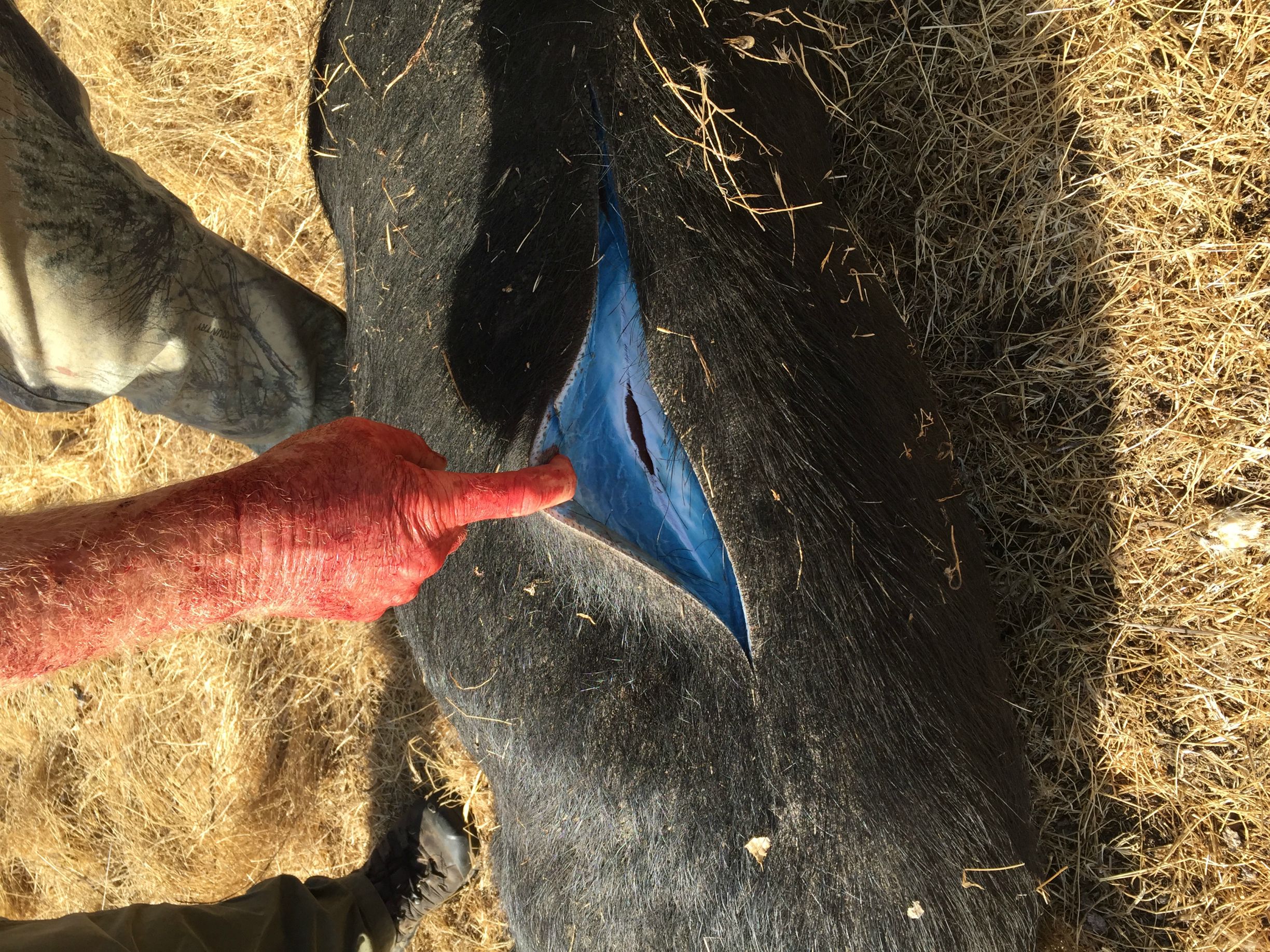
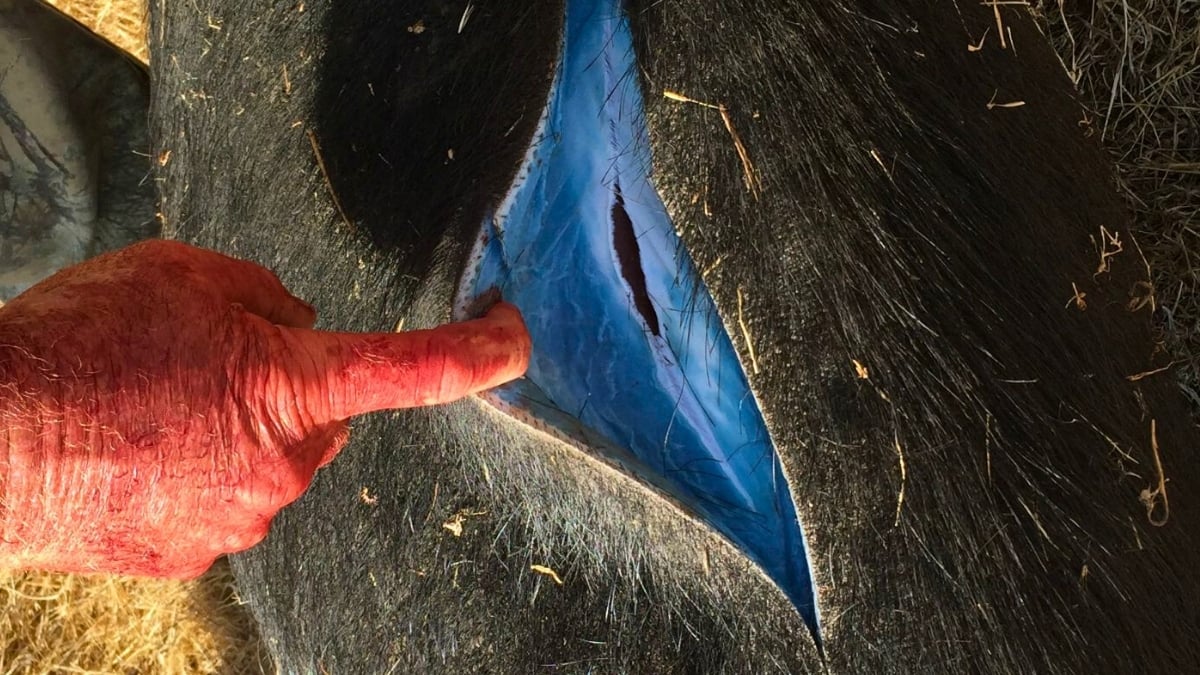
When reports surfaced that wild pigs in California were turning up with flesh and fat so bright they looked almost dyed, the story sounded like the kind of thing people might dismiss as exaggeration. But the warning from California wildlife officials made clear that this was not rumor, myth, or hunter folklore. In Monterey County, multiple wild pigs were found with vivid blue muscle and fat, a discovery that officials linked to likely exposure to diphacinone, an anticoagulant rodenticide used in agricultural settings to kill smaller pest animals. The California Department of Fish and Wildlife said its Wildlife Health Lab and the California Animal Health and Food Safety Laboratory confirmed exposure in pigs from the area, and the department warned hunters and trappers not to consume meat from animals showing blue pigmentation.
What made the discovery so alarming was not just the color itself, but what it implied. Blue meat is not merely unusual. In this case, it may be a visible sign that a game animal has ingested poison meant for rodents or other small agricultural pests. That means the issue is no longer confined to pest control or wildlife management. It reaches directly into the hunting community, into food safety, and into the wider question of how poison placed in working landscapes can move through ecosystems in unexpected ways. California officials were explicit that secondary exposure can affect predators, scavengers, pets, and people who consume contaminated animals.
The discovery began with one trapper who had seen many pigs before
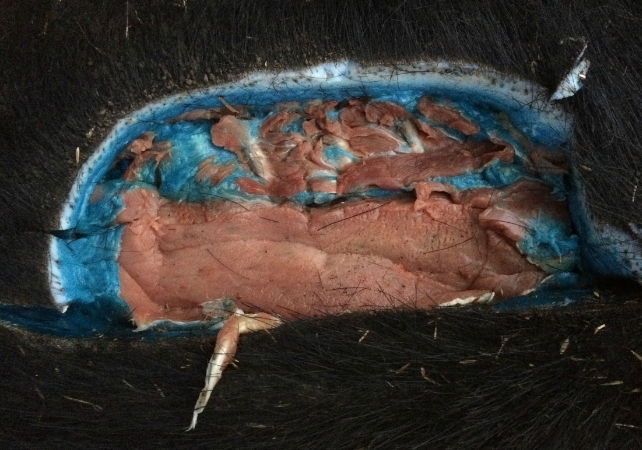
According to the Los Angeles Times report that brought the story wide attention, wildlife trapper Dan Burton said he had handled hundreds of wild pigs through his Salinas-based control business, but even he was stunned when he cut open one animal and found what he described as “neon blue, blueberry blue” flesh. Burton reported the discovery to Monterey County officials and the California Department of Fish and Wildlife, which then began looking more closely at what had happened.
Burton’s account mattered because he was not an inexperienced observer misreading normal tissue discoloration. He had enough experience with feral swine to know that what he was seeing was far outside the ordinary. The department later said it first became aware of the possible poison exposure in March 2025 after a Monterey County trapper reported several wild pigs with blue muscle and fat. Testing of one pig found diphacinone in the stomach and liver.
That sequence is important. This was not a random internet image or a speculative guess based on one strange carcass. It led to laboratory findings, an official advisory, and a broader warning aimed at hunters, trappers, and anyone who might process meat from wild pigs in the region. California officials are essentially saying that the blue flesh is not just gruesome. It is a potentially useful warning sign of contamination.
Why the meat may be blue in the first place
The most likely explanation for the bizarre color is not that the pigs themselves are mutating or carrying some rare disease. It is that the bait used in rodent control is often dyed blue on purpose so it can be recognized as poison. The California Department of Fish and Wildlife said rodenticide bait containing diphacinone is commonly dyed and that the unusual blue coloring in pig muscle may be a sign the animals consumed the poison directly or ingested contaminated material.
That does not mean every poisoned animal will necessarily show blue flesh. In fact, officials specifically cautioned that blue pigmentation may not always be present even when an animal has been exposed. This makes the problem trickier than it first appears. The pigs with visible blue tissue are the obvious red flag, but the absence of blue does not guarantee safety. Hunters are therefore being urged to stay alert not only to dramatic color changes, but also to the possibility that exposure may go unnoticed without testing.
This uncertainty is part of what makes the issue so serious. A hunter might think the danger is only in animals that look abnormal. The official warning suggests that is too simple. Blue tissue may be the clearest sign, but not the only one, and wildlife managers are concerned because the poison can remain in tissues and organs long enough to create risk for whatever eats the animal next.
How pigs may be getting poisoned on agricultural land
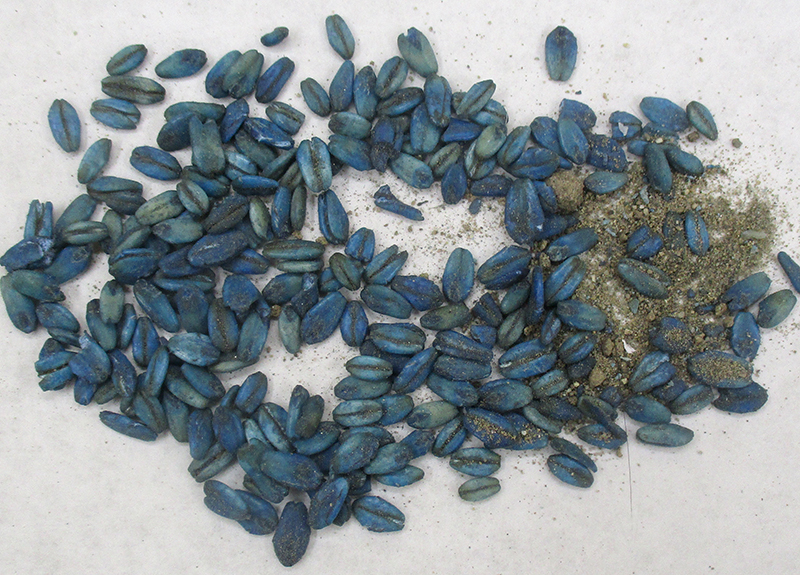
The story becomes even more troubling when you look at how the contamination may have happened. Burton told the Los Angeles Times that the pigs appeared to be actively targeting bait stations in farm fields, especially squirrel bait stations. He said he observed pigs trying to flip the stations, break into them, and get access to the poison. The company that hired him reportedly removed the squirrel bait stations from the field after the concern became clear, out of fear that they were drawing in groups of pigs.
This detail changes the story from passive exposure to something more dynamic. The pigs were not necessarily being poisoned only through food chains or incidental contact. They may have been directly seeking out bait designed for much smaller animals. Because diphacinone is meant to kill rodents and similar pests, a 100- to 200-pound pig may not die immediately after ingesting it. Burton said the pigs appeared to act normally even with visibly affected tissue, which makes the risk harder to spot in the field.
That finding creates a serious management problem for agriculture. Farmers and agricultural firms use rodenticides to protect crops from pests that can cause major damage. But when those poisons are accessed by larger animals, the result is no longer controlled pest management. It becomes contamination moving into wildlife populations and potentially into food chains that include hunters, carnivores, scavengers, and pets.
Why wildlife officials say people should not eat this meat
California wildlife officials have not minced words on the public health side. The department specifically warned hunters not to consume meat from game animals showing blue pigmentation in muscle or fat. It also noted that diphacinone residues in exposed animals can cause secondary poisoning in anything that eats the carcass or organs.
The scientific concern behind that warning is supported by research. A 2011 study indexed on PubMed found that cooking meat from feral pigs exposed to diphacinone had little effect on residual concentrations, and concluded that the hazards to humans and pets are not reduced by cooking. The authors recommended that meat from pigs obtained in areas with active rodent control programs should be avoided.
That point matters because many people instinctively assume heat solves contamination problems. It often does for pathogens. It does not necessarily do so for chemical residues. In this case, research suggests cooking is not a reliable safeguard. So the old hunter’s comfort that “we’ll cook it well” does not hold up here. If the animal has been contaminated with diphacinone, the danger may still remain after the meat reaches the pan.
This is not just a pig problem
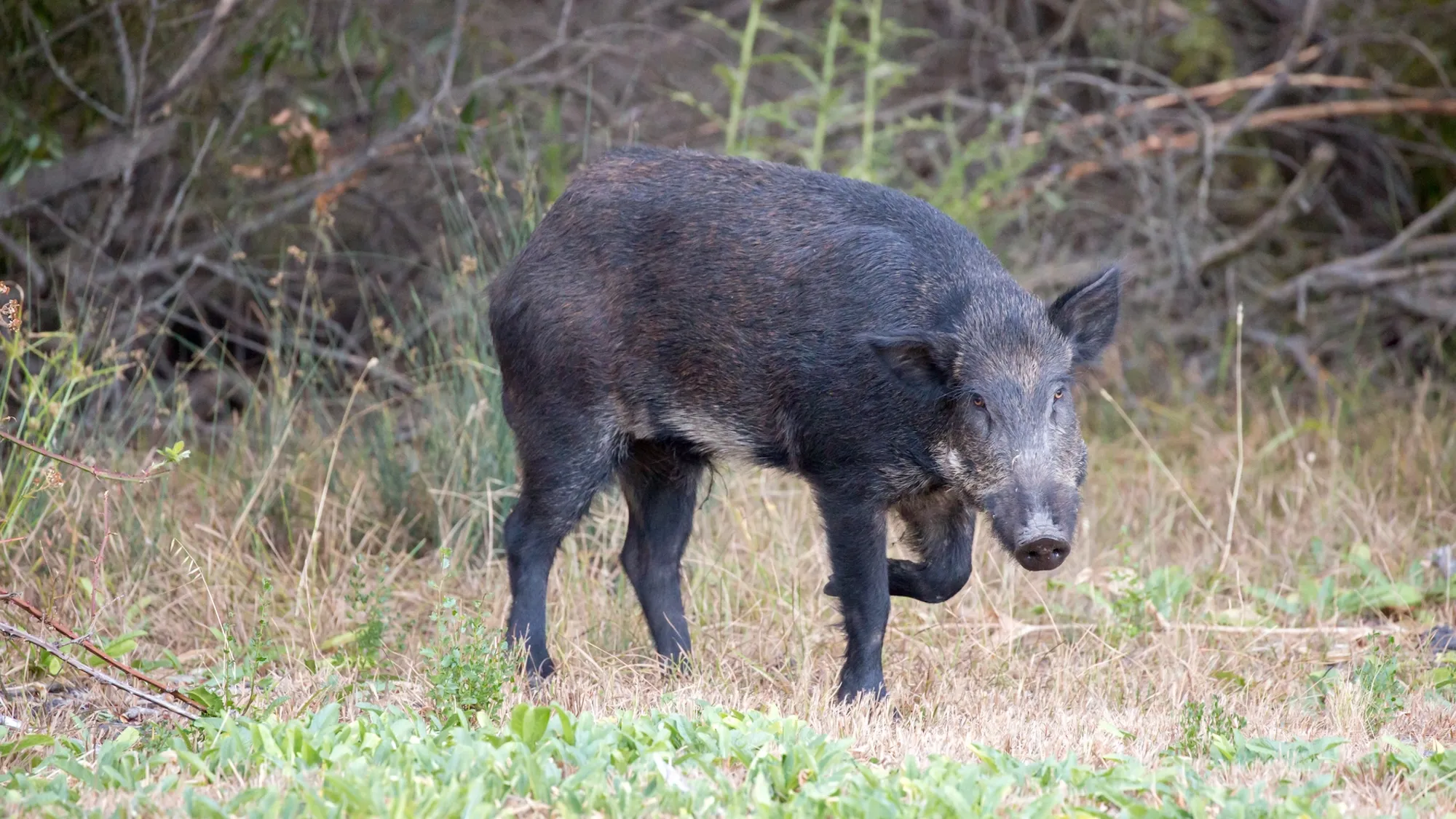
It would be a mistake to treat this as a weird feral swine story and move on. California’s official warning explicitly mentioned that other game animals such as deer, bear, and geese may also be contaminated if they have been exposed to rodenticides. That broadens the issue considerably.
It also reinforces what wildlife scientists and conservationists have been arguing for years: poisons placed into landscapes rarely stay neatly confined to their intended targets. Rodenticides can move through ecosystems in complex ways. Small animals consume bait. Larger animals consume them. Scavengers feed on carcasses. Pets may encounter remains. Hunters take game from treated areas. What begins as a farm management choice can quickly become a wildlife health issue and then a human food safety issue.
The department also pointed to a 2018 study finding that about 8.3 percent of tested wild pigs carried traces of anticoagulant rodenticide residue. That means the current blue-pig discovery is dramatic, but it is not entirely isolated from previous evidence that poisoned game has been part of the landscape problem for some time.
California already tightened rodenticide rules, but the problem has not disappeared
California has not ignored rodenticide risks. The state has already restricted most uses of anticoagulant rodenticides, allowing limited exceptions for certified vector control professionals, government agencies, and agricultural sites. According to the Department of Fish and Wildlife, these restrictions were strengthened in 2024 under a law aimed at protecting wildlife from exposure.
Yet the Monterey County case shows that even partial legal restriction does not eliminate real-world exposure. Agricultural exemptions still matter because farms remain places where pest control is heavily used and wildlife moves constantly. The law may reduce widespread consumer misuse, but it cannot fully solve the ecological problem when toxic bait remains available in working fields where pigs and other animals roam.
That is what makes this story so revealing. It is not simply about one bad actor using poison irresponsibly. It is about the tension between agricultural necessity and ecological consequence. Farmers need to protect crops. Wildlife does not recognize property lines or bait labels. And once game species start eating poison, the consequences extend beyond the field.
Why hunters are being singled out in the warning
Hunters are at the center of the advisory for a reason. Wild pig hunting remains legal year-round in California with no daily bag or possession limit, according to state hunting rules. That means many people may encounter and process pigs from areas where active rodent control is being used.
Burton’s concern, as reported by the Los Angeles Times, was that young or inexperienced hunters might not know what to look for. An animal can appear normal in behavior and body condition, yet still contain poisoned tissues. If a hunter is unfamiliar with unusual tissue coloration or does not know the local land use context, the carcass could easily be butchered and eaten.
That is why the warning is not only scientific. It is educational. Officials are trying to move the information quickly into the hands of the people most likely to bring these animals into kitchens, freezers, and family meals. In this sense, the blue flesh serves almost like a public awareness campaign written directly into the animal’s body.
What this alarming discovery really means
The image of neon blue wild pig meat is shocking enough to spread fast, but the bigger story is not the color. It is the chain of exposure that color reveals. A poison designed for rodents appears to be reaching larger game animals in agricultural settings. Laboratory testing has confirmed diphacinone exposure in at least one Monterey County pig. California officials are warning hunters and trappers not to eat affected animals. Research suggests cooking does not remove the hazard. And wildlife managers are reminding the public that blue tissue may be only the most visible sign of a wider contamination risk.
In the end, the discovery of these blue pigs is not just a gruesome curiosity. It is a warning about how human pest-control strategies spill into the wider natural world, and how those consequences can come back toward people in ways that are deeply unsettling. Hunters are being asked to look closer. Farmers are being forced to think harder about bait placement. And wildlife officials are trying to get ahead of a problem that has become far more visible than anyone expected. When a pig’s flesh turns neon blue, the message is hard to miss: something in the landscape has gone badly wrong.