
When neuroscientists first noticed that laboratory rats responded to tickling with bursts of ultrasonic sounds, the discovery seemed almost whimsical. But as recordings accumulated and behavioral patterns became undeniable, researchers realized they were observing something profound. These were not random noises or reflexive reactions. The rats were, in a measurable and biologically meaningful way, expressing joy.
What initially looked like an amusing footnote in animal behavior research soon became a gateway into understanding how mammals experience pleasure, play, and emotional connection. The implications reached far beyond rodents. If rats could enjoy being tickled, it suggested that the roots of joy, laughter, and social bonding might run far deeper in the mammalian brain than previously assumed.
This unexpected discovery has reshaped how scientists think about emotion, animal consciousness, and even the biological origins of happiness itself.
Table of Contents
- The Experiment That Changed How We See Rats
- What Rat “Laughter” Really Means
- Why Play Matters in the Mammalian Brain
- Emotions Are Not Just Human
- What This Means for Animal Welfare
- The Neuroscience of Joy and Reward
- Why Mood Matters: Rats Are Selective About Tickling
- Challenging Old Assumptions About Intelligence
- Implications Beyond the Laboratory
- A Small Discovery With Big Meaning
The Experiment That Changed How We See Rats
The breakthrough emerged from studies examining social play in rats. Researchers were already aware that young rats engage in rough-and-tumble play, chasing and wrestling with one another in ways that closely resemble playful behavior in other mammals. What caught scientists off guard was how consistently rats responded to specific types of human interaction.
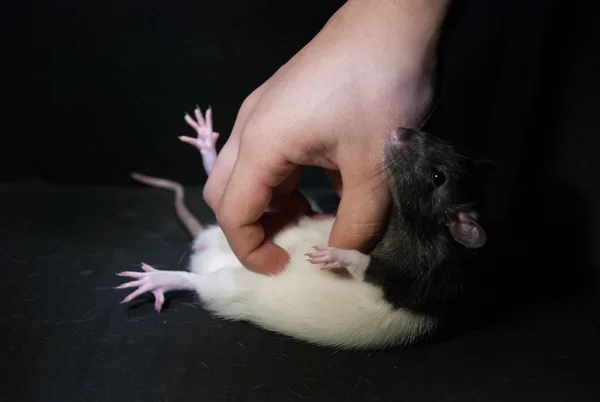
When researchers gently tickled rats in areas similar to where they interact during play—particularly around the neck and belly—the animals emitted high-frequency chirps. These sounds were not audible to the human ear without special equipment, but once analyzed, they displayed patterns associated with positive emotional states.
Even more telling was what happened next. Rats that had been tickled would actively seek out the experimenter, returning for more contact. Rather than avoiding the stimulus, they pursued it. In behavioral science, voluntary repetition is one of the strongest indicators that an experience is pleasurable.
What Rat “Laughter” Really Means
The sounds rats produce during tickling are ultrasonic vocalizations around 50 kilohertz, a frequency long associated with positive affect in rodents. These vocalizations differ significantly from lower-frequency sounds linked to fear or distress. In essence, rats were communicating excitement and enjoyment.
Researchers began referring to these sounds as a form of laughter—not because rats experience humor the way humans do, but because the neurological mechanisms appeared strikingly similar. The same brain regions activated during tickling were involved in reward processing, motivation, and social bonding.
This discovery challenged the long-standing assumption that complex emotional expressions are exclusive to humans or higher primates. Instead, it suggested that joy might be a fundamental mammalian trait, deeply embedded in neural architecture.
Why Play Matters in the Mammalian Brain

Play is often dismissed as frivolous, but neuroscientists view it as a critical driver of development. In mammals, play helps refine motor skills, establish social hierarchies, and strengthen emotional regulation. Rats deprived of play during early development show long-term deficits in social behavior and stress management.
Tickling appears to tap directly into this play circuitry. When researchers stimulated areas of the rat brain associated with playfulness, the animals responded with the same ultrasonic vocalizations seen during tickling. When those areas were suppressed, the vocalizations diminished.
This link revealed that play is not a side effect of intelligence—it is a core biological function that shapes emotional resilience and social competence.
Emotions Are Not Just Human
For decades, scientists avoided attributing emotions to animals out of concern for anthropomorphism. Emotions were seen as subjective experiences, impossible to measure objectively in non-human species. The rat tickling studies challenged this reluctance with hard data.
Neural imaging and behavioral analysis showed that positive emotional states in rats follow predictable biological patterns. Dopamine release, neural activation, and vocal expression aligned consistently with pleasurable experiences.
This does not mean rats feel happiness exactly as humans do. But it does mean that emotional systems evolved long before language or abstract thought. Joy, in its most basic form, appears to be a biological signal that reinforces social interaction and learning.
What This Means for Animal Welfare
The discovery that rats enjoy being tickled has had practical consequences for laboratory animal welfare. Researchers found that rats handled playfully showed reduced stress, improved learning performance, and healthier social behavior.
Stress in laboratory animals can significantly distort research outcomes. By incorporating positive handling techniques, scientists improve both ethical standards and data reliability. In this way, tickling rats became more than a curiosity—it became a tool for better science.
The findings also prompted broader discussions about how animals experience captivity, enrichment, and human interaction. If rats can feel joy, then emotional well-being becomes an essential consideration, not a luxury.
The Neuroscience of Joy and Reward
At the neurological level, tickling activates reward circuits involving dopamine and the prefrontal cortex. These systems are remarkably conserved across mammals. Similar pathways are engaged when humans experience laughter, bonding, or pleasurable surprise.
By studying these mechanisms in rats, scientists gain insights that would be difficult or unethical to obtain in humans. Understanding how joy is encoded in the brain could inform treatments for depression, anxiety, and social disorders.
The rat model offers a rare opportunity to observe emotional processing without the complexity of language or cultural conditioning—revealing the biological foundations of pleasure itself.
Why Mood Matters: Rats Are Selective About Tickling
One of the most intriguing findings was that rats do not always enjoy being tickled. Mood matters. Rats that were stressed, anxious, or unfamiliar with the experimenter showed fewer vocalizations and avoided interaction.
This selectivity reinforced the idea that the response was emotional, not reflexive. Just as humans may dislike physical play when stressed or uncomfortable, rats responded differently depending on context.
Emotion, it turns out, is not simply triggered—it is regulated, nuanced, and responsive to environment, even in small mammals.
Challenging Old Assumptions About Intelligence
Historically, intelligence and emotion were treated as separate traits, with emotion often viewed as a byproduct of higher cognition. The rat tickling studies turned that assumption on its head.
Rats are not known for abstract reasoning or symbolic thought, yet their emotional responses were rich, measurable, and biologically complex. This suggests that emotion may not emerge from intelligence, but alongside it, as a parallel evolutionary system.
In this view, joy and play are not rewards for intelligence—they are foundations upon which learning and adaptability are built.
Implications Beyond the Laboratory

The implications of this research ripple outward. If emotional systems are deeply conserved across mammals, then empathy, bonding, and play may be far more universal than previously believed.
This insight reshapes how humans relate to animals—not as mechanistic organisms, but as beings with internal experiences shaped by biology. It also reframes joy as a survival tool, not a luxury. Play strengthens social bonds, reduces stress, and enhances learning across species.
What began as an experiment involving laughter-like chirps in rats ultimately revealed a shared emotional heritage connecting mammals across millions of years of evolution.
A Small Discovery With Big Meaning
The idea that rats enjoy being tickled may sound lighthearted, even humorous. But beneath the surface lies one of neuroscience’s most elegant lessons: emotion is not an afterthought of evolution. It is a core feature, deeply woven into the mammalian brain.
By listening carefully—to sounds too high for human ears and behaviors too subtle to dismiss—scientists uncovered a truth that reshapes our understanding of joy. Not as something uniquely human, but as a biological language spoken quietly across species.
In recognizing joy in rats, we come closer to understanding it in ourselves—not as a mystery of the mind, but as a fundamental expression of life itself.