

When headlines started circulating that twice as many American teens now say they “don’t enjoy life,” the reaction was instant and emotionally charged. Parents felt a familiar knot of fear. Teachers nodded like it confirmed what they’d been seeing in classrooms for years. Teenagers rolled their eyes—half because they were tired of adults panicking, and half because the panic felt disturbingly close to the truth. The claim didn’t land like a normal statistic. It landed like a cultural warning light.
What makes this story more than a viral talking point is that it fits into a much larger pattern that public health researchers have been tracking for years: a sustained rise in reported distress among adolescents, especially since the early-to-mid 2010s, alongside a near-total takeover of daily life by smartphones, algorithmic feeds, and always-on social comparison. Pew has found that nearly half of U.S. teens say they are online “almost constantly,” roughly double the share from 2014–2015. That alone doesn’t prove causation—but it tells you the environment teens are growing up in is radically different from the one adults remember.
The question isn’t just whether teens are “too online.” It’s what that constant connectivity is doing to the way young people experience meaning, confidence, friendships, and joy—and what happens when an entire generation starts describing life with words that sound more like resignation than hope.
Table of Contents
- The Data Behind “Don’t Enjoy Life” and Why It Hit a Nerve
- The Social-Media Era Didn’t Invent Teen Pain—But It Changed the Texture of It
- Why “Almost Constantly Online” Matters More Than People Admit
- The Real Problem Might Be the Feeling of Having No Control
- “Don’t Enjoy Life” Can Also Be a Loneliness Signal
- The Most Important Detail Adults Miss: Teens Aren’t Just “Addicted”—They’re Socially Cornered
- So What Can Actually Help Without Turning This Into Moral Panic?
- What This Story Really Means for the Next Decade
The Data Behind “Don’t Enjoy Life” and Why It Hit a Nerve
Reports like the one popularized by the New York Post describe a sharp rise over time in teens endorsing bleak self-assessments—statements such as “I don’t enjoy life,” “I can’t do anything right,” or “my life is not useful.” These are the kinds of phrases that don’t just measure sadness; they measure self-concept—how a person evaluates their worth, competence, and purpose.
Even if you ignore the headline framing and focus on the underlying issue, the public health picture is still grim. The CDC’s Youth Risk Behavior Survey has repeatedly shown large shares of high school students reporting persistent feelings of sadness or hopelessness. In the 2023 results, the CDC reported about 40% overall (down slightly from 2021’s 42%), and some subgroups remain substantially higher. This isn’t a niche problem affecting only a few kids. It’s widespread enough to shape the emotional climate of schools, friend groups, and families.
So why did “don’t enjoy life” become the lightning phrase? Because it describes something beyond stress. It suggests a flattening—when fun stops feeling fun, when the future stops pulling you forward, when days feel like scrolling and coping rather than living.
The Social-Media Era Didn’t Invent Teen Pain—But It Changed the Texture of It
Teenagers have always dealt with pressure, insecurity, and identity confusion. That’s not new. What is new is the delivery system: the way comparison, validation, humiliation, and “who matters” dynamics now follow teens into their bedrooms, bathrooms, and late-night hours.
The U.S. Surgeon General’s advisory on social media and youth mental health does not claim that social media is the single cause of every adolescent struggle. But it does warn that the evidence base is concerning, that youth exposure is nearly universal, and that safety-by-design has not kept up with the scale of use. HHS+1 When a public health office issues an advisory, it’s essentially saying: the risk signals are strong enough that waiting for perfect certainty is not a responsible strategy.
Here’s the simplest way to understand the shift. Social media didn’t just add a new activity to teen life. It rewired the social rules of teen life. Popularity became quantifiable. Appearance became a scoreboard. Friend drama became content. And boredom—once a doorway to imagination—became something algorithms are engineered to eliminate.
That’s a powerful mix during adolescence, a developmental period already defined by hypersensitivity to peer feedback and social belonging.
Why “Almost Constantly Online” Matters More Than People Admit

Adults often argue about whether teen screen time is “really that bad.” But there’s a difference between using the internet frequently and living in a state of perpetual partial attention. Pew’s finding—nearly half of teens online “almost constantly,” about double the mid-2010s share—matters because it suggests a shift from “I go online” to “I’m basically never offline.”
When you’re never offline, your brain doesn’t get clean breaks from social monitoring. Even if a teen isn’t actively posting, they’re watching. They’re tracking who’s included. They’re absorbing curated happiness. They’re seeing bodies, lifestyles, and achievements filtered into perfection. And if they’re vulnerable—socially anxious, already depressed, already bullied—this environment can intensify what they already fear: that they’re behind, unwanted, or failing.
The CDC has also explored how frequent social media use relates to bullying victimization, sadness/hopelessness, and suicide risk among U.S. high school students, underscoring that the heaviest-use patterns often intersect with other risks. The point isn’t that every teen who uses social media heavily is doomed. The point is that the “always-on” environment can amplify existing vulnerabilities—fast.
The Real Problem Might Be the Feeling of Having No Control
One of the least discussed aspects of teen distress is the sensation of powerlessness. Many teenagers don’t just feel sad; they feel trapped. They describe school as a treadmill, friendships as fragile, and the future as something expensive they’re expected to earn while the world looks increasingly unstable.
Now layer in algorithmic feeds designed to keep attention hooked through outrage, envy, and emotional spikes. Teens can feel like their minds are being pulled by something they didn’t choose. That is a direct assault on agency—on the sense that you can steer your day.
This is why lawmakers have started focusing not just on “screen time,” but on specific platform features like infinite scrolling, autoplay, and algorithmic feeds. In late December 2025, Reuters reported on a new New York law requiring mental health warnings on social media platforms that use such features, part of a broader push to protect young users. Whether one agrees with the policy or not, the political shift signals something important: adults in power are starting to treat platform design as a public health issue, not merely a parenting preference.
“Don’t Enjoy Life” Can Also Be a Loneliness Signal
Not enjoying life isn’t always classic depression. Sometimes it’s social emptiness. Teens may have hundreds of online connections yet feel starved for real closeness. Online interaction can be constant but emotionally thin. It can keep someone busy while still leaving them lonely.
That loneliness can be especially intense during the years when teens are supposed to be forming identity through real-world belonging—teams, clubs, friend groups, shared experiences, first jobs, first risks, first competence wins. If digital life crowds out those experiences, teens can wind up with fewer moments that feel solid and earned.
And when life doesn’t feel earned, it doesn’t feel satisfying.
The Most Important Detail Adults Miss: Teens Aren’t Just “Addicted”—They’re Socially Cornered
Adults sometimes say, “Just delete the apps.” Teens often can’t—socially. Social life is coordinated there. Plans are made there. Group humor happens there. Status is negotiated there. Leaving can mean isolation.
This is part of why the Surgeon General’s advisory talks about the difficulty of simply opting out and stresses the need for safeguards across platforms, families, and institutions—not just willpower. If the environment is built to be inescapable, telling teenagers to escape it without support can feel like blaming them for drowning.
So What Can Actually Help Without Turning This Into Moral Panic?
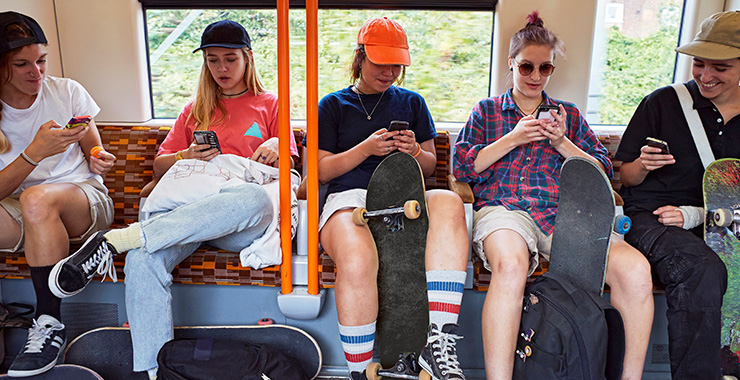
If the data show distress rising, the instinct is to panic. But panic usually produces the least useful solutions: blanket bans, shame-based lectures, or nostalgia-driven “when I was your age” speeches that make teens stop talking.
More effective responses tend to be specific and practical:
Teens benefit from predictable offline anchors—sleep routines, movement, real meals, and face-to-face time that isn’t treated as optional. They benefit from friction in the phone environment—charging phones outside bedrooms at night, disabling autoplay where possible, and turning off nonessential notifications. They benefit from adults who can discuss social media without sounding terrified or contemptuous—because teens can smell fear, and they can smell hypocrisy.
At the policy level, current trends suggest governments are increasingly targeting “addictive design” rather than merely “content.” The New York warning-label law reported by Reuters is part of that momentum. The details will be debated, but the direction is clear: the public conversation is moving from “kids are weak” to “systems may be engineered in harmful ways.”
What This Story Really Means for the Next Decade

The most haunting part of “don’t enjoy life” is not that teens are unhappy. It’s that enjoyment is a basic fuel for development. Enjoyment is what makes effort feel worth it. Enjoyment is what makes friendships sticky. Enjoyment is what gives teenagers a reason to imagine themselves in the future.
A society can survive with stressed teenagers. It cannot thrive with teenagers who stop feeling that life is meaningful.
The emerging data on teen mental health, persistent sadness, and the scale of constant connectivity should be treated like an early-warning system. The CDC’s continued reporting shows that distress remains widespread even with slight improvements in some measures. Pew’s numbers show the digital immersion isn’t fading—it’s stabilizing at high levels. And public health authorities continue to signal that we cannot assume youth social media use is “safe by default.”
If we respond well, we could see a cultural correction: more protection by design, more digital literacy that actually matches reality, more schools that treat mental health like infrastructure, and more families that build tech boundaries without shame.
If we respond poorly, we’ll keep doing what we’ve been doing: arguing about whether the problem is real while teenagers quietly decide life isn’t enjoyable.