

When neuroscientists first confirmed that the human brain cannot feel pain, the discovery unsettled many people. After all, the brain is the command center of sensation, emotion, and awareness. It interprets every ache, burn, sting, and throb the body experiences. Yet paradoxically, the brain itself exists in total silence, incapable of sensing pain within its own tissue. This strange biological contradiction is not a flaw of evolution, but a remarkably precise design—one that allows surgeons to operate on a conscious patient’s brain while the person speaks, moves, and even jokes during the procedure.
This counterintuitive fact raises deeper questions about how pain works, where pain truly originates, and why the brain—the organ that defines our conscious experience—remains immune to the very sensation it decodes. What follows is an exploration of the neuroscience behind pain perception, the surprising absence of pain receptors in brain tissue, and what this reveals about the fragile yet extraordinary system that keeps humans alive.
Table of Contents
- Why Pain Exists in the First Place
- The Brain’s Strange Immunity to Pain
- How Pain Signals Actually Reach the Brain
- The Evolutionary Advantage of a Painless Brain
- Why Brain Surgery Can Be Done While You’re Awake
- If the Brain Can’t Feel Pain, Why Do Headaches Hurt So Much?
- What This Reveals About Consciousness and Pain
- Medical Implications and Future Research
- A Silent Organ That Feels Everything Else
Why Pain Exists in the First Place
Pain is not merely an unpleasant sensation; it is a survival mechanism refined over millions of years. From an evolutionary perspective, pain exists to warn the body of danger. It signals tissue damage, extreme temperatures, chemical threats, or mechanical stress that could compromise survival if ignored. Without pain, organisms would continue harmful behaviors, unknowingly injuring themselves until damage became irreversible.
This warning system depends on specialized sensory receptors known as nociceptors. These microscopic detectors are embedded throughout the body—especially in the skin, muscles, joints, and internal organs. When activated, nociceptors send electrical signals through the spinal cord and into the brain, where those signals are interpreted as pain. The brain does not generate pain on its own; it translates incoming messages into the subjective experience we recognize as suffering.
Yet here lies the paradox: while the brain processes every pain signal, it contains no nociceptors of its own.
The Brain’s Strange Immunity to Pain
Unlike nearly every other organ in the human body, brain tissue lacks pain receptors. There are no nociceptors within the neurons, synapses, or networks responsible for thought, memory, or consciousness. If the brain itself were to be cut, burned, or stimulated directly, it would register no pain sensation at all.
This is why neurosurgeons can perform awake brain surgery. During these procedures, patients are conscious, responsive, and able to communicate while surgeons carefully stimulate or remove sections of the brain. The patient may feel pressure, vibration, or movement—but not pain from the brain tissue itself.
However, this does not mean the entire head is pain-free. The scalp, skull, blood vessels, and meninges (the protective layers surrounding the brain) are rich with nociceptors. Headaches, migraines, and trauma pain originate from these surrounding structures—not from the brain tissue beneath them.
This distinction explains why severe headaches can feel like “brain pain,” even though the sensation arises entirely outside the brain itself.
How Pain Signals Actually Reach the Brain
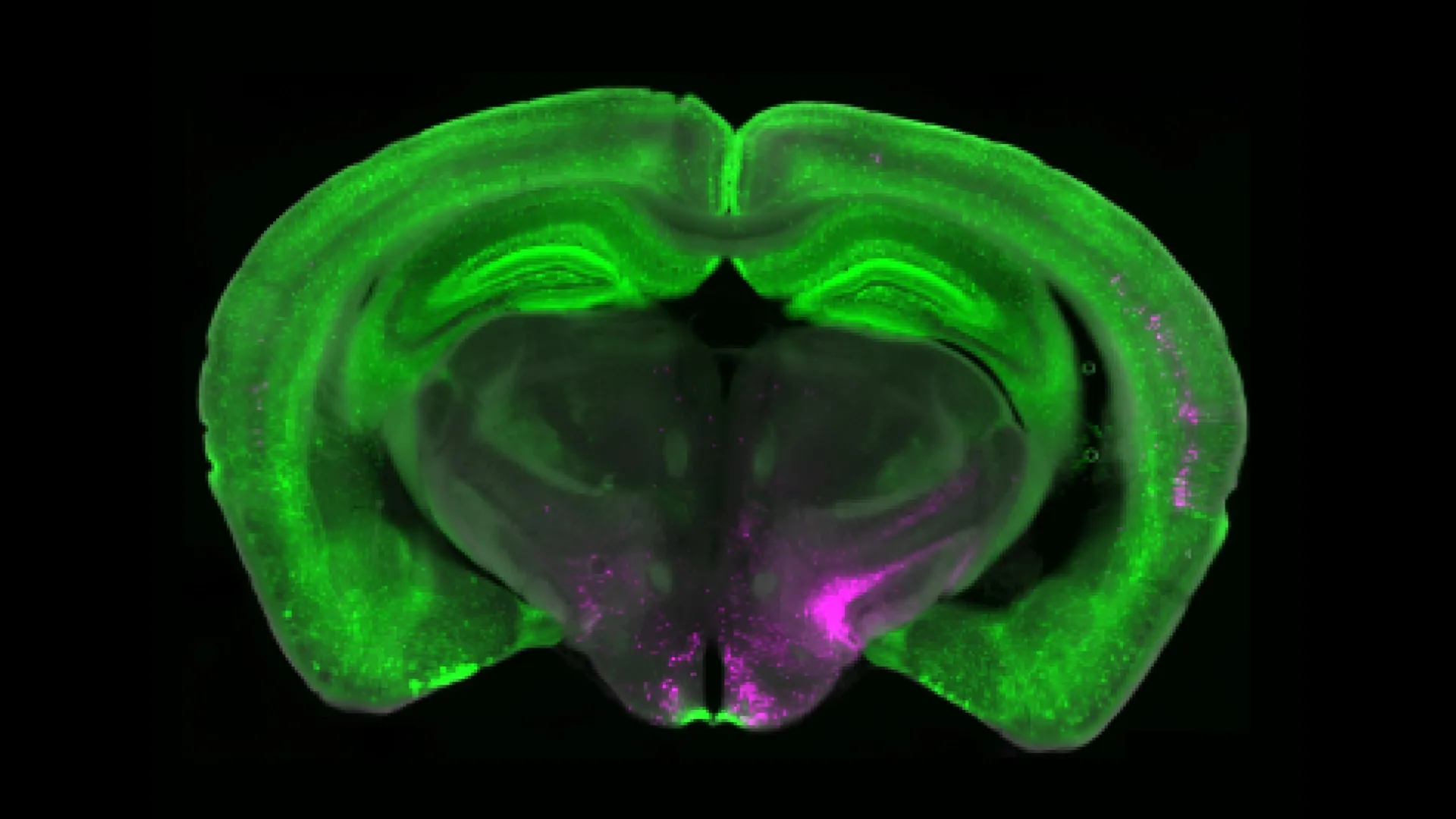
To understand why the brain cannot feel pain, it helps to understand how pain normally travels through the body. When tissue damage occurs—such as touching a hot stove—nociceptors in the skin are activated. These receptors convert physical damage into electrical signals, which travel through peripheral nerves into the spinal cord.
From there, signals ascend through complex neural pathways to specific regions of the brain, including the thalamus and somatosensory cortex. Only when these signals are interpreted does pain become a conscious experience. Pain, therefore, is not located at the site of injury. It is constructed by the brain as a response to incoming information.
If the brain were capable of feeling its own pain, it would require a separate system to interpret those signals—creating a recursive loop with no clear biological advantage. Evolution appears to have eliminated this inefficiency entirely.
The Evolutionary Advantage of a Painless Brain
At first glance, a pain-sensitive brain might seem beneficial. But in reality, such a design would be catastrophic. The brain is an organ in constant activity, consuming enormous energy and undergoing continuous chemical and electrical changes. If it were equipped with nociceptors, normal physiological processes could trigger constant pain signals, overwhelming consciousness and disrupting survival behaviors.
Moreover, injury to the brain often requires immediate medical intervention. A brain capable of generating pain would incapacitate a person during trauma, increasing shock, stress, and neurological overload at precisely the moment calm processing is most needed.
By isolating pain detection to peripheral systems, evolution ensured that the brain could remain a stable control center—processing danger without becoming consumed by it.
Why Brain Surgery Can Be Done While You’re Awake
One of the most extraordinary demonstrations of the brain’s pain immunity occurs in operating rooms around the world. During certain neurosurgical procedures, patients remain awake while surgeons stimulate specific brain regions. This allows doctors to map critical functions such as speech, movement, and memory in real time.
If stimulation disrupts speech or movement, surgeons immediately know which areas to avoid, preserving vital cognitive abilities. The patient feels no pain from the brain itself—only mild discomfort from surrounding tissues, which are carefully numbed beforehand.
These procedures have reshaped modern neurosurgery and significantly reduced the risk of permanent neurological damage. None of this would be possible if the brain could feel pain.
If the Brain Can’t Feel Pain, Why Do Headaches Hurt So Much?

Headaches often lead people to assume their brain is hurting, but the pain actually originates elsewhere. Blood vessels, nerves, muscles, and membranes surrounding the brain are densely packed with pain receptors. When these structures become inflamed, constricted, or irritated, they trigger pain signals that the brain interprets as head pain.
Migraines, for example, involve changes in blood vessel activity and nerve signaling around the brain, not damage to the brain tissue itself. Tension headaches stem from muscle strain and nerve compression in the scalp and neck. Even severe head trauma produces pain through external structures, while the brain remains silent.
This illusion reinforces how effectively the brain constructs reality—even when the source of pain is misunderstood.
What This Reveals About Consciousness and Pain
The brain’s inability to feel pain reveals a profound truth: pain is not a property of tissue damage, but a perception created by the brain itself. Without interpretation, there is no pain—only electrical signals.
This explains why pain perception varies so dramatically between individuals. Emotional state, memory, expectation, and context all influence how pain is experienced. Two people with identical injuries can report vastly different pain levels, not because the injury differs, but because their brains interpret the signals differently.
It also explains phenomena such as phantom limb pain, where individuals experience pain in limbs that no longer exist. The brain generates the experience independent of physical input, reinforcing the idea that pain is a constructed experience, not a direct reflection of damage.
Medical Implications and Future Research
Understanding that the brain itself cannot feel pain has reshaped pain management, neurosurgery, and neurological research. It has helped scientists target pain pathways more precisely, leading to better treatments for chronic pain conditions that do not respond to traditional medications.
Researchers are now exploring how pain perception can be modulated at the level of interpretation rather than sensation alone. Psychological therapies, neural stimulation, and cognitive interventions are increasingly used alongside medication to reduce suffering by changing how the brain processes pain signals.
This shift represents a broader evolution in medicine—from treating pain as a purely physical phenomenon to understanding it as a complex interaction between body, brain, and mind.
A Silent Organ That Feels Everything Else

The fact that the brain cannot feel pain is one of biology’s most elegant contradictions. The organ responsible for every sensation, emotion, and experience exists beyond the reach of pain itself. This silence is not a limitation, but a safeguard—one that protects consciousness, enables advanced medical procedures, and preserves the brain’s ability to function under extreme conditions.
In understanding why the brain feels no pain, we gain deeper insight into what pain truly is—and how profoundly the brain shapes our experience of reality. What seems like a vulnerability turns out to be one of the most intelligent designs in human biology, quietly working in the background, allowing us to feel everything else.