

Table of Contents
- A Case That Began in a Cleveland Apartment Building
- The Legal Fight Over One Word
- Why the Decision Matters Beyond One Defendant
- The Court Was Clear on the Outcome, but Not on the Drafting
- What the Ruling Says About Stray Animals in the Law
- The Broader Context of Animal Cruelty Enforcement
- Why the Case Resonated So Widely
- A Reminder That Statutory Language Can Shape Real Lives
- What the Decision May Mean Going Forward
A Case That Began in a Cleveland Apartment Building
The case centered on Alonzo Kyles, a Cleveland man who, according to court records and reporting on the ruling, was afraid of cats and tried to drive an 8 month old kitten away from the basement area of his apartment building by pouring bleach in the stairwell. When Cleveland police responded, they found the kitten with red, swollen paws consistent with bleach exposure. Kyles was convicted under Ohio’s felony level companion animal cruelty law and sentenced to nine months in jail. What followed was not a dispute over whether the kitten had been harmed, but whether the law treated that kitten as the kind of animal covered by the felony statute.
That distinction became the entire case. Kyles’s legal team argued that because the kitten was not a household pet and was not being cared for by anyone in the way a typical pet might be, the conduct should fall under a lower level misdemeanor cruelty offense rather than a fifth degree felony. At first, that argument found traction. Ohio’s Eighth District Court of Appeals had ruled that the state had not shown the kitten was “kept,” meaning under someone’s care or control, and therefore had not shown it qualified as a companion animal for purposes of the enhanced felony penalty.
The Legal Fight Over One Word

At the center of the case was a deceptively small question: what does Ohio’s definition of “companion animal” actually mean? State law defines a companion animal to include “any animal that is kept inside a residential dwelling and any dog or cat regardless of where it is kept.” The appellate court had focused on the word “kept,” reasoning that the state needed to prove the animal was being cared for or maintained by someone. That reading effectively created a divide between owned or supervised animals and strays.
The Ohio Supreme Court rejected that interpretation. In a unanimous decision, the justices concluded that the statute’s language extends felony protection to all dogs and cats, no matter where they are found and no matter whether someone has formally taken them in. The court’s reasoning, summarized in official court coverage and other reports, was direct: “any” means all. In other words, once the statute says “any dog or cat,” the inquiry does not stop to ask whether that dog or cat has an owner, sleeps indoors, or receives regular care.
Why the Decision Matters Beyond One Defendant

This ruling matters because it closes a gap that could have weakened cruelty protections for some of the most vulnerable animals. If the lower court’s reasoning had stood, prosecutors might have faced a harder path when pursuing felony charges in cases involving stray cats, stray dogs, or community animals that live around apartment buildings, alleys, farms, or neighborhoods without clear ownership. That would have created a troubling hierarchy in enforcement, where the same act of serious abuse could carry different criminal consequences depending on whether the animal happened to belong to someone in a legally recognizable way.
The Supreme Court’s decision removes much of that uncertainty. It sends a message that the law protects cats and dogs because of what they are under the statute, not because a person has officially claimed them. For animal welfare advocates, that is a meaningful expansion in practical protection. For prosecutors, it provides a clearer basis for charging serious abuse cases involving unowned animals. And for the public, it reinforces a simple moral idea through legal language: cruelty does not become less serious because the victim had no home.
The Court Was Clear on the Outcome, but Not on the Drafting
Even while ruling unanimously, the court acknowledged that the law itself was not perfectly written. Justice Pat Fischer wrote in the opinion that the statute was “no model of clarity,” a line that has stood out in coverage of the case. That comment matters because it shows the court was not pretending the text was elegant or obvious in every respect. Instead, the justices read the statute as best they could and reached what they concluded was the correct interpretation.
That kind of judicial language often points to a deeper issue in legislation. Lawmakers sometimes write statutes with broad intent but imperfect wording, leaving courts to sort out conflicts later when real life cases expose ambiguity. In this instance, the Supreme Court resolved the ambiguity in favor of broader protection, but it also effectively invited the legislature to draft more clearly in the future if it wants to avoid similar disputes. That is often how law evolves: not in one clean act, but through a mix of legislation, litigation, and judicial clarification.
What the Ruling Says About Stray Animals in the Law

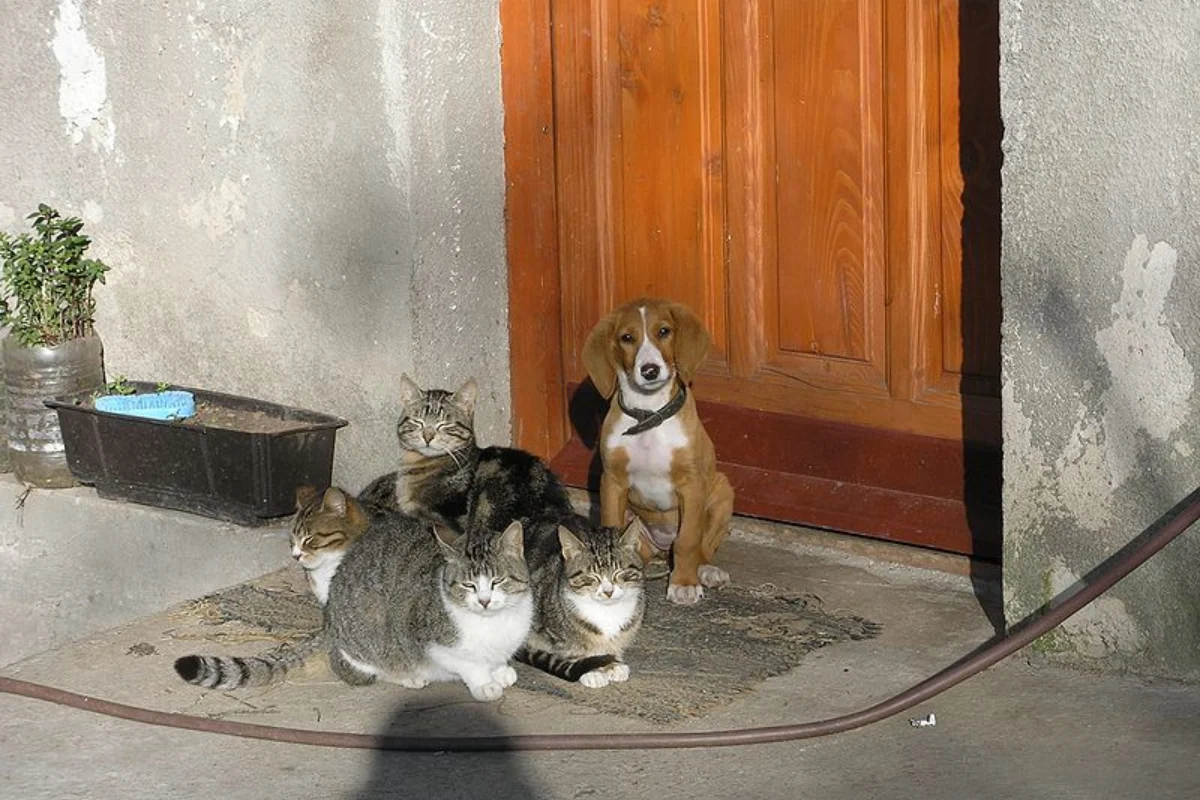
One of the most striking things about the case is that it turns on a category of animal many legal systems have historically treated inconsistently. Stray animals exist in a difficult space. They are visible in daily life and emotionally recognizable as dogs and cats, yet they often fall into gray areas when questions of ownership, responsibility, and enforcement arise. Some communities treat them as nuisances, some as rescue priorities, and some as public welfare concerns. But when the legal system links stronger criminal penalties to the concept of a companion animal, the question becomes whether stray animals are fully inside that circle or only partly.
Ohio’s ruling pushes firmly toward inclusion. It effectively recognizes that a dog or cat does not lose meaningful legal protection simply because it is outside the home, abandoned, or surviving on its own. That matters because stray animals are often at heightened risk of abuse precisely because they are less visible in the protective structures that shield owned pets. A person may assume there will be fewer consequences if no owner complains, no veterinary records exist, and no one can say the animal belonged to them. This decision undercuts that assumption.
The Broader Context of Animal Cruelty Enforcement
Animal cruelty law has become more serious in many states over the past few decades, with harsher penalties, specialized statutes, and greater recognition that violence toward animals can be both morally significant and socially important to address. Ohio’s felony level companion animal cruelty law, sometimes referred to publicly as Goddard’s Law, is part of that broader trend. The law elevates certain acts causing serious physical harm to companion animals from misdemeanor treatment to felony treatment. This case was not about inventing a new crime. It was about deciding who falls within the law’s existing protection.
That distinction is important because rulings like this can quietly affect enforcement across an entire state. Police officers, humane investigators, prosecutors, defense lawyers, shelters, and judges all rely on appellate clarity. Once a state supreme court says the felony statute applies to all dogs and cats, that interpretation shapes future charging decisions, plea negotiations, and trial strategy. It also creates a precedent other courts can cite in related cases. In that sense, one injured kitten becomes the center of a much larger legal standard.
Why the Case Resonated So Widely
Cases involving animals often attract public attention out of proportion to their technical legal size, and this one is no exception. Part of that is emotional. Dogs and cats occupy a distinctive place in American life. Even people who do not own pets often see cruelty toward them as a sharp marker of moral wrongdoing. But this case also resonated because the defense argument struck many readers as unsettling in its logic. The idea that serious abuse might be punished less severely because the victim was a stray touched a public nerve.
It also raised a bigger question about legal worth. Does vulnerability reduce protection, or increase the need for it? The Ohio Supreme Court’s answer, at least in practical terms, leaned toward the latter. The ruling did not dress itself up as moral philosophy, but its effect is to deny a loophole that could have made unowned animals easier targets. That is one reason advocates described the decision as significant not just for pets, but for community cats and stray animals across the state.
A Reminder That Statutory Language Can Shape Real Lives

Legal disputes often seem abstract until the facts are stripped back down to the living being at the center of them. Here, the debate over statutory wording was not merely academic. It determined whether harming a kitten with bleach would be treated as a felony or something less. That is the power of legal interpretation. A phrase in a criminal statute can alter sentencing exposure, prosecutorial leverage, and the symbolic seriousness with which society condemns an act.
This is also why state supreme courts matter so much. Many of the legal questions that directly affect daily life are resolved not in Washington, but in state courts interpreting state statutes. Animal cruelty enforcement, housing disputes, family law, criminal sentencing, and civil liability often turn on those state level decisions. The Ohio ruling is a reminder that a seemingly local case can produce a statewide rule with lasting impact.
What the Decision May Mean Going Forward
In practical terms, the ruling likely makes it easier for Ohio prosecutors to pursue felony cruelty charges in future cases involving stray dogs or cats. It may also influence how law enforcement and humane agencies document these cases, since they no longer need to prove that a cat or dog was being “kept” in the sense the lower court demanded. That could streamline prosecutions where the facts of ownership are murky but the facts of harm are not.
More broadly, the decision may shape legislative and legal conversations beyond Ohio. Other jurisdictions with differently worded statutes may not automatically follow the same rule, but the reasoning still adds to a growing legal and cultural recognition that cruelty toward unowned animals should not be minimized. In a period when states are regularly reassessing animal welfare laws, this case offers a concrete example of a high court refusing to let a narrow reading weaken enforcement.
In the end, the significance of the ruling lies in both its legal clarity and its moral undertone. The Ohio Supreme Court did not create a sweeping new philosophy of animal rights. It did something more grounded and, in its own way, more powerful. It read the statute and said that all dogs and cats count. That means a stray kitten in a basement stairwell is not outside the reach of serious legal protection. It means felony cruelty law does not depend on a collar, a leash, a microchip, or a family photo on someone’s phone. And it means that in Ohio, at least, the law now speaks more clearly for animals that had the least ability to speak for themselves.