
Table of Contents
- A Championship That Felt Inevitable
- Gabriela Jaquez Leads With Authority
- Lauren Betts Dominates the Interior
- A Team Effort That Overwhelmed South Carolina
- A Game That Slipped Away Early
- Defensive Mastery Defines the Game
- South Carolina’s Struggles and Reflection
- A Season of Consistency and Growth
- A Historic Moment for the Program
- What This Means for the Future of Women’s Basketball
- A Victory That Resonates Beyond the Scoreboard
A Championship That Felt Inevitable
From the opening tip, UCLA looked composed, focused, and completely in control. There was no hesitation in their movement, no uncertainty in their execution. Every pass, every defensive rotation, and every shot carried the confidence of a team that knew exactly what it was capable of achieving.
Head coach Cori Close later revealed that this sense of certainty was not something that suddenly appeared on game day. It had been building all along. She described feeling peaceful before the game, not because the outcome was guaranteed, but because she believed her team was ready to perform at its highest level when it mattered most. That mindset proved to be a defining factor.
Gabriela Jaquez Leads With Authority
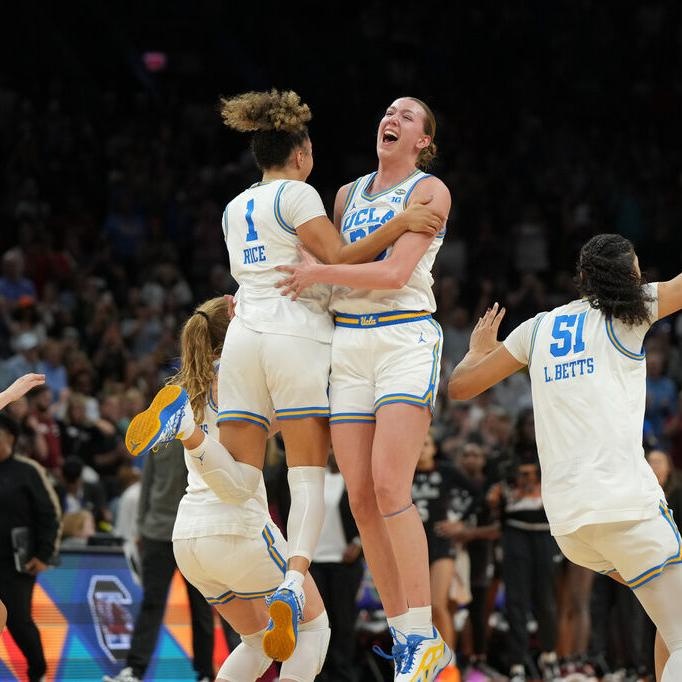
At the heart of UCLA’s performance was Gabriela Jaquez, who delivered one of the most complete games of her career. She finished with 21 points, 10 rebounds, and five assists, controlling the pace and rhythm of the game from start to finish.
Jaquez was not just scoring. She was dictating. Every possession seemed to run through her energy, her decisions, and her ability to read the defense. Her presence on the court made UCLA feel organized and unstoppable at the same time.
For Jaquez, this moment was the culmination of years of preparation and belief. Surrounded by a roster of experienced players, she understood that this team had something special from the very beginning. It was never about one player carrying the load. It was about everyone becoming the best version of themselves at the same time.
Lauren Betts Dominates the Interior
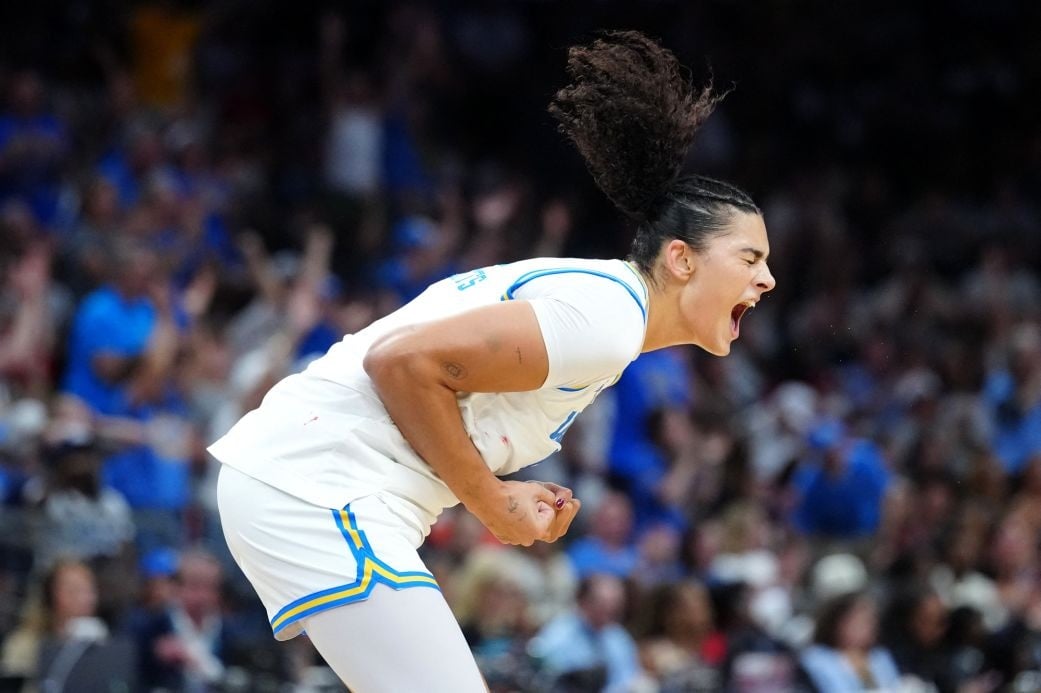
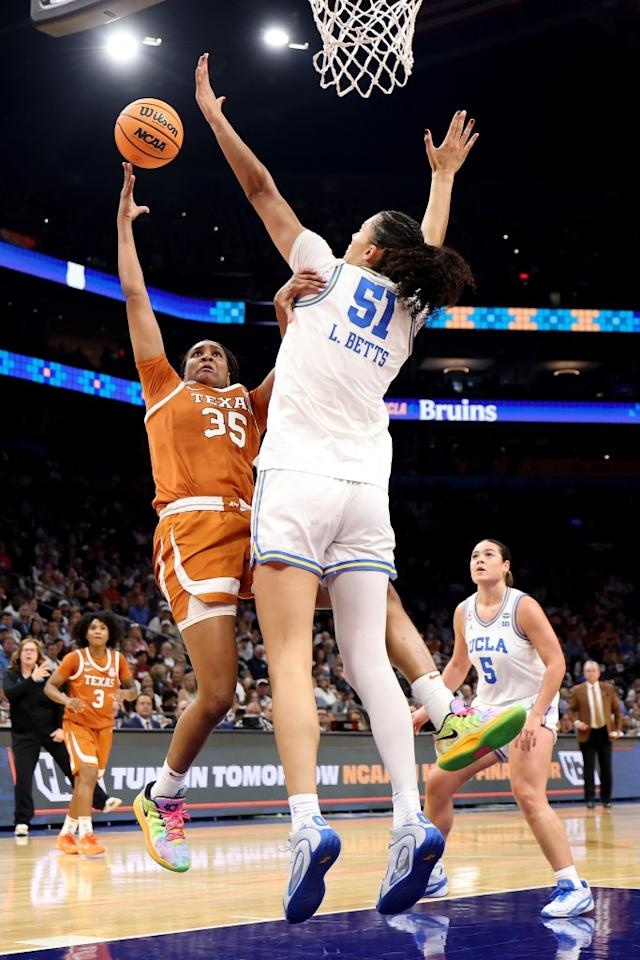
While Jaquez orchestrated the offense, Lauren Betts controlled the paint. Standing at 6 foot 7, Betts was an imposing force that South Carolina struggled to contain. She recorded 14 points and 11 assists, marking her 15th double double of the season and earning her the title of Most Outstanding Player.
Her impact went far beyond the stat sheet. Defensively, she altered shots, disrupted passing lanes, and made it nearly impossible for South Carolina to find any rhythm inside. Offensively, her presence created space for her teammates, allowing UCLA’s balanced attack to flourish.
Betts’ performance was also a reflection of growth. After experiencing a painful loss in the previous season’s Final Four, she and her teammates used that disappointment as fuel. This time, when the moment arrived, they were ready.
A Team Effort That Overwhelmed South Carolina
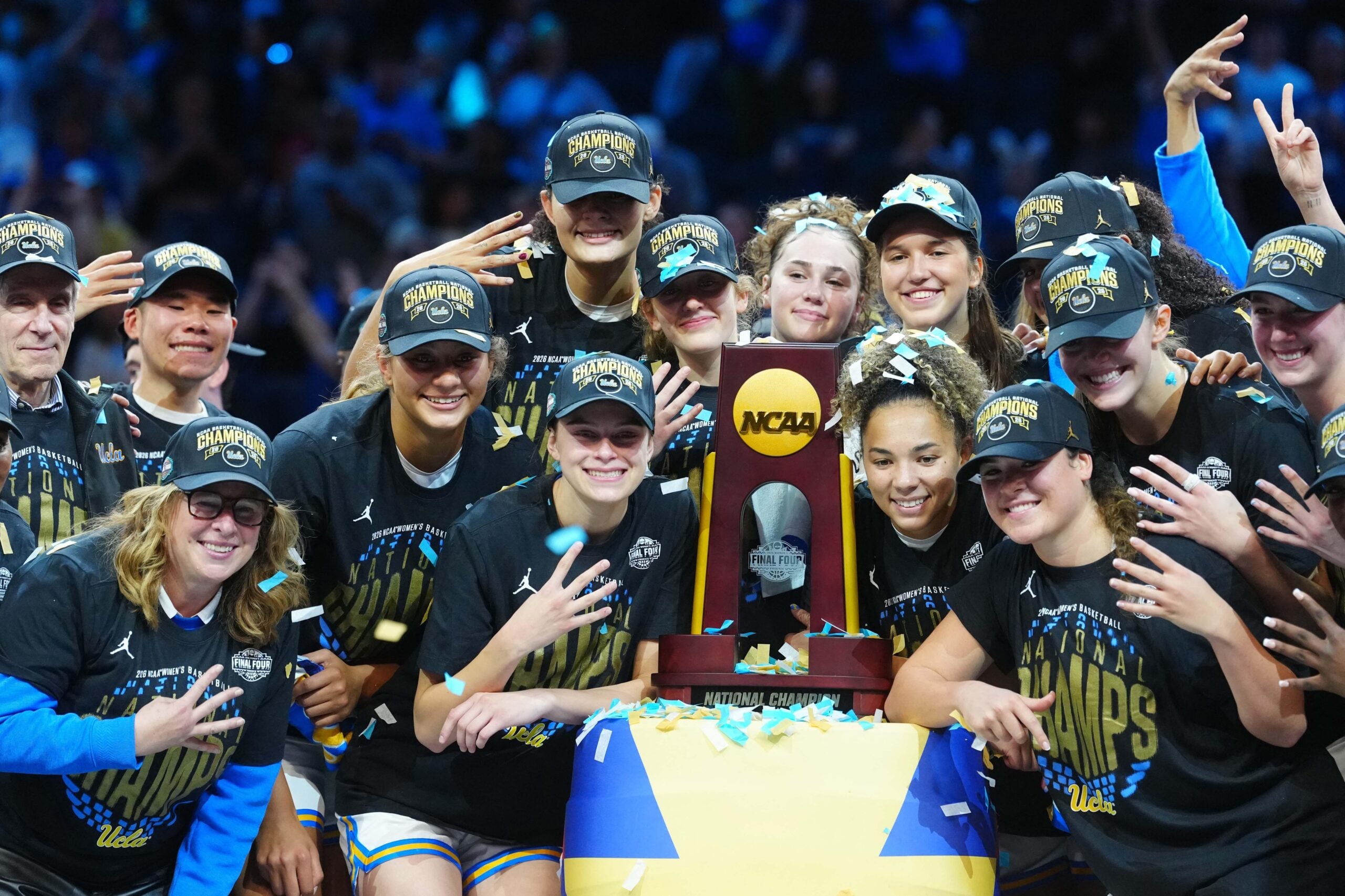
What made UCLA’s victory even more impressive was the collective contribution from its starting lineup. All five senior starters scored in double figures, showcasing the depth and balance that defined this team throughout the season.
Gianna Kneepkens added 15 points, Charlisse Leger Walker contributed 10, and Kiki Rice delivered 10 points along with six rebounds and five assists. This kind of distribution made it impossible for South Carolina to focus on stopping just one player.
Every time the Gamecocks attempted to adjust defensively, another UCLA player stepped up. It was a relentless wave of execution that gradually turned the game into a one sided contest.
A Game That Slipped Away Early
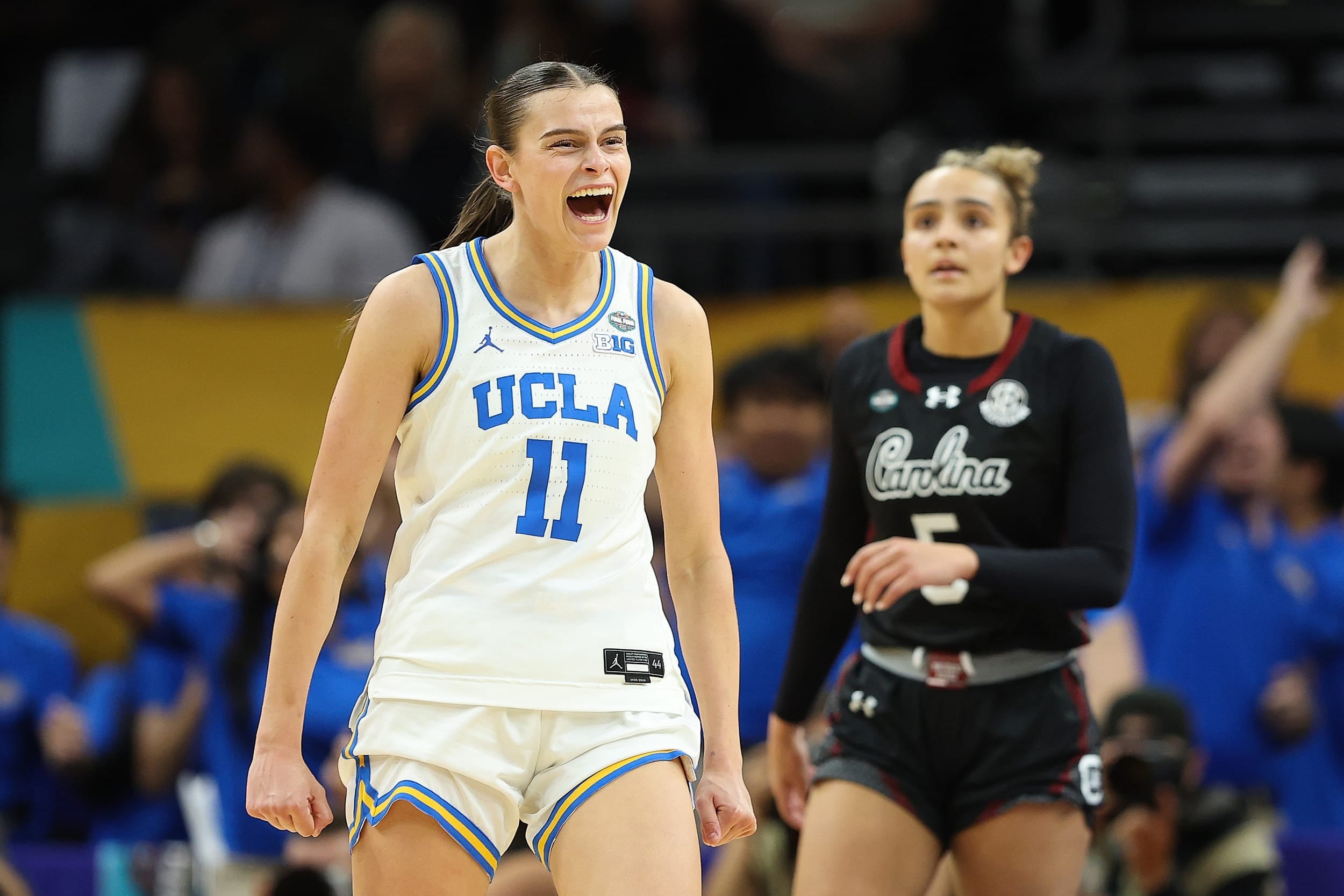
South Carolina entered the game with its own impressive credentials, including multiple recent championship appearances and a reputation for resilience. However, from the very beginning, they struggled to keep pace with UCLA’s intensity.
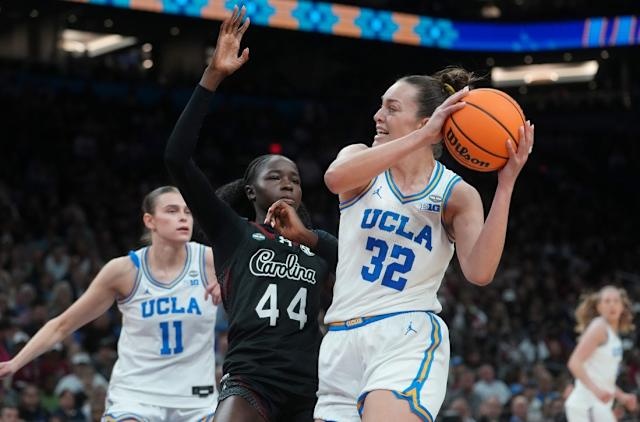
The Bruins quickly built a lead, moving ahead 13 to 4, then 21 to 10, and eventually 30 to 15. By halftime, the score stood at 36 to 23, already signaling a difficult uphill battle for South Carolina.
The third quarter effectively sealed the outcome. A fast break layup from Jaquez extended the lead, and a series of three pointers sparked a 13 to 0 run that pushed UCLA ahead by nearly 30 points. By the end of the quarter, the score was 61 to 32, leaving little doubt about the final result.
Defensive Mastery Defines the Game
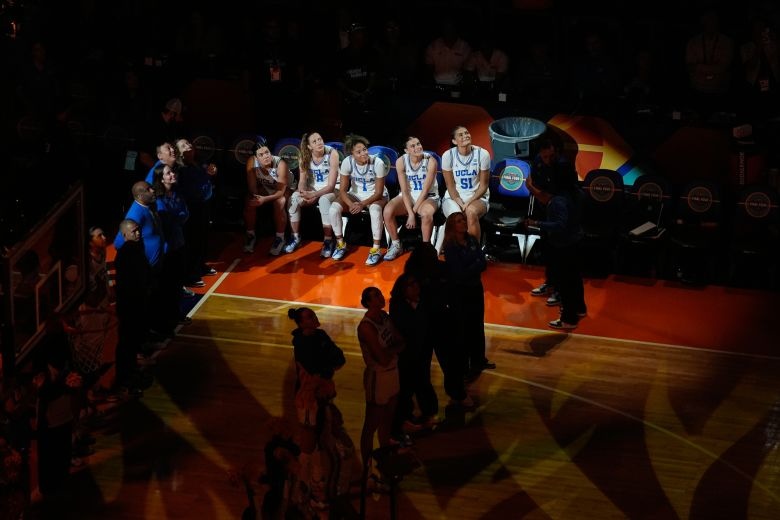
One of the most telling aspects of the game was UCLA’s defensive performance. South Carolina was held to just 29 percent shooting from the field, a statistic that highlights how effectively UCLA controlled every aspect of the game.
The Bruins also dominated the boards, securing a 49 to 37 rebounding advantage. This allowed them to limit second chance opportunities while creating additional possessions for themselves.
This defensive discipline was not limited to the championship game. In the semifinal against Texas, UCLA had already demonstrated its ability to shut down opponents, holding the Longhorns to just over 30 percent shooting. The consistency of their defense became a defining characteristic of their championship run.
South Carolina’s Struggles and Reflection
For South Carolina, the loss was both surprising and sobering. Head coach Dawn Staley acknowledged that her team was simply outplayed. Despite entering the game with high expectations, they were unable to match UCLA’s energy or execution.
Tessa Johnson led the Gamecocks with 14 points, while Agot Makeer added 11, but their efforts were not enough to close the gap. At no point in the fourth quarter did South Carolina come within 28 points, underscoring the magnitude of UCLA’s dominance.
Staley’s response reflected both disappointment and determination. She emphasized the need for her team to learn from the experience and find a way to respond in the future. For a program that has consistently competed at the highest level, this loss becomes part of a larger journey.
A Season of Consistency and Growth
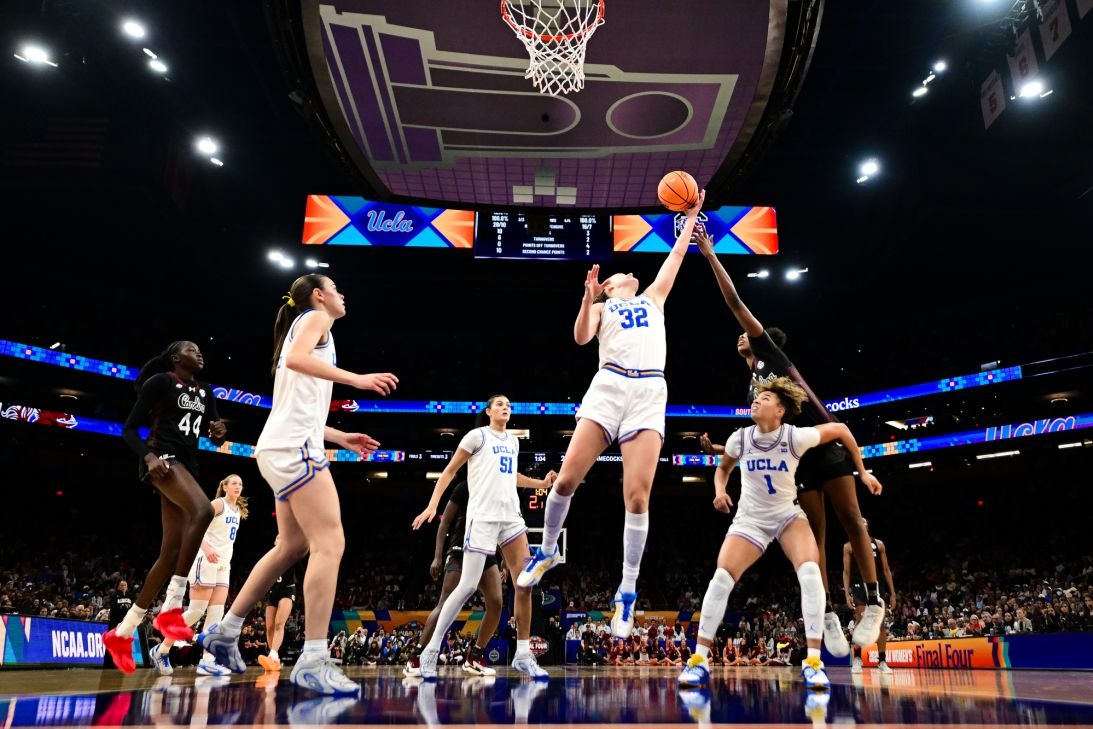
UCLA’s championship did not happen by chance. The team finished the season with a remarkable 37 and 1 record, including a 31 game winning streak to close out the year.
This level of consistency is rare, especially in a sport as competitive as college basketball. It speaks to the team’s discipline, preparation, and ability to maintain focus over an extended period.
Their journey also included lessons from past setbacks. The memory of last season’s loss in the Final Four served as a constant reminder of what it takes to reach the top. This time, they did not just reach the championship game. They dominated it.
A Historic Moment for the Program
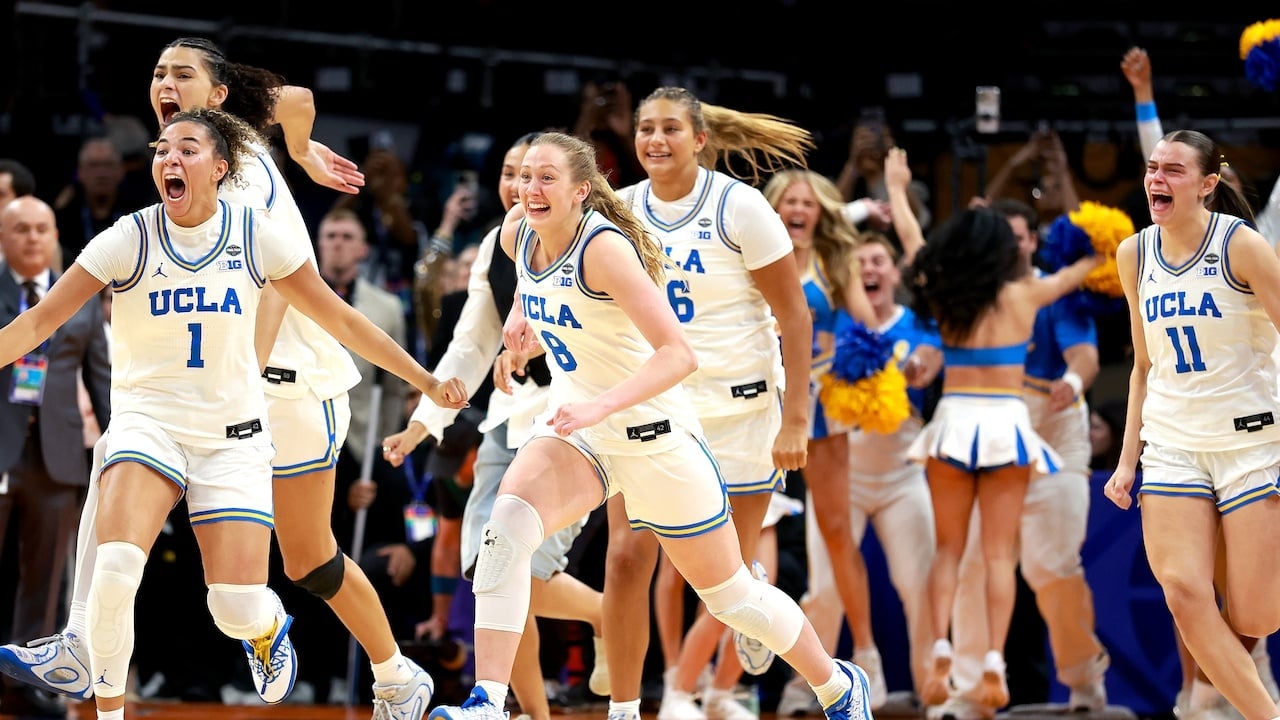
While UCLA had previously won a national title in 1978 during the AIAW era, this victory marks the program’s first championship in the NCAA era. That distinction adds significant weight to the achievement.
The NCAA era represents the modern landscape of college basketball, with higher visibility, increased competition, and greater expectations. Winning in this environment places UCLA among the elite programs in the sport.
It also signals a shift in the balance of power. With established programs like South Carolina consistently competing for titles, UCLA’s emergence adds a new dynamic to the conversation.
What This Means for the Future of Women’s Basketball
Beyond the immediate celebration, UCLA’s victory carries broader implications for women’s basketball. It highlights the increasing depth of talent across programs and the growing competitiveness of the sport.
The dominance displayed in this game also sets a new standard. Future teams will look to UCLA’s performance as an example of what is possible when talent, preparation, and belief come together.
At the same time, it raises questions about what comes next. Can UCLA sustain this level of success, or will other programs rise to challenge them? How will South Carolina respond after such a decisive loss?
These questions ensure that the impact of this championship will extend far beyond a single game.
A Victory That Resonates Beyond the Scoreboard
In the end, UCLA’s triumph is about more than numbers. It is about a team that believed in itself, learned from its failures, and delivered when it mattered most.
The players did not just win a championship. They created a moment that will be remembered as one of the most dominant performances in NCAA women’s basketball history.
As the celebrations begin and the spotlight shifts to the future, one thing remains clear. UCLA did not simply claim a title. It announced its arrival as a powerhouse, and in doing so, it reshaped the landscape of the sport.