
Table of Contents
- How Manta Rays Are Shaping the Future of Underwater Drones
- Understanding the Manta Ray: Nature’s Inspiration for Underwater Drones
- Study and Simulation: Testing Manta Ray Group Swimming Patterns
- Implications for Drone Swarms and Underwater Missions
- Using Artificial Intelligence to Optimize Drone Movement
- The Role of Nature in Shaping Future Technology
- Potential Applications for Manta Ray-Inspired Drones
- The Future of Underwater Drone Technology
- Conclusion: Bio-Inspired Design Leading the Way
- Closing Thoughts:
How Manta Rays Are Shaping the Future of Underwater Drones
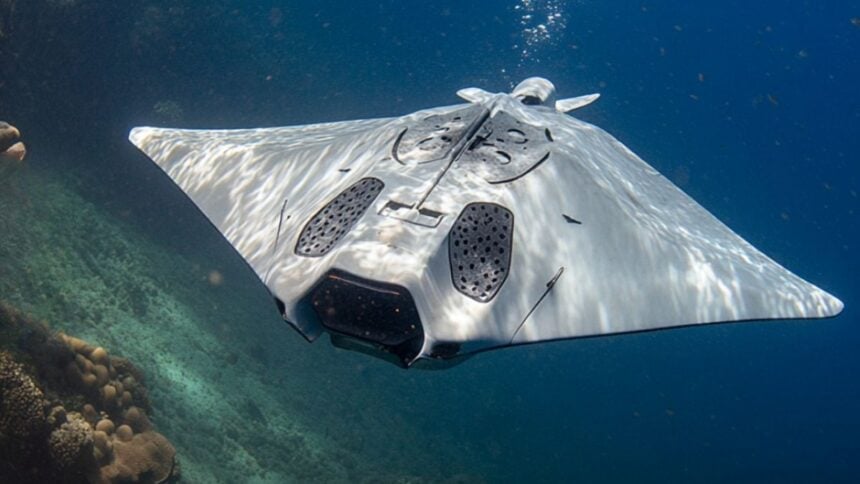
When scientists look for inspiration in nature, they often turn to the world’s most efficient creatures. In the case of Chinese researchers, the manta ray has become the model for their latest breakthrough in underwater drone technology. Scientists from Northwestern Polytechnical University and the Ningbo Institute have found that the graceful swimming of manta rays could lead to smarter and more efficient underwater drones. These new drones promise to have a significant impact on various fields, from underwater research and exploration to military and rescue operations.
This study, published in the scientific journal Physics of Fluids, sheds light on how the swimming behavior of manta rays could revolutionize underwater drone technology. By studying how these marine creatures swim in groups and the biomechanics behind their movements, researchers are designing drones that will be able to glide through water with less resistance and greater efficiency. The potential of this new generation of drones could change the way we conduct underwater missions and make operations more energy-efficient.
Understanding the Manta Ray: Nature’s Inspiration for Underwater Drones
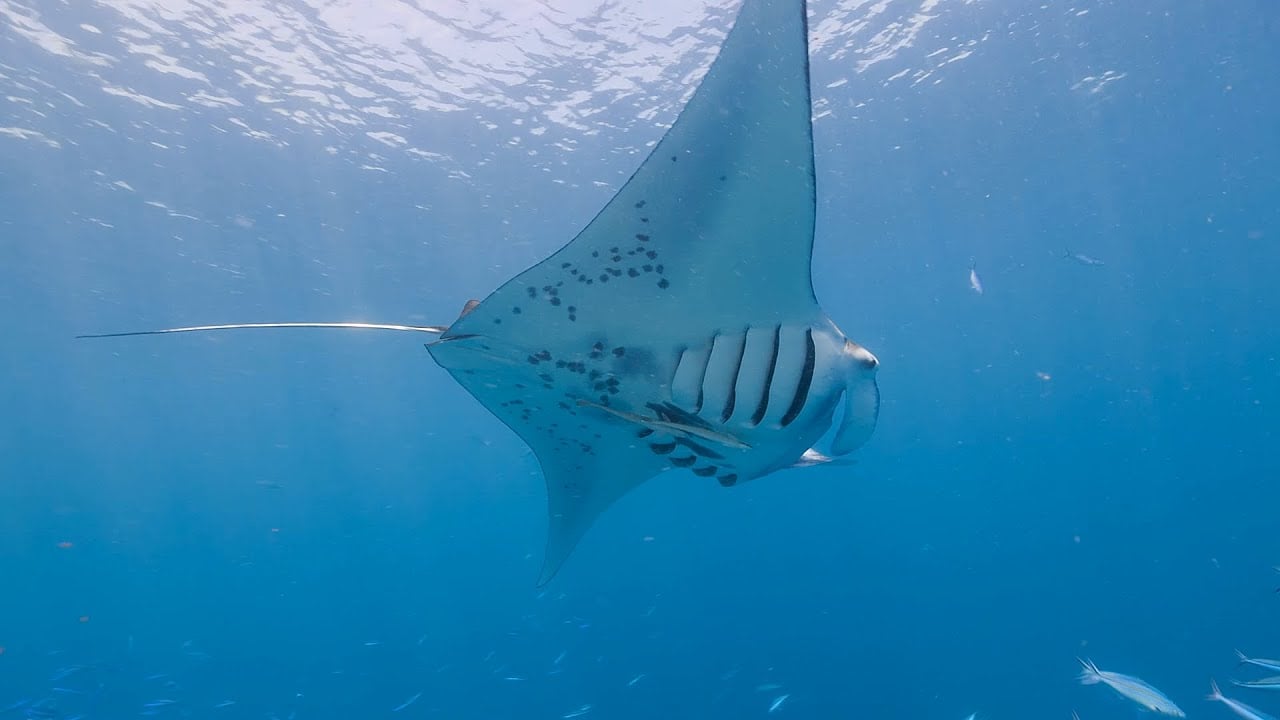
Manta rays are remarkable creatures, known for their large, wing-like pectoral fins and flat bodies that allow them to glide effortlessly through the water. They move with minimal resistance and use little energy, which makes them an ideal model for designing underwater vehicles. Unlike fish, which rely on their tails to propel them through the water, manta rays use their flippers to push themselves forward, providing more lift and minimizing drag.
One of the key features of manta rays is their body structure, which has a high aspect ratio—meaning their bodies are wide compared to their thickness. This design helps them create more lift while swimming, making them incredibly efficient swimmers. The scientists behind the underwater drone project believe that by replicating these features, they can design drones that move as efficiently as manta rays do in the ocean.
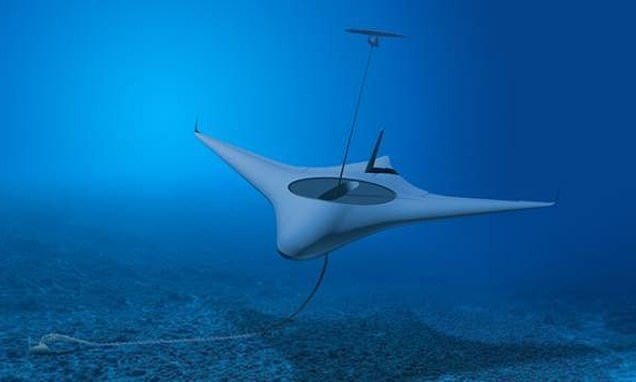
The shape of the manta ray’s body and its method of propulsion make it an excellent source of inspiration for underwater drone technology. By mimicking these features, drones could be designed to travel faster and use less energy, allowing them to operate for longer periods while covering more distance underwater.
Study and Simulation: Testing Manta Ray Group Swimming Patterns
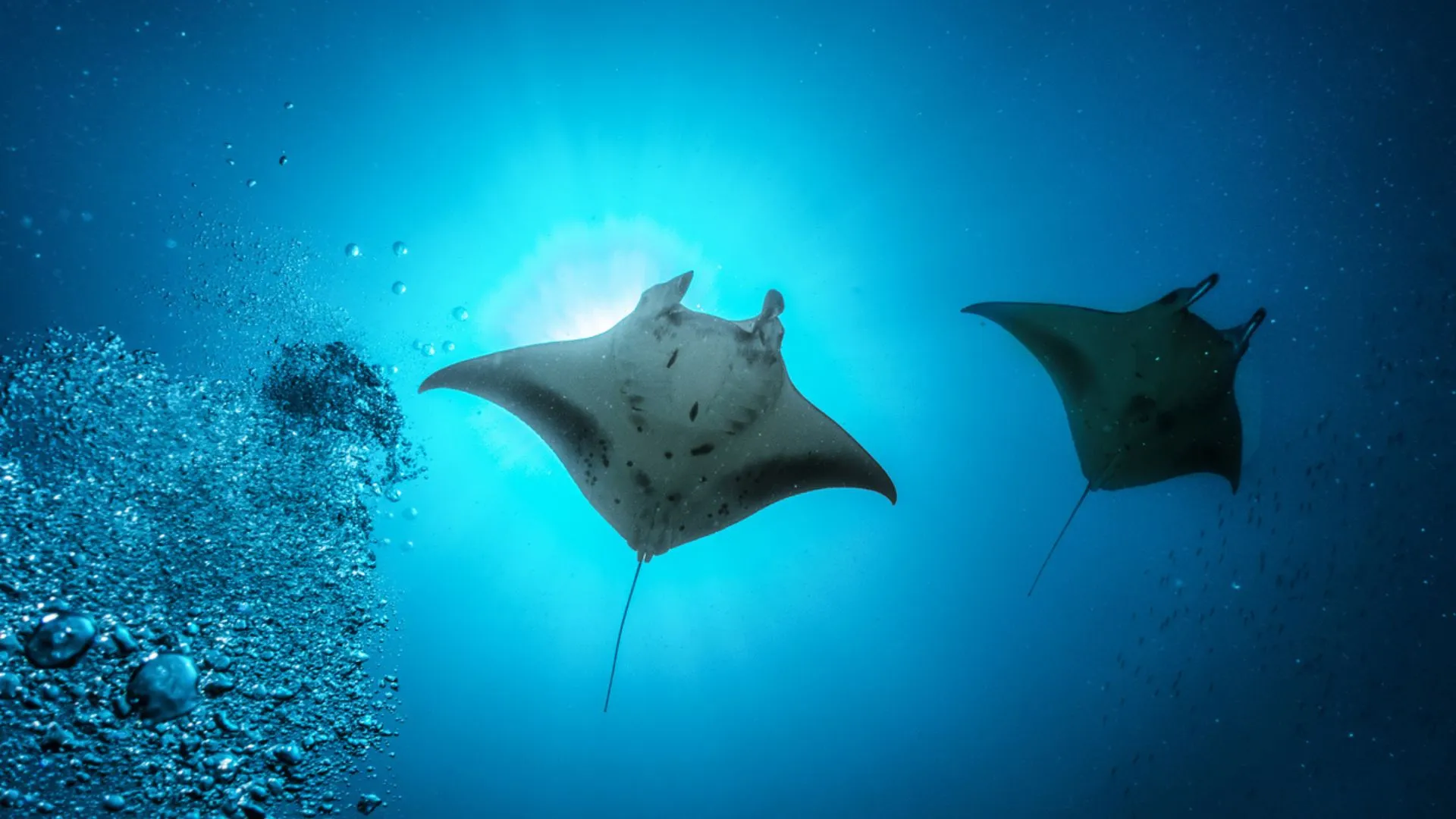
To understand how manta rays swim in groups, the research team used real-life images of manta rays swimming together and conducted simulations to test how different swimming formations affect their movement. The team focused on three primary formations:
- Linear Tandem – Where all manta rays swim in a straight line.
- Triangle Formation – Where one manta ray leads and two follow.
- Inverted Triangle – Where one swims behind two others in an upside-down triangle.
The findings showed that the linear tandem formation was the most efficient. In this arrangement, the middle swimmer benefits from the water flow created by the one in front, allowing it to move more quickly and with less effort. This formation could be key in designing drone swarms, as the energy efficiency of the middle drone would allow the entire group to cover more distance with less power consumption.
While the triangle-shaped formation was less efficient, manta rays still use this arrangement frequently in the wild. The researchers believe this could be due to other factors such as social behavior or navigation needs. This suggests that the ability to mimic manta ray behavior in group settings could be essential when designing drone systems that need to function in teams.
Implications for Drone Swarms and Underwater Missions
Underwater tasks are becoming increasingly complex, with missions requiring the collaboration of multiple drones. Whether it’s for military surveillance, research, or search-and-rescue operations, there’s a growing need for drone swarms that can work together efficiently to cover large underwater areas. Inspired by manta rays, scientists are focusing on developing drones that can move in formation, share information, and complete tasks collectively.
The goal is to create drones that can swim in sync, much like manta rays in a group, to maximize efficiency and energy savings. By understanding how manta rays work together in the wild, scientists believe they can design drone systems that will work better in group settings, enhancing their overall performance.
Lead researcher Pengcheng Gao emphasized the importance of studying small groups of manta rays. He explained that by understanding how these creatures move in groups, scientists could build the foundation for larger drone swarms capable of performing more complex missions. The idea is to use the same principles of efficient movement and group behavior in designing a fleet of drones that can coordinate seamlessly to carry out tasks.
Using Artificial Intelligence to Optimize Drone Movement
In their research, the scientists also explored how AI could be used to optimize the movement of underwater drones in real-time. By using AI to help drones adjust their movements based on their surroundings, they can move more efficiently and adapt to changing environments. For example, AI could allow drones to adjust their speed and positioning to take advantage of favorable water currents, just like manta rays do in the ocean.
This kind of adaptability will be critical as drones are deployed in different environments, where conditions can change quickly. By leveraging AI, drones could adjust their behavior on the fly, ensuring they remain efficient and effective throughout their missions.
The Role of Nature in Shaping Future Technology
The study highlights the growing importance of bio-inspired design in technology development. By observing how manta rays move, scientists have uncovered valuable insights that can be applied to drone technology, making them smarter, more efficient, and more capable of performing complex underwater tasks.
The ability to learn from nature has long been a powerful tool for scientific innovation. As researchers continue to study the natural world, they are discovering new ways to apply these findings to technological advancements. In this case, manta rays are not only inspiring the next generation of underwater drones but also demonstrating the power of nature to drive cutting-edge innovation.
Potential Applications for Manta Ray-Inspired Drones
The potential applications of these manta ray-inspired drones are vast. In military and defense, drones that can move in formation and cover large areas could be used for surveillance, reconnaissance, and even combat operations. In research, drones could be used to explore uncharted underwater territories, map the ocean floor, or monitor marine life.
In the realm of rescue operations, these drones could be deployed to search for survivors in flooded or submerged areas, providing critical assistance in emergency situations. Their energy-efficient design would allow them to operate for extended periods, covering more ground than traditional underwater vehicles.
Additionally, the drones could play a vital role in environmental monitoring, helping scientists track the health of marine ecosystems and detect pollution or illegal activities such as poaching.
The Future of Underwater Drone Technology
As scientists continue to refine their designs and incorporate more advanced technology, the future of underwater drones looks promising. By learning from manta rays and other marine creatures, researchers are unlocking new possibilities for drone design that could revolutionize underwater exploration and operations.
With ongoing advancements in artificial intelligence, propulsion systems, and bio-inspired designs, the next generation of underwater drones will be more capable, efficient, and adaptable than ever before. These drones could become an essential tool in various industries, from military defense to environmental conservation, helping humanity better understand and protect the oceans.
Conclusion: Bio-Inspired Design Leading the Way
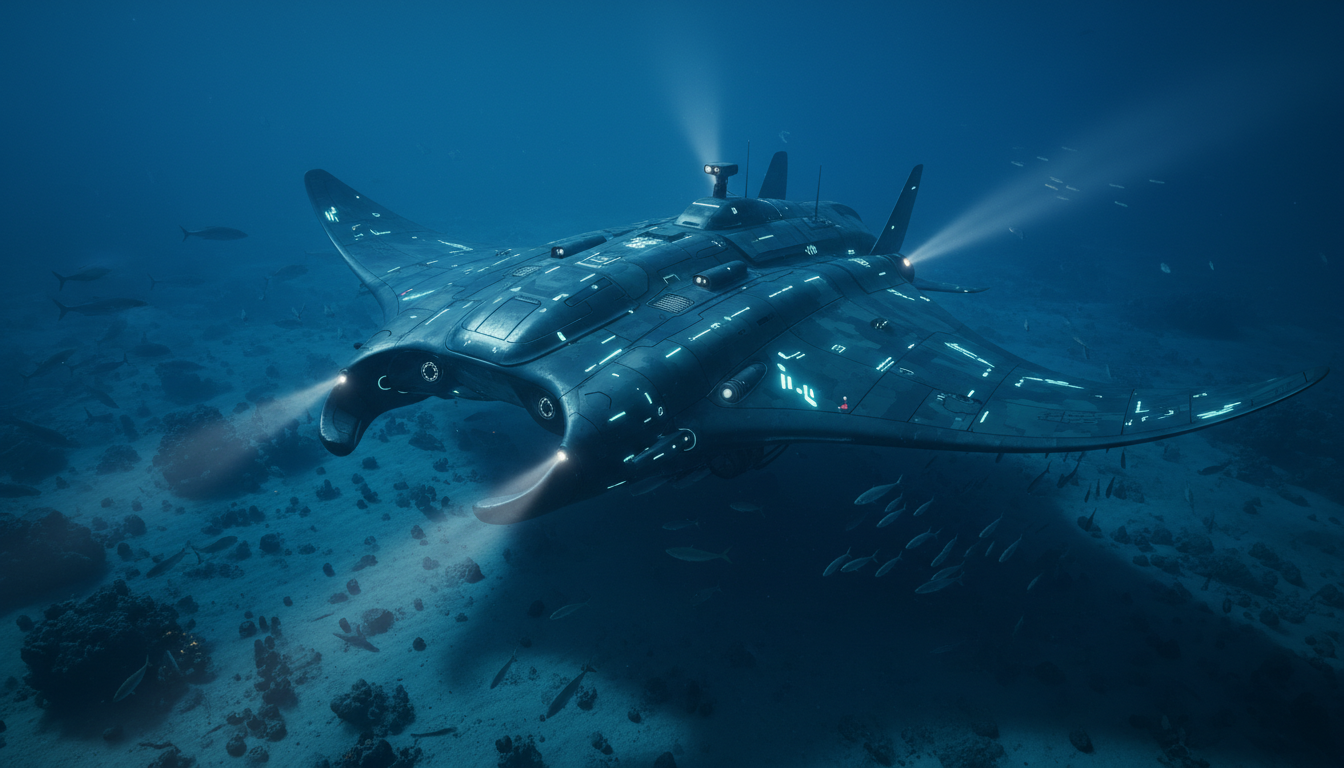
The development of manta ray-inspired underwater drones is an exciting example of how nature can inspire technological innovation. By studying how manta rays swim and move in groups, scientists have identified key features that can be applied to improve drone design, making them more energy-efficient and capable of performing complex tasks. As the technology continues to evolve, these drones could play a pivotal role in a wide range of industries, from military applications to environmental monitoring. The future of underwater exploration looks brighter than ever, thanks to the lessons learned from one of the ocean’s most graceful creatures.
Closing Thoughts:
Nature has always been a source of inspiration for human innovation, and the development of manta ray-inspired underwater drones is just one example of how bio-inspired design can lead to groundbreaking advancements in technology. With further research and refinement, these drones could revolutionize underwater exploration, defense, and conservation efforts, helping us better understand and protect the world’s oceans.