
Table of Contents
- When the United States Quietly Closed a Major Chapter in Iraq
- Why the Airbase Mattered Strategically
- The Long Arc of U.S. Military Presence in Iraq
- What “Strategic Withdrawal” Actually Means
- Why This Moment Was Chosen
- Iraq’s Growing Role in Its Own Security
- What Remains of the U.S. Presence
- How This Fits Into U.S. Middle East Strategy
- Regional Reactions and Quiet Adjustments
- Why Symbolism Matters Even Without Headlines
- Lessons Learned From Two Decades of Engagement
- The Impact on Counterterrorism Operations
- How Iraqi Forces Are Preparing for the Transition
- Domestic Considerations Behind the Decision
- Why This Is Not an Isolated Event
- What This Means for U.S.–Iraq Relations
- Why the Withdrawal Was Designed to Be Quiet
- The Broader Regional Implications
- What Comes Next After the Airbase Closure
- Why This Moment Reflects a Broader Strategic Shift
- A Quiet Exit With Lasting Meaning
- What This Signals About the Future of U.S. Military Engagement
- A Chapter Closing Without an Ending
When the United States Quietly Closed a Major Chapter in Iraq
When news emerged that U.S. forces had completed a strategic withdrawal from a major airbase in Iraq, the announcement arrived without dramatic ceremony. There were no large-scale press conferences or triumphant declarations. Instead, the withdrawal unfolded as a measured conclusion to a long and complex chapter of American military presence in the country.
Yet the absence of spectacle did not diminish its significance. The departure marked more than a logistical shift. It reflected a broader recalibration of U.S. strategy in the Middle East, shaped by changing priorities, evolving threats, and two decades of experience in the region. What follows is an exploration of why this withdrawal matters, how it fits into a larger strategic pattern, and what it could mean for Iraq, the United States, and regional stability.
Why the Airbase Mattered Strategically

The airbase in question was not merely a logistical hub. For years, it played a central role in U.S. and coalition operations, supporting air missions, intelligence gathering, and coordination with Iraqi security forces. Its location and infrastructure made it a cornerstone of military planning during periods of intense conflict.
Over time, however, the strategic value of permanent large-scale bases began to shift. Advances in technology, changes in mission objectives, and lessons learned from prolonged deployments altered how military planners assessed the necessity of such installations.
The Long Arc of U.S. Military Presence in Iraq
The U.S. military presence in Iraq has evolved through multiple phases. From the initial invasion to counterinsurgency operations, and later to advisory and support roles, the nature of engagement changed as conditions on the ground shifted.
This withdrawal fits within that broader arc. Rather than signaling disengagement, it reflects a transition away from fixed, highly visible installations toward more flexible forms of military cooperation and regional presence.
What “Strategic Withdrawal” Actually Means

A strategic withdrawal does not imply retreat in the traditional sense. Instead, it refers to a deliberate repositioning of forces to better align with current objectives. In this case, U.S. officials emphasized that the move was planned, coordinated with Iraqi authorities, and consistent with long-term strategy.
The focus has increasingly shifted toward supporting Iraqi forces through training, intelligence sharing, and limited advisory roles rather than maintaining large operational footprints.
Why This Moment Was Chosen
Timing in military decisions is rarely accidental. The completion of the withdrawal came amid ongoing assessments of regional threats, domestic priorities, and global commitments. The U.S. military faces demands in multiple theaters, requiring careful allocation of resources.
Completing the withdrawal now suggests confidence that Iraqi forces are better positioned to manage security responsibilities associated with the airbase and surrounding areas.
Iraq’s Growing Role in Its Own Security
For Iraqi leaders, the withdrawal represents both an opportunity and a responsibility. Taking control of major military infrastructure signals progress toward sovereignty and self-reliance. It also places greater expectations on Iraqi security forces to maintain stability.
This transition has been gradual, shaped by years of cooperation and capacity-building efforts. The handover of facilities underscores Iraq’s evolving role from host to primary security actor.
What Remains of the U.S. Presence

While the airbase withdrawal is significant, it does not mean the United States has left Iraq entirely. A reduced number of U.S. personnel remain in the country, primarily focused on advisory and support missions.
This leaner presence aligns with a broader strategy that favors mobility, partnerships, and regional coordination over permanent installations.
How This Fits Into U.S. Middle East Strategy
The Middle East remains strategically important, but U.S. engagement is increasingly selective. Rather than large-scale deployments, the emphasis has shifted toward deterrence, rapid response capabilities, and cooperation with regional partners.
The airbase withdrawal illustrates this shift. It reflects a desire to reduce exposure while retaining influence and operational flexibility.
Regional Reactions and Quiet Adjustments
The withdrawal was closely observed by regional actors, even if public reactions were muted. Allies and rivals alike assess such moves for what they reveal about long-term intentions.
In this case, the quiet nature of the withdrawal signaled continuity rather than abrupt change. It suggested adjustment rather than abandonment.
Why Symbolism Matters Even Without Headlines
Military bases carry symbolic weight. Their presence or absence shapes perceptions of commitment and influence. Closing a major airbase inevitably prompts questions about resolve and future engagement.
By framing the withdrawal as strategic and coordinated, U.S. officials aimed to manage these perceptions, emphasizing that change in form does not equal change in interest.
Lessons Learned From Two Decades of Engagement
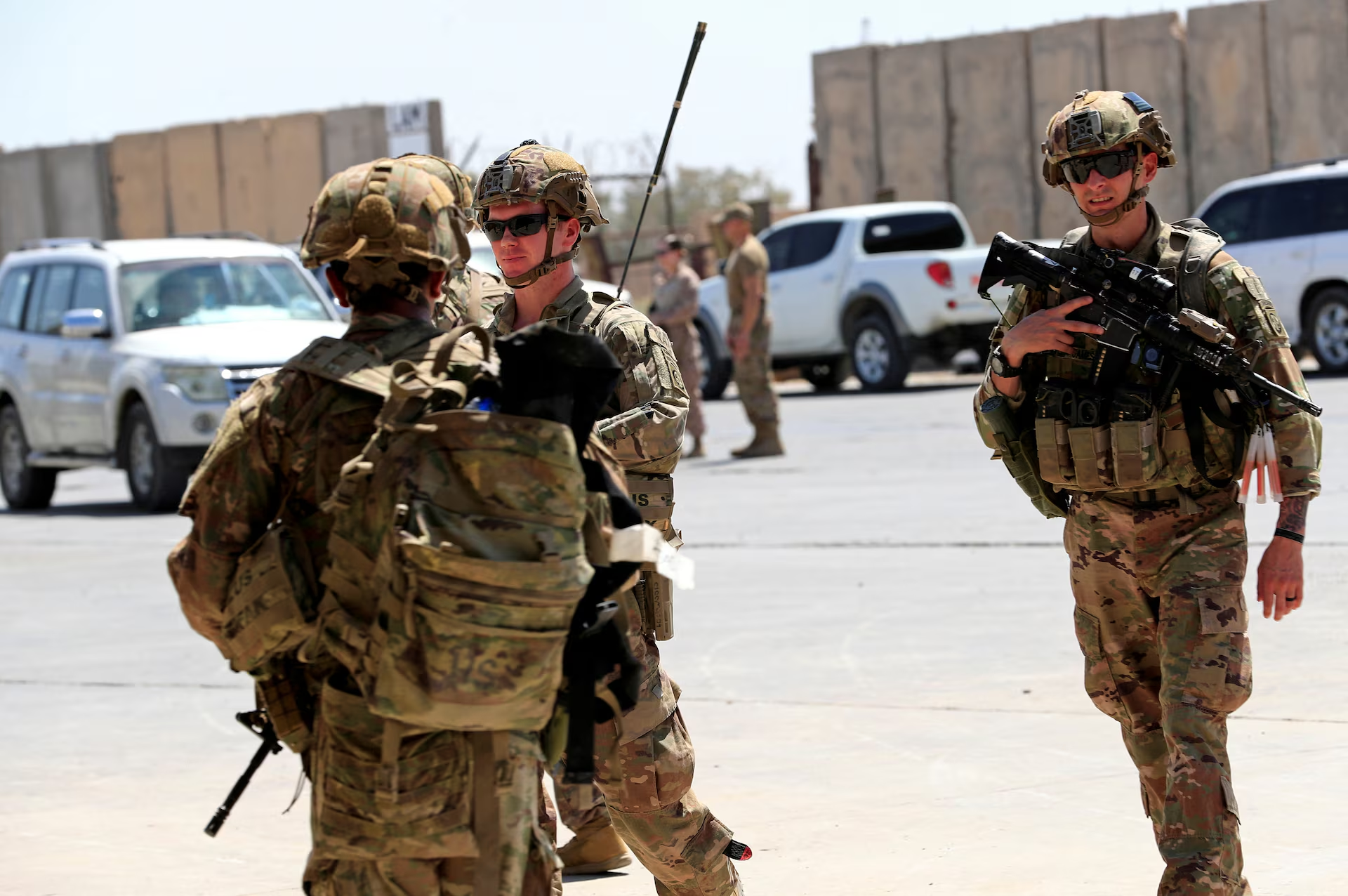
Experience in Iraq has reshaped how the U.S. approaches overseas military involvement. Long-term deployments revealed the limits of sustained large footprints and the importance of local capacity.
This withdrawal reflects those lessons. It prioritizes sustainability, partnership, and adaptability over permanence.
The Impact on Counterterrorism Operations
Counterterrorism remains a key concern in Iraq and the wider region. U.S. officials have stressed that withdrawal from the airbase does not diminish the ability to monitor and respond to threats.
Modern surveillance, intelligence-sharing agreements, and regional assets allow continued engagement without reliance on a single large base.
How Iraqi Forces Are Preparing for the Transition
Iraqi military and security forces have been preparing for such transitions through joint training exercises and gradual assumption of responsibilities. The handover of the airbase represents a milestone in that process.
While challenges remain, Iraqi officials have framed the transition as a step toward greater autonomy rather than a security gap.
Domestic Considerations Behind the Decision
Domestic factors also shape foreign military decisions. Public fatigue with prolonged overseas deployments, budgetary pressures, and shifting political priorities influence how military resources are deployed.
The strategic withdrawal aligns with broader efforts to recalibrate commitments while focusing on readiness and modernization.
Why This Is Not an Isolated Event
The Iraq airbase withdrawal is part of a pattern rather than a singular act. Similar adjustments have occurred in other regions, reflecting a global reassessment of how military presence supports national objectives.
These changes point toward a future where influence is maintained through networks rather than footprints.
What This Means for U.S.–Iraq Relations
Far from signaling a rupture, the withdrawal underscores a maturing relationship. Cooperation continues, but on terms that emphasize Iraqi leadership and shared responsibility.
This evolution reflects a shift from dependency to partnership, shaped by years of interaction and mutual adaptation.
Why the Withdrawal Was Designed to Be Quiet
Silence can be strategic. Conducting the withdrawal without fanfare reduced the risk of misinterpretation, escalation, or politicization. It allowed the transition to proceed without becoming a symbolic flashpoint.
In diplomacy and security, restraint often speaks louder than rhetoric.
The Broader Regional Implications
The Middle East remains volatile, and any adjustment in U.S. posture is closely watched. However, strategic withdrawals can reduce tensions by lowering visible military footprints while maintaining deterrence through other means.
This balance is central to managing long-term regional stability.
What Comes Next After the Airbase Closure
The closure of the airbase is not an endpoint but a waypoint. Future engagement will likely focus on intelligence cooperation, diplomatic engagement, and regional coordination rather than permanent installations.
Flexibility, rather than fixed presence, is becoming the defining principle.
Why This Moment Reflects a Broader Strategic Shift
At its core, the withdrawal reflects a shift in how power is projected. Presence is no longer measured solely by bases, but by relationships, technology, and the ability to respond quickly.
This evolution mirrors changes in global security dynamics, where adaptability often matters more than visibility.
A Quiet Exit With Lasting Meaning
The completion of the U.S. withdrawal from a major Iraq airbase may not dominate headlines, but its implications are lasting. It marks the end of one operational model and the continuation of another.
In the absence of drama, the significance becomes clearer: a recalibration shaped by experience, restraint, and a recognition that strategy evolves.
What This Signals About the Future of U.S. Military Engagement
The future of U.S. military engagement in the Middle East is unlikely to resemble the past. Large, permanent bases are giving way to smaller footprints and shared responsibilities.
This shift does not eliminate risk, but it reflects a belief that long-term stability depends on local capacity supported by strategic partnerships.
A Chapter Closing Without an Ending
As the airbase transitions fully to Iraqi control, the chapter of direct U.S. operation there closes quietly. Yet the story of U.S.–Iraq security cooperation continues, shaped by new realities and shared challenges.
In strategic terms, the withdrawal is less about leaving than about redefining presence—an adjustment that may prove just as consequential as the deployments that came before it.